

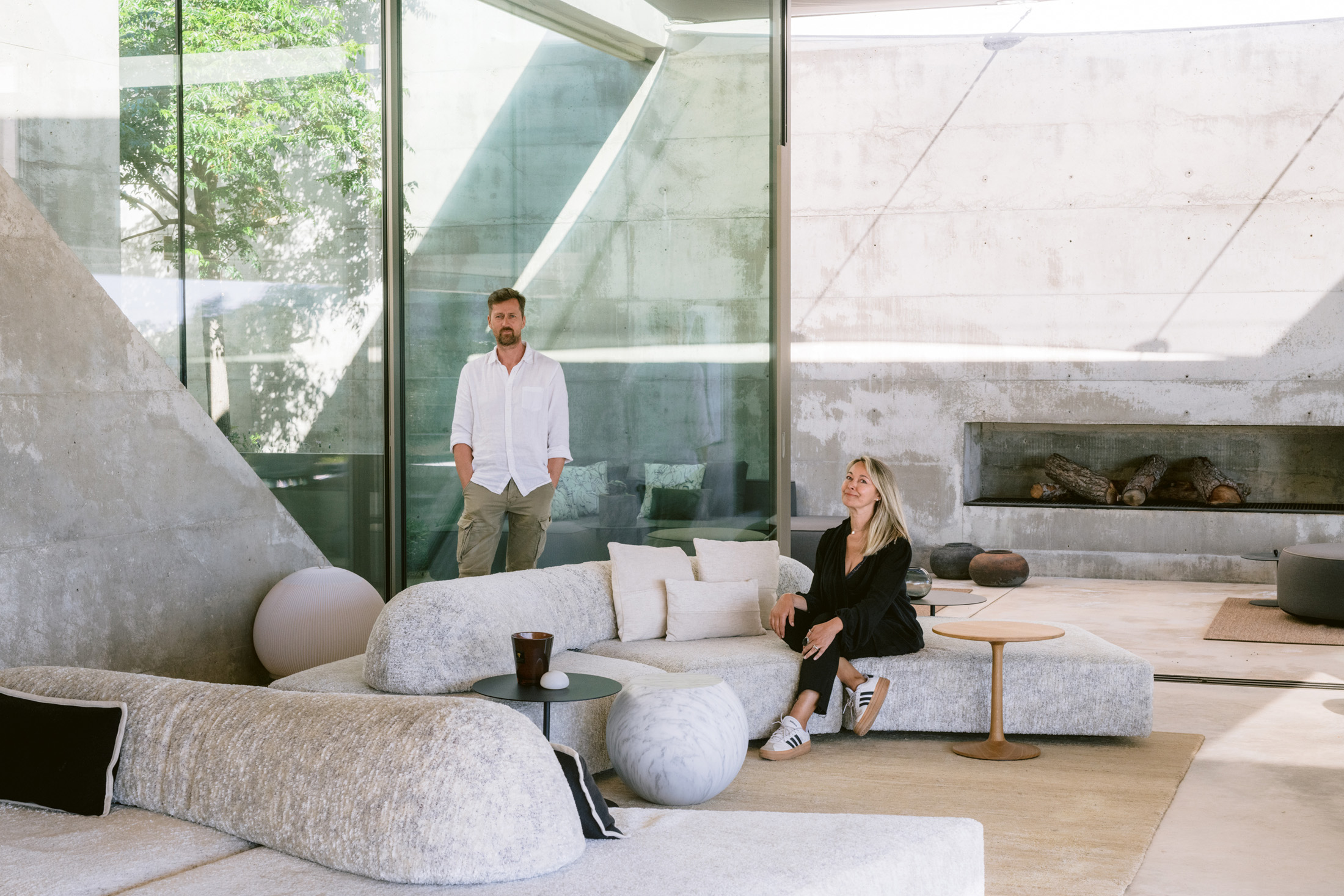
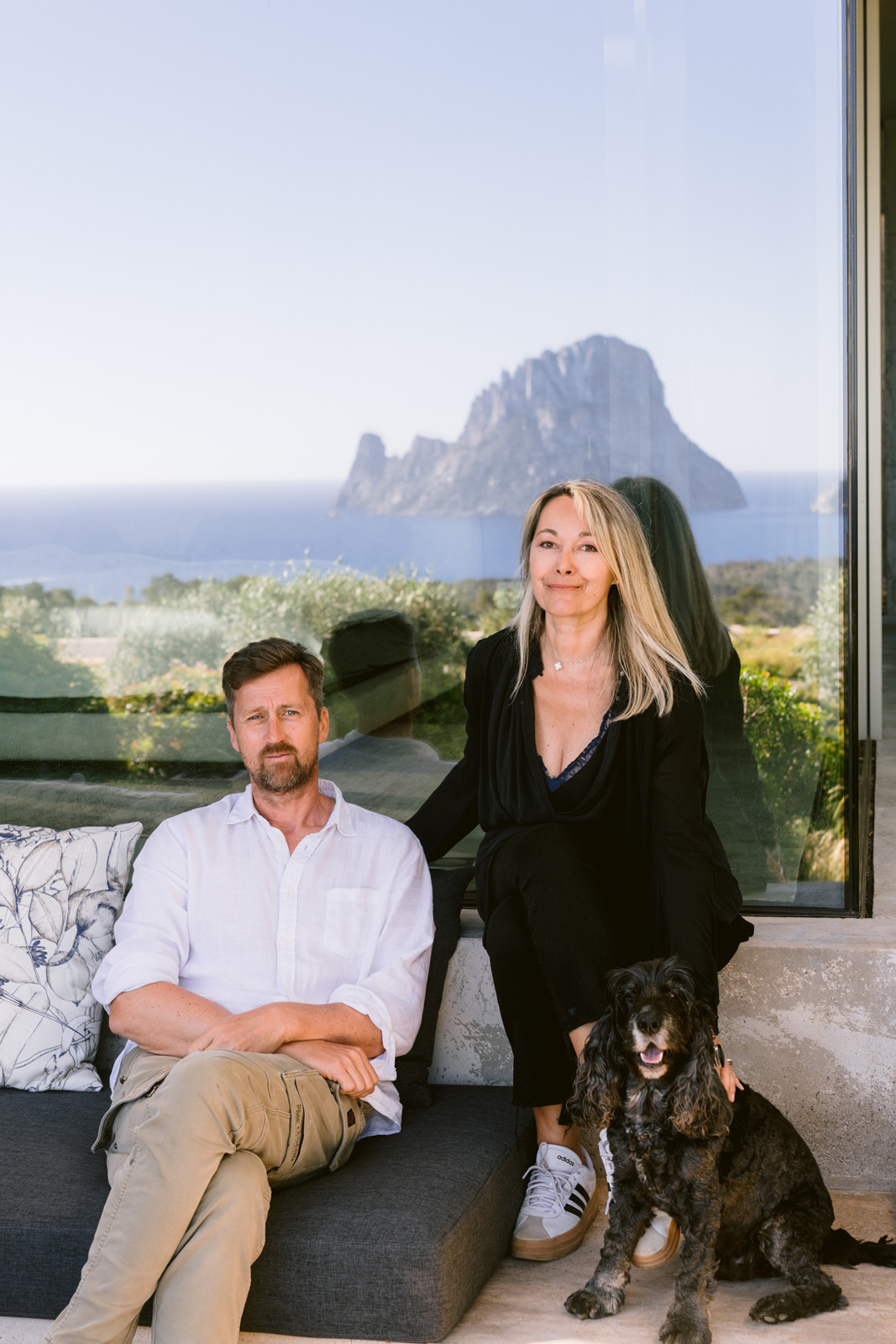
At Jean-François Kroonen and Katia Scheidecker’s Bruno Erpicum-designed villa, uncompromising concrete and restrained interiors conspire to frame the real star of the show: the view.
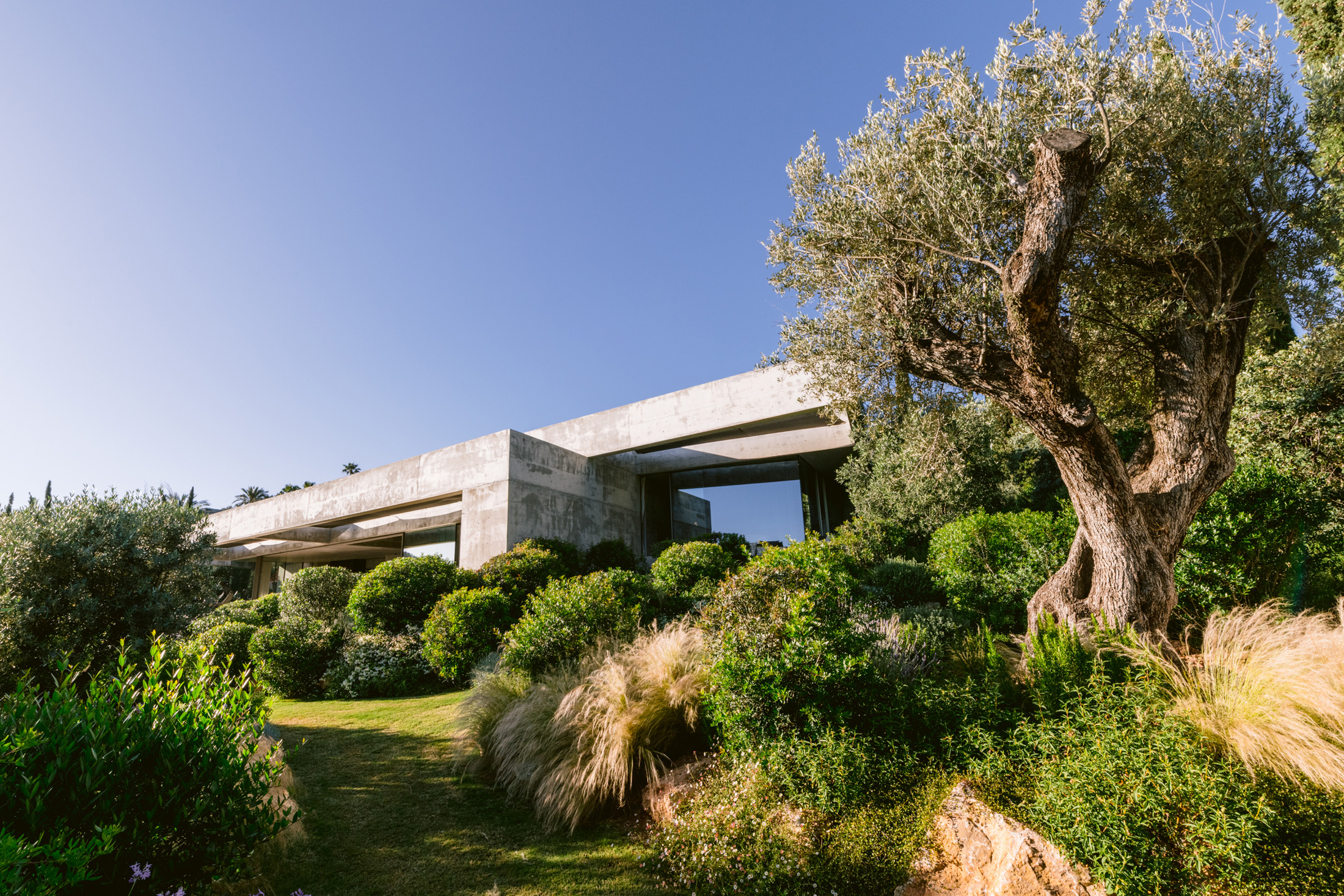
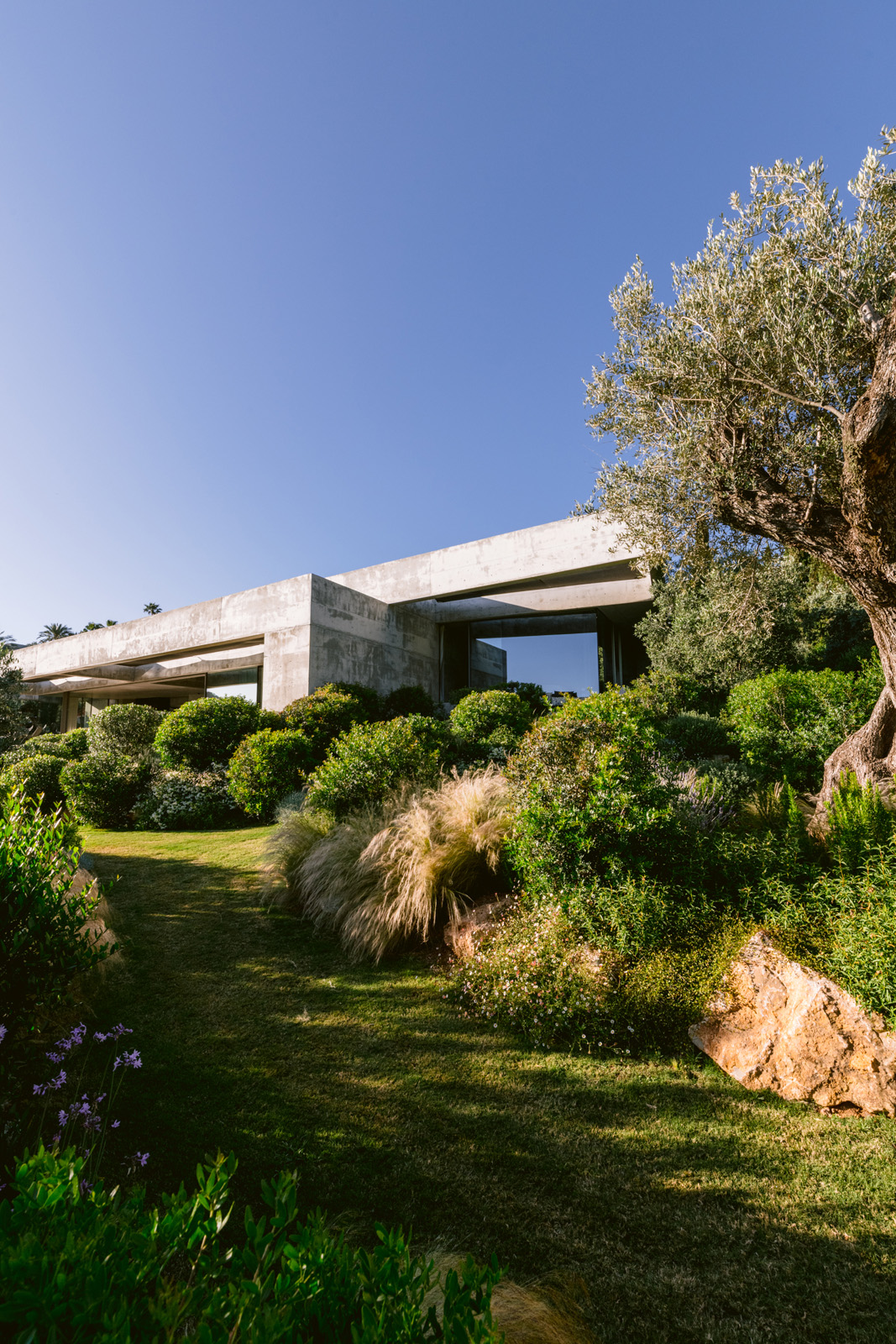
First impressions can be misleading. On the hillside above Cala d’hort, Jean-François Kroonen and Katia Scheidecker’s home is unassuming: a low composition of concrete that gives little away of the drama beyond. Move past the entrance though and the villa choreographs a gradual reveal: first geometry, then garden, then the full cinematic force of its setting.
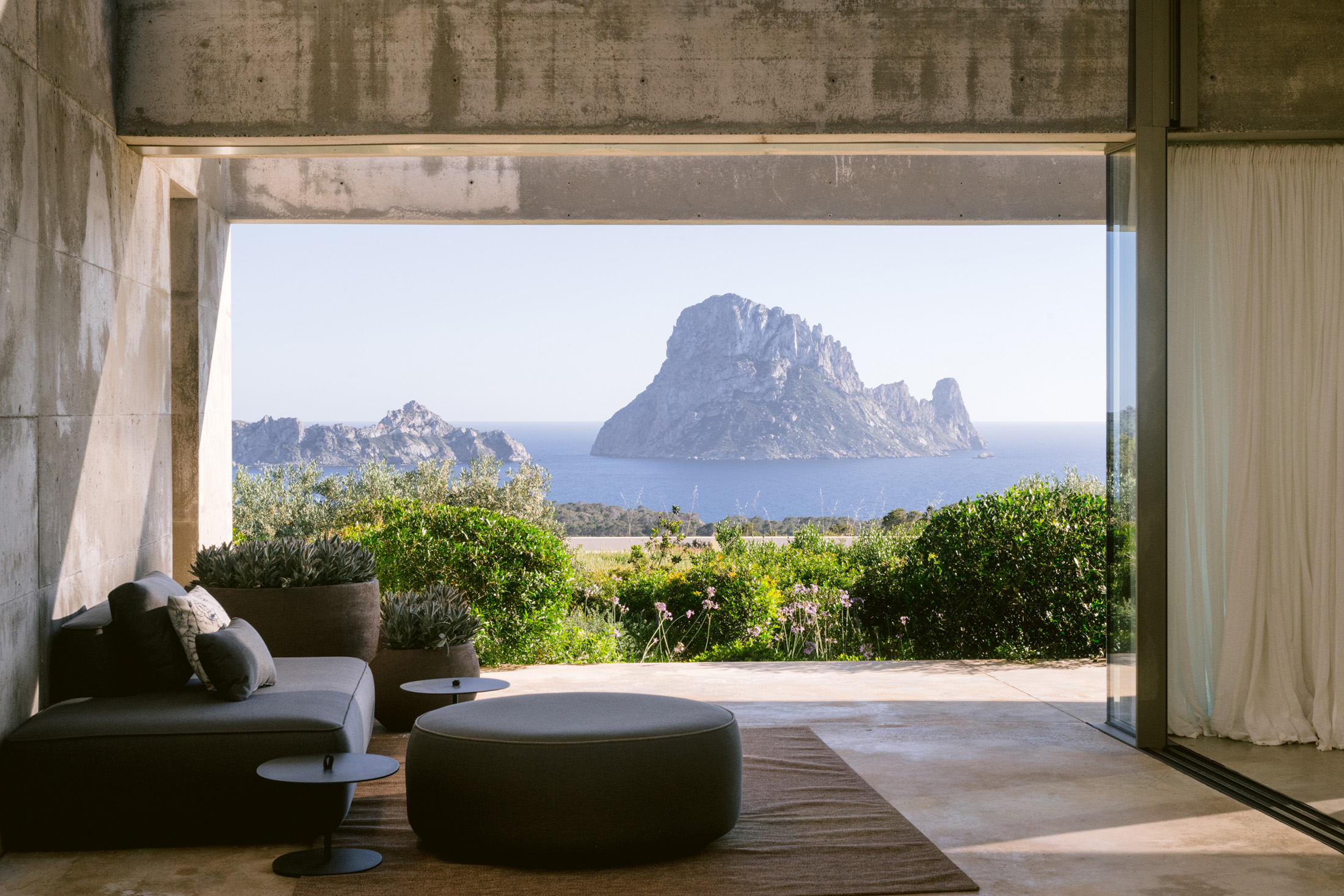
Only once inside the principal living space does the scale reveal itself: the glass retracts, the horizon expands and the rock formations of Es Vedrà pull the gaze beyond the house entirely.
The decision to hide the view until the last moment was deliberate. “It works,” smiles developer Jean-François. “When people enter for the first time, suddenly, you hear: ‘wow’.”
It’s interesting to compare how the other architects approached the view totally differently. Here we wanted to have the living space enjoying the setting the most
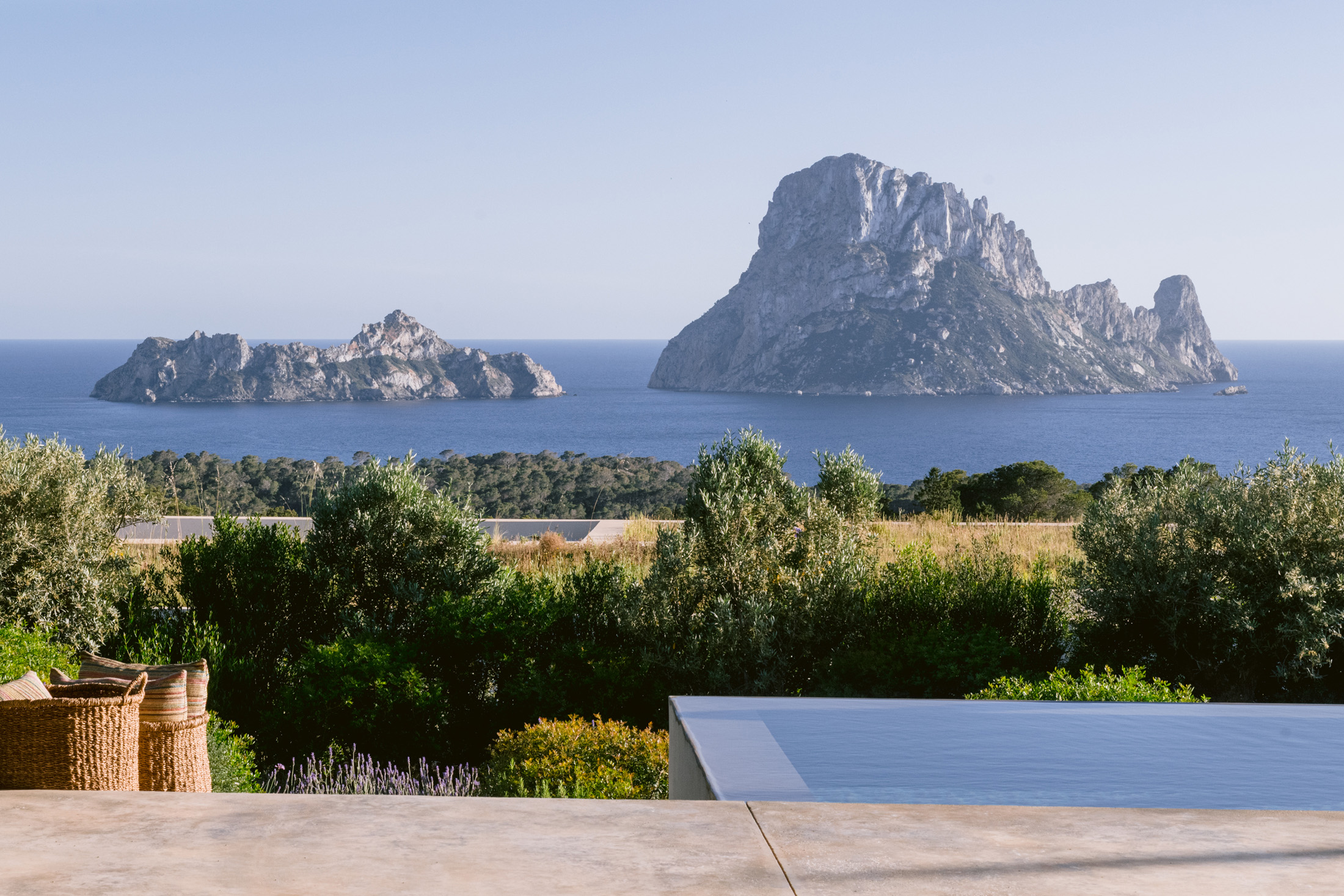
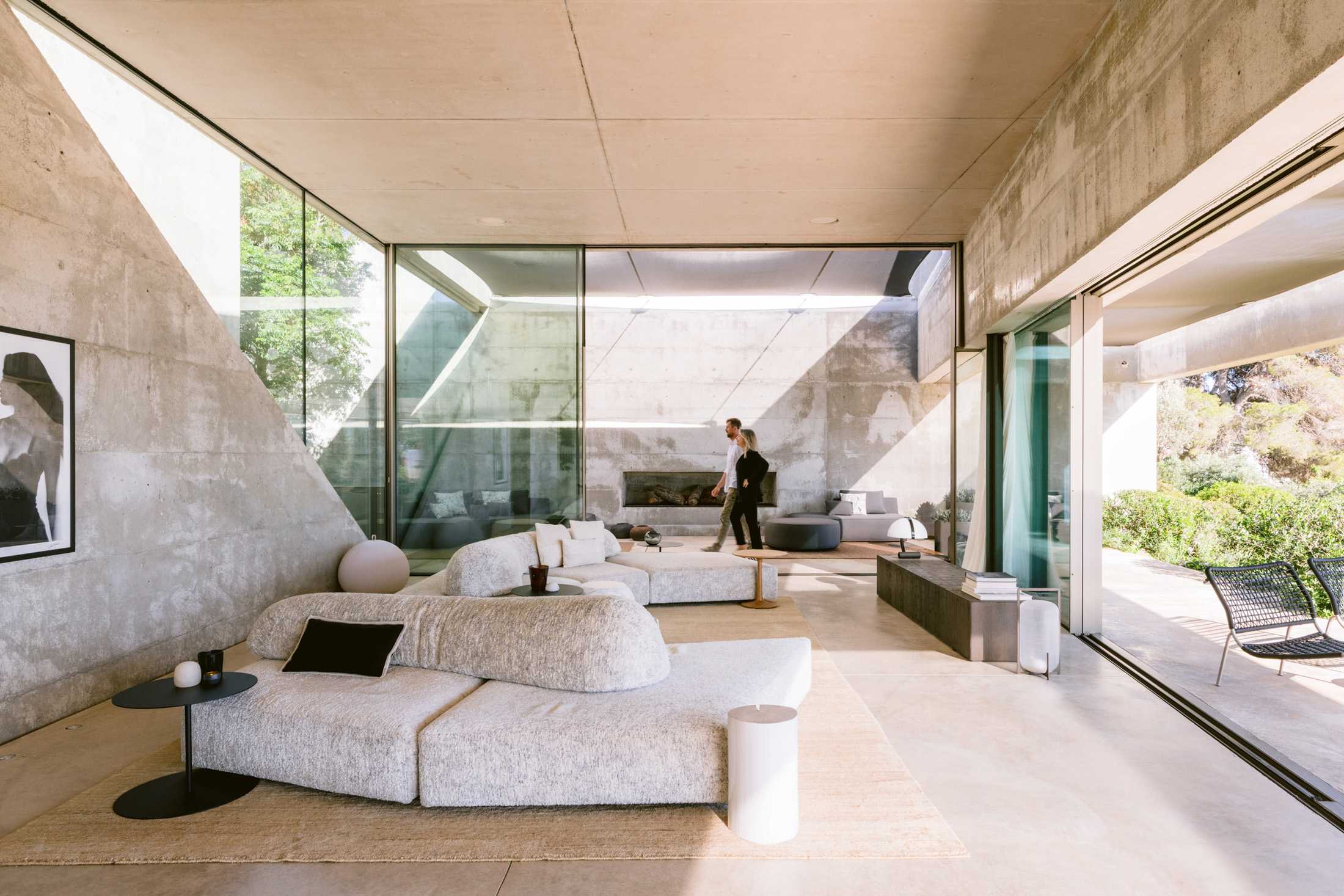
Designed by Belgian architect Bruno Erpicum, everything builds towards that moment: the descent, the planted roof, the cool weight of the concrete, the abrupt amplification of glass and light. In the salon, which opens completely to the elements, the architecture falls quiet. The eye goes straight past the polished concrete floors and pared-back interiors to the band of blue holding the horizon.
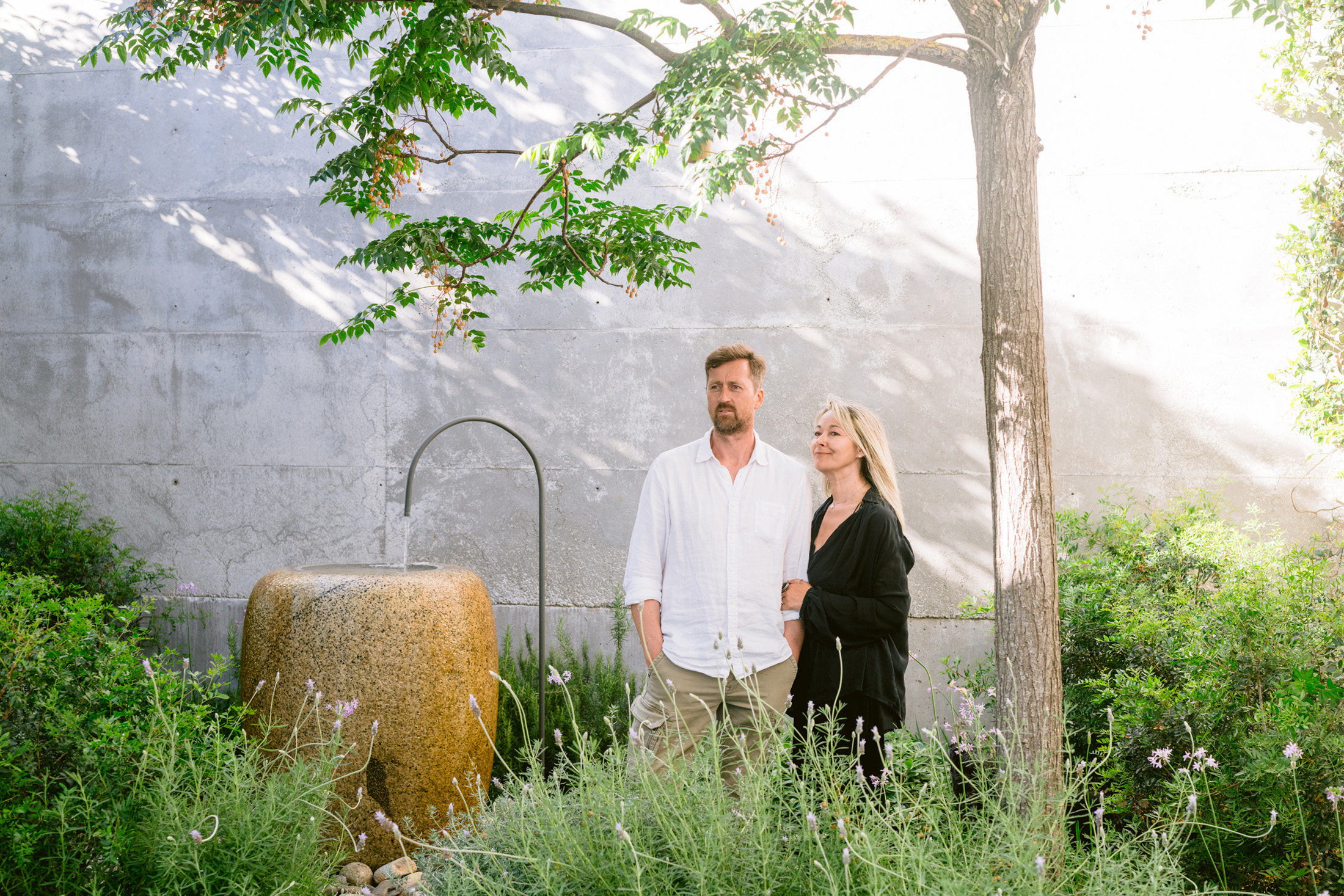
Jean-François and Katia are no strangers to creating homes with presence. Their villa sits at the highest point of a tiered plot that also contains another previous project developed by the couple through their company Desmesus. Each was designed by a different architect; each takes its own position on how to engage with the view.
Just below, the Jaime Romano-designed Villa Vedra is similarly low-slung and linear but orientates almost every room towards the sea. This one is more restrained. Only the living room and principal suite face the waves. Guest bedrooms open instead to planted terraces, where the mood becomes quieter and more enclosed.
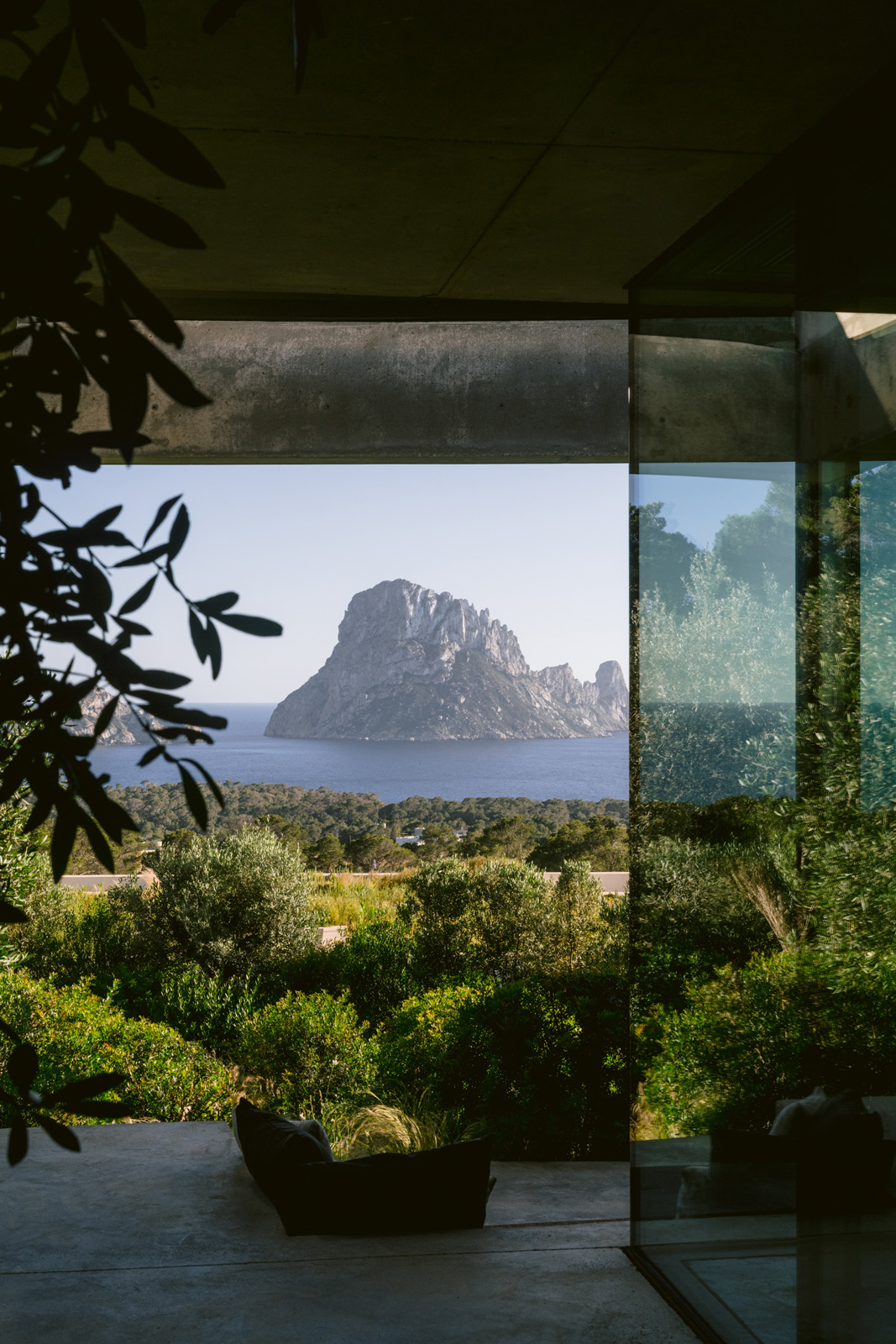
“It’s interesting to compare how the other architects approached the view totally differently,” says Jean-François. “Here we wanted to have the living space enjoying the setting the most.”
The view may have been the main reason for buying the plot – “it’s incredible”, Jean-François adds with some understatement – but the house resists the obvious move of giving it to every room. Instead, Bruno Erpicum’s disciplined response allows the landscape to arrive in snapshots rather than everywhere at once.
The couple’s own design principles are clear. While both villas have their own architectural language, each adheres to a shared set of principles. “The first is the view,” says Jean-François. “Next comes landscaping, cosy interiors and minimalist architecture.”
Here, all four are present, with each element supporting the next. The architecture frames the landscape; the planting softens the concrete; the interiors temper the minimalism; the view remains the pulse.
For this project, the couple were uncharacteristically hands off. “We gave Bruno carte blanche,” they recall. “We didn’t want to constrain his creativity with specifics. Instead, the brief was simple: this is the plot, this is the view – make the best of it.
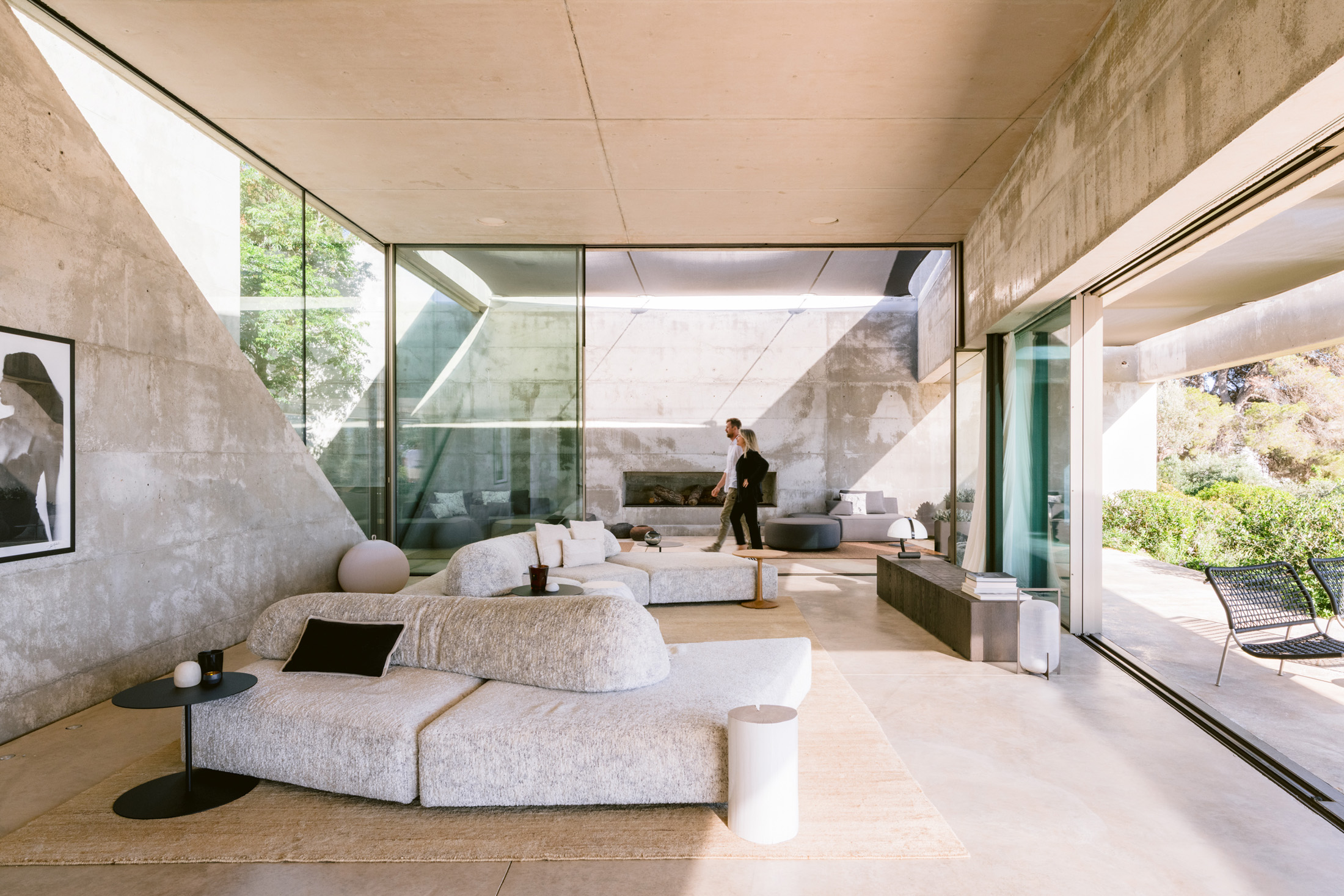
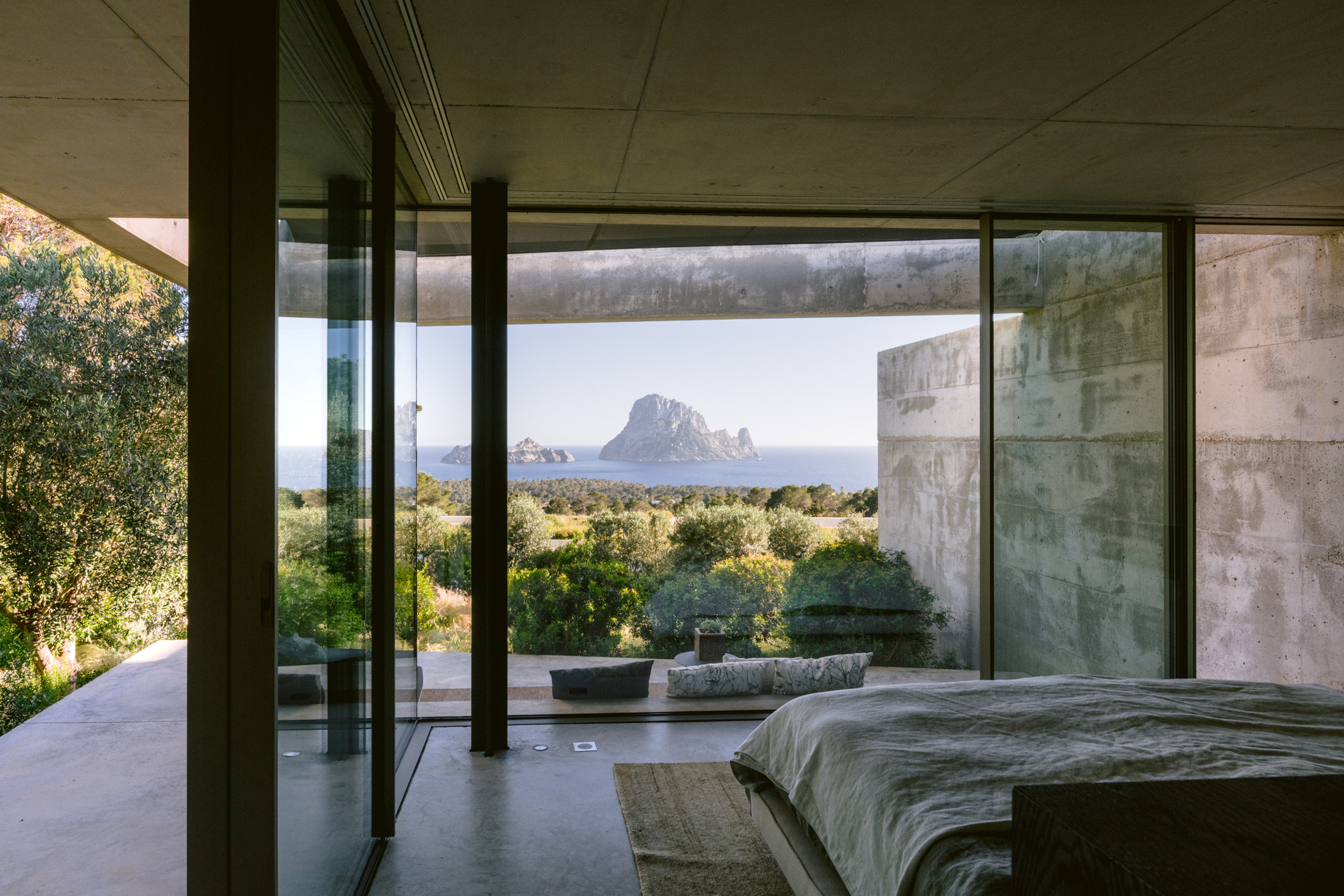
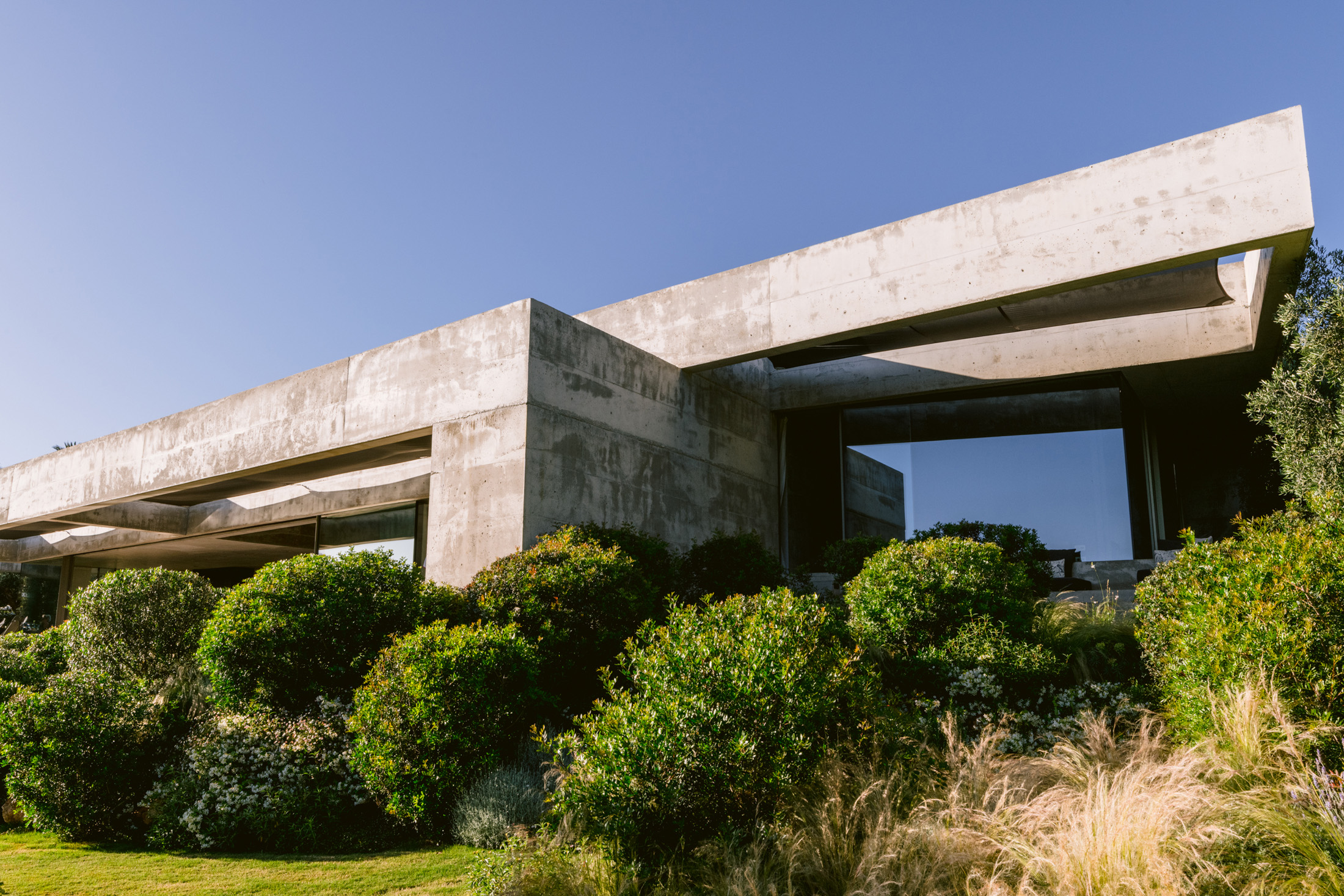
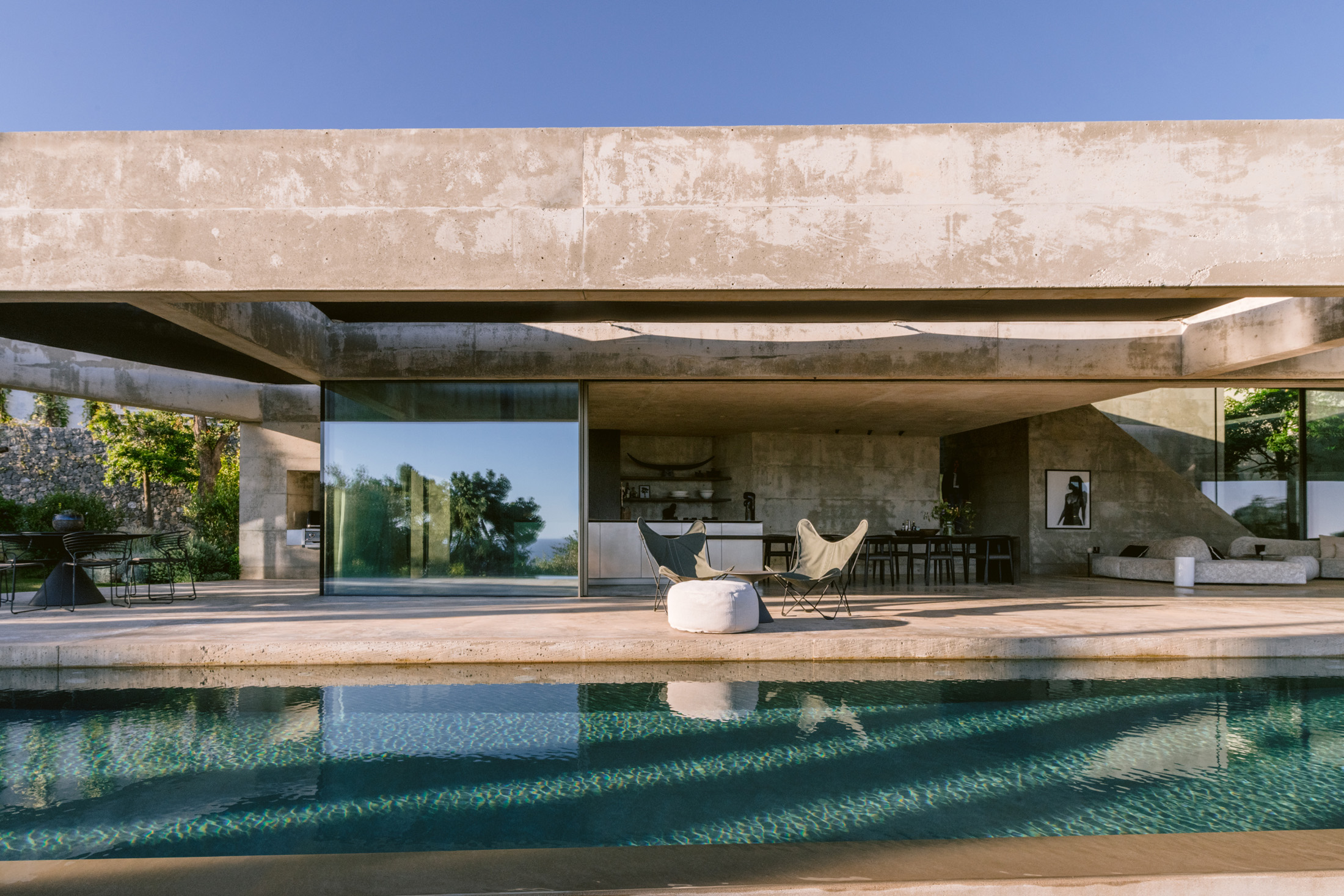
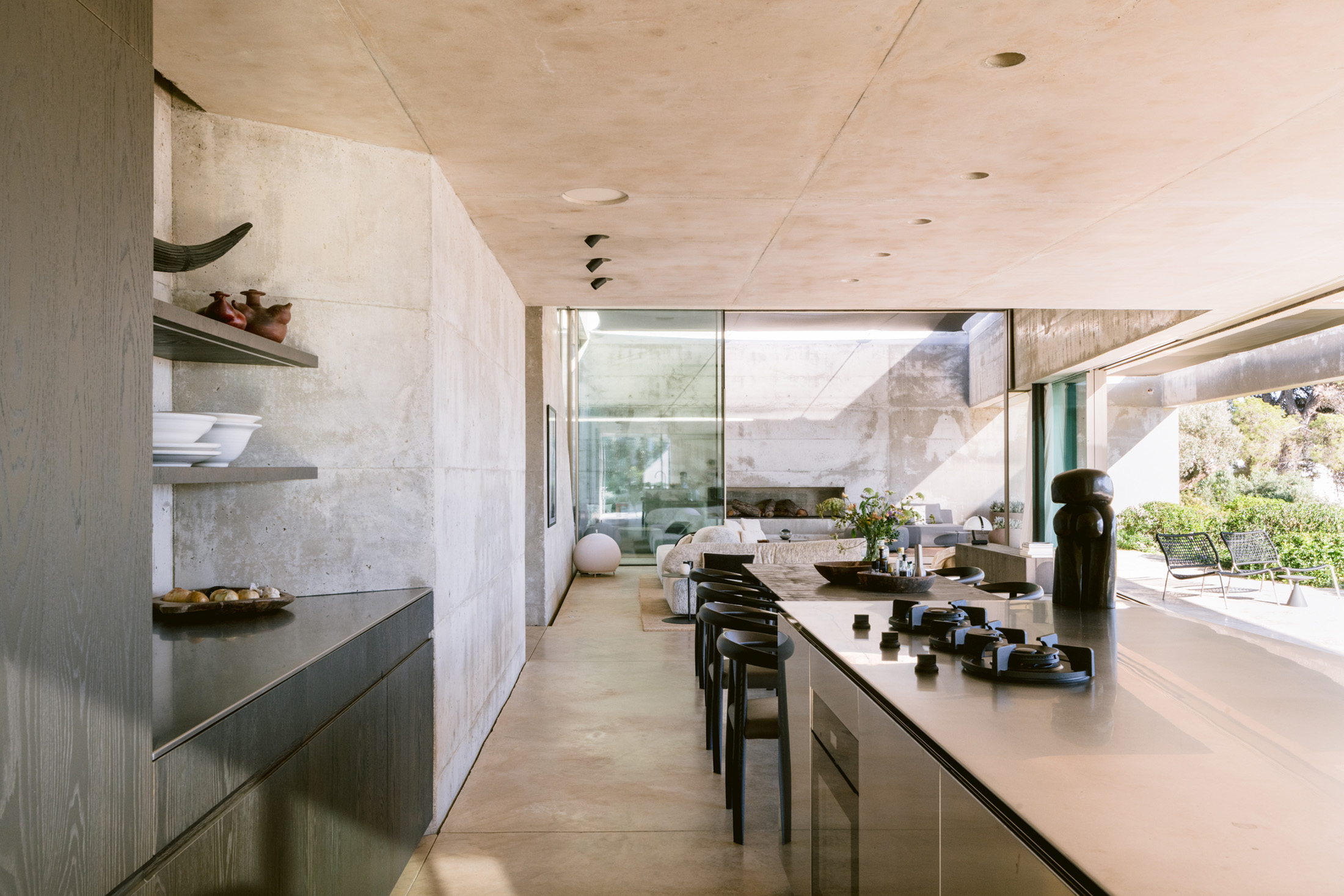
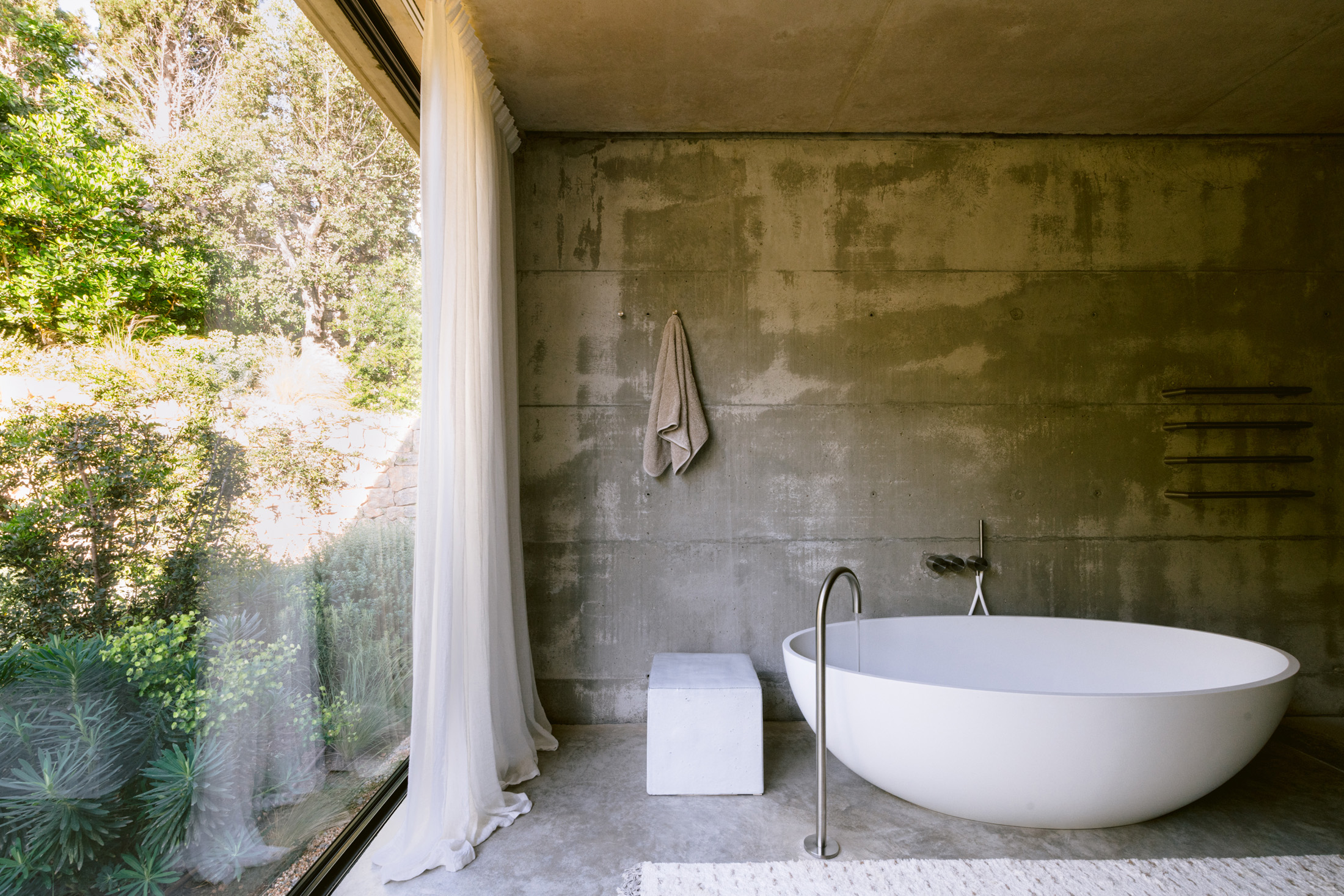
There was one certainty: the house would be concrete. A material closely associated with the Erpicum studio, it gives the villa sculptural force: walls, floors and volumes in the same tonal vernacular, their surfaces marked in places, quietly weathered and characterful.
“When you select an architect, you go for their style,” notes Jean-François. “You don’t go to them asking them to build the house you’ve drawn for them.”
The result is a brutal kind of beauty: broad planes, polished floors, and a palette that rarely strays from grey, green and blue. Nothing shouts because nothing needs to, and the architecture has enough confidence to recede.
Although initially sceptical about the sheer amount of concrete, Katia set about warming the atmosphere through timber, textiles and tone. “The choice of wood was very important,” she reflects. “This is why we chose a darker shade, to give that depth. Yes, it’s a fully concrete house, but the feeling is still welcoming.”
A subtle separation between day and night areas reinforces that restful rhythm. A handful of steps bridges the shift in level with the bedroom wing at the rear, establishing a sense of transition without breaking the home’s single-story ease.
The guest bedrooms are darker, moodier and open to leafy terraces. The drama returns in the principal suite, where the bed faces the view and each morning begins with a reveal of its own. “You wake up, open the curtains and here it comes,” the couple says of the scene beyond the glass.
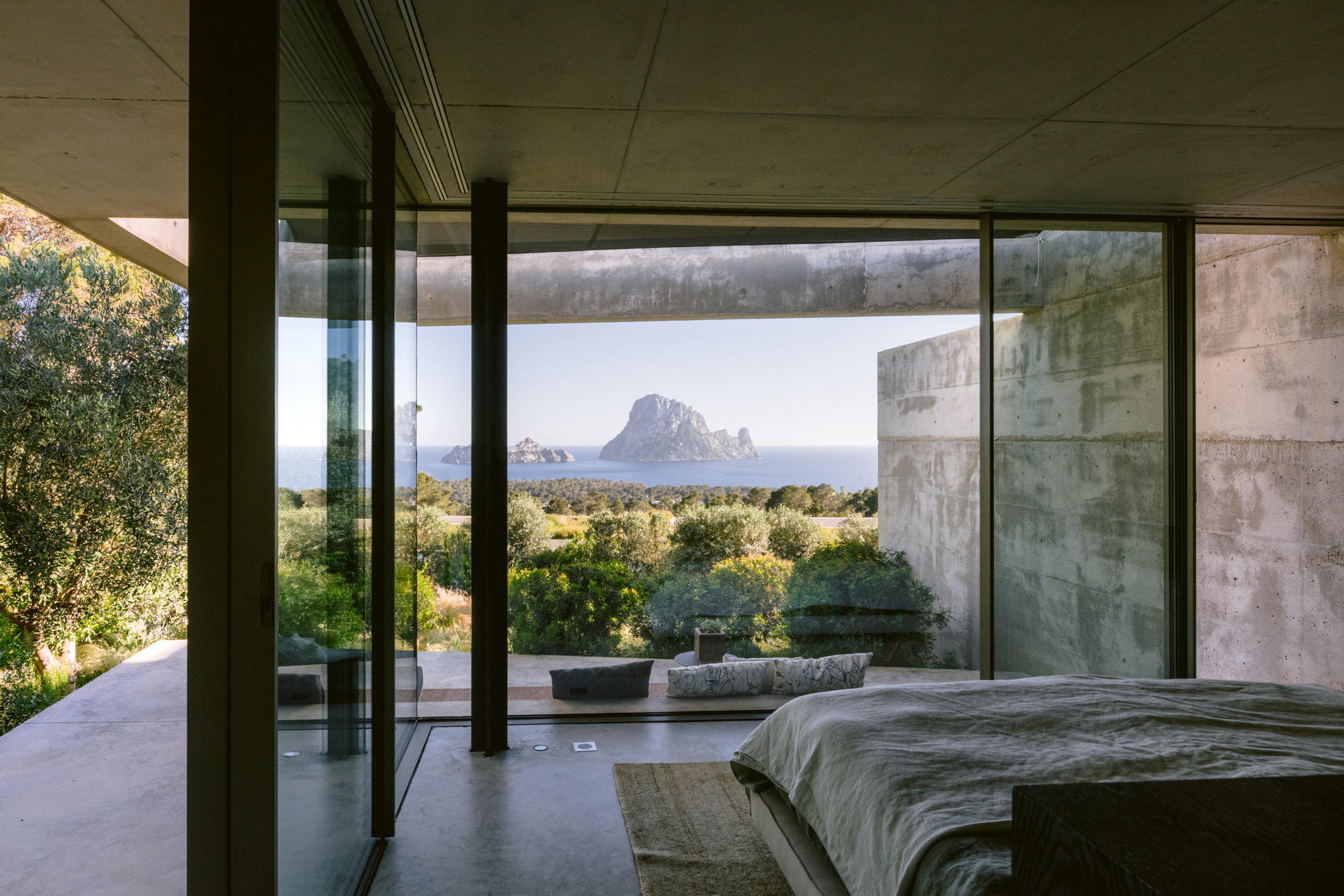
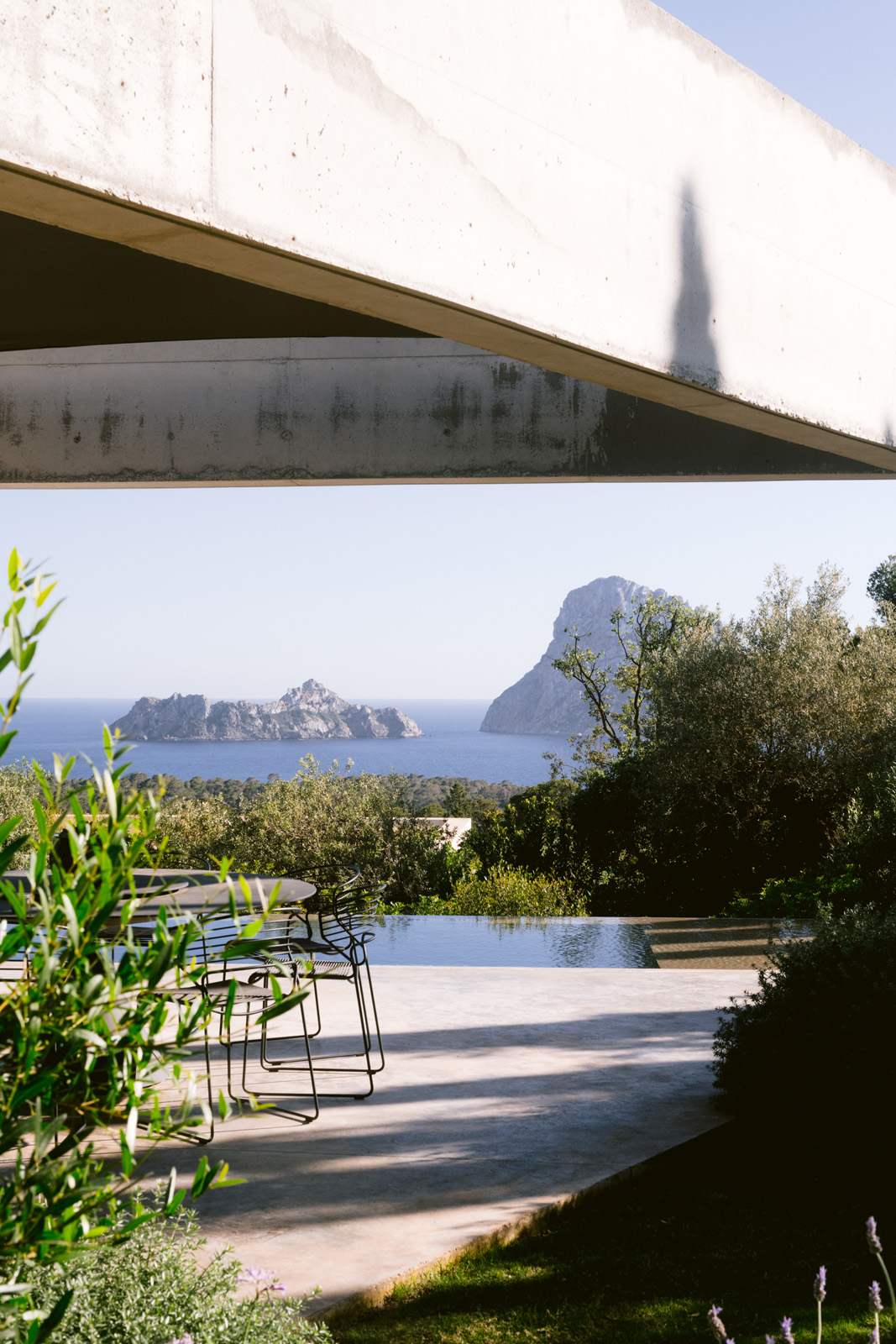
The landscaping creates an added connection with the outside, explains Katia. “Because everything is on one level, the garden is really close to the house, whether that’s in the bedrooms, the kitchen, the living space. It’s present everywhere.”
Designed by Estudio Laterna, Mediterranean planting wraps everything in a softer register with lavender, olive trees and local species, allowing a concrete structure that is far from traditional Ibicencan architecture to feel grounded in its setting.
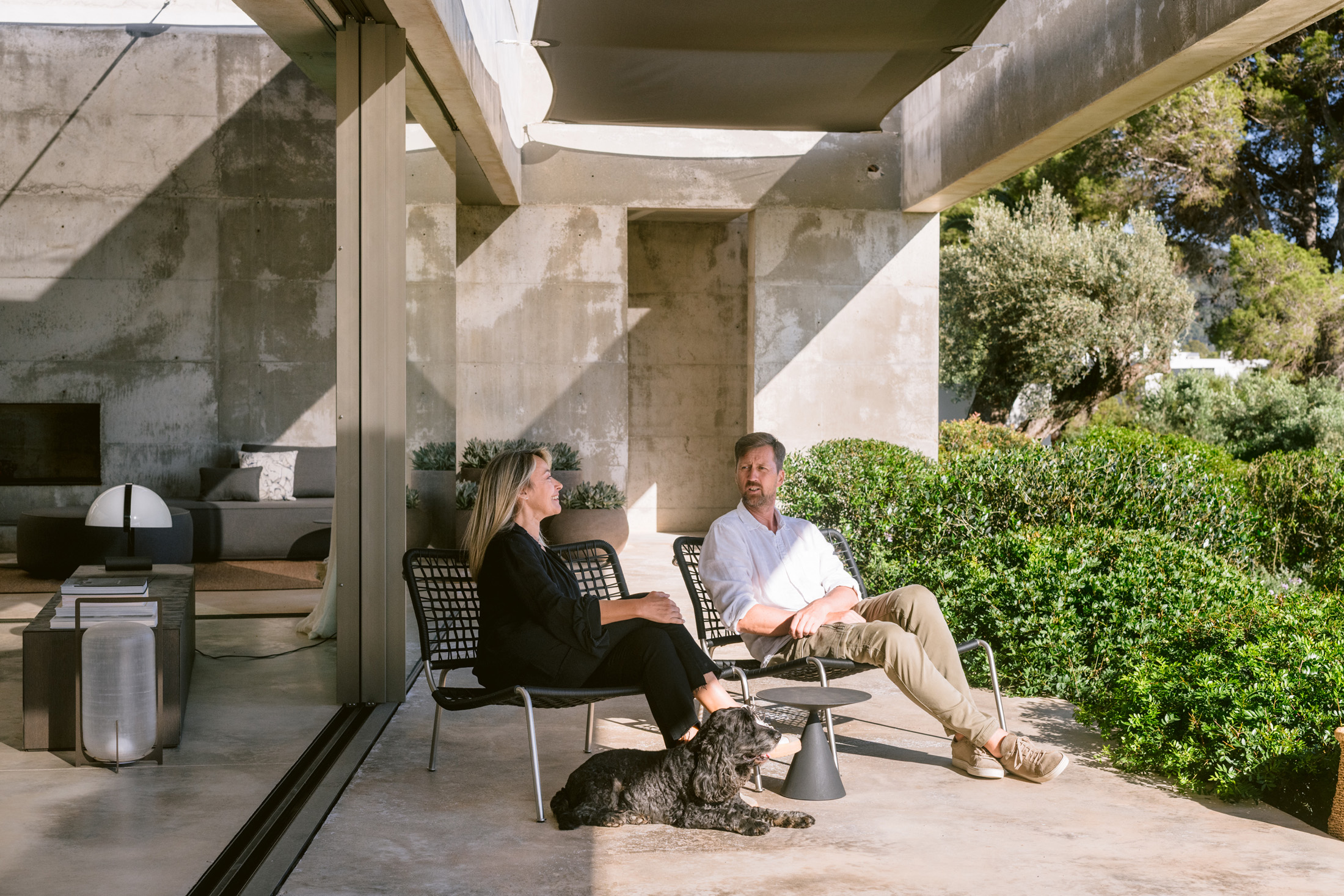
That integration extends to the way the house is lived. “Ibiza inspires a different type of design,” notes Katia, adding that the island’s light and outdoor way of life have shaped how they think about the circulation between inside and out. Breakfast areas, dining terraces, chill-out spaces, the roof terrace and pool all form part of daily rituals. “You live mostly outside here, so that connection had to be as natural as possible,” she says.
For all its architectural statement, this is a house for the everyday: a roof terrace for watching the light change, an infinity pool that follows the slope of the land, and a second kitchen that supports the behind-the-scenes logistics of entertaining. The communal spaces feel composed, but they’re designed to be used.
Throughout, what stays with you is not only the view, but the timing of the house; the way it holds back. In the end, the villa doesn’t compete with the landscape, it simply knows when to step aside.
Related articles
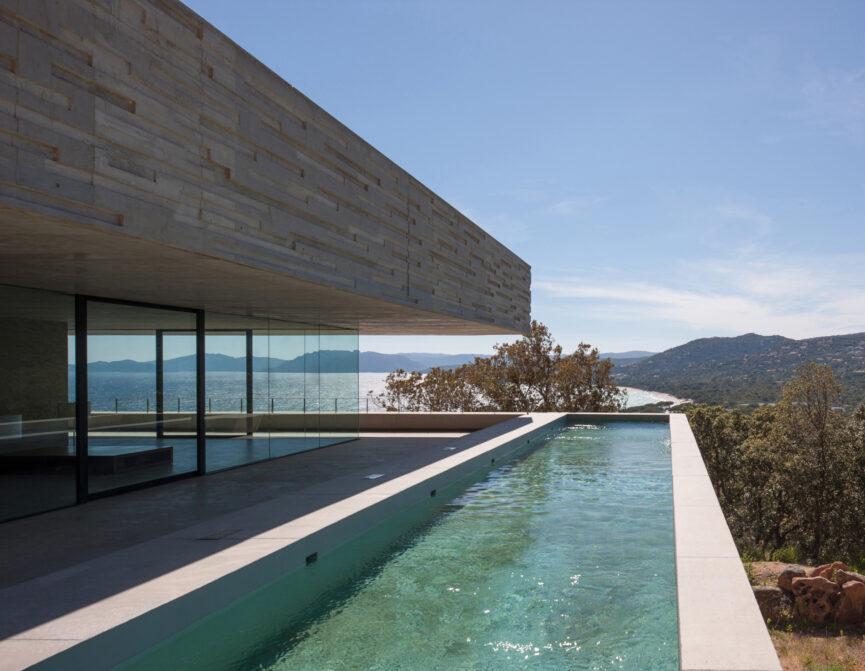
Bruno Erpicum: Making space for modernism
A master of shape, space and simplicity. Bruno Erpicum discusses the principles and challenges that motivate him.
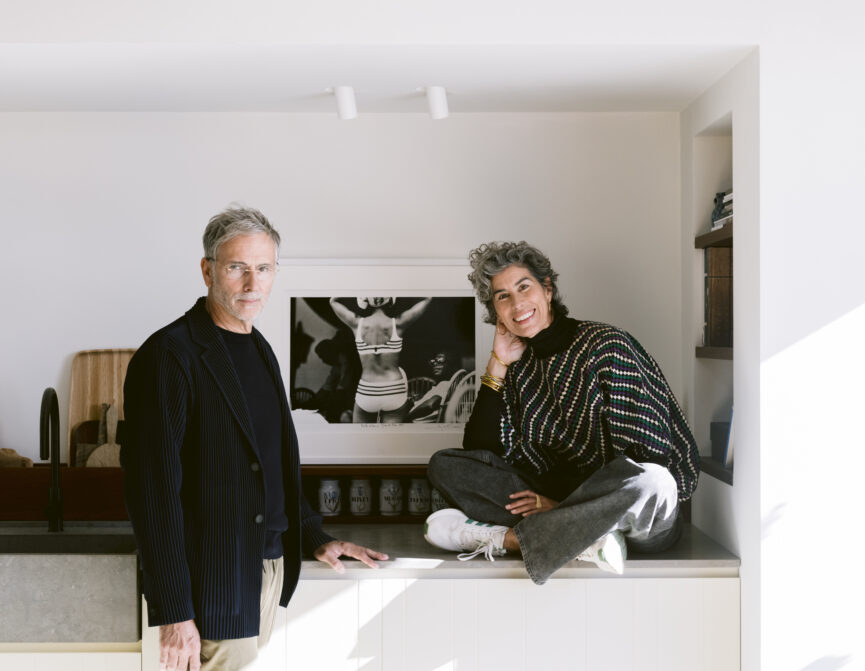
In the studio with Romano Arquitectos
Less is more says Jaime Romano of his architecture studio’s outside-the-box island creations.