

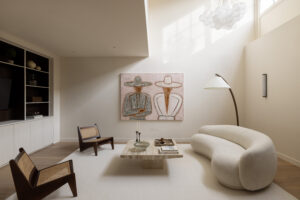
Architect Adam Arya on creating unexpected volume and space in this unassuming Notting Hill home.
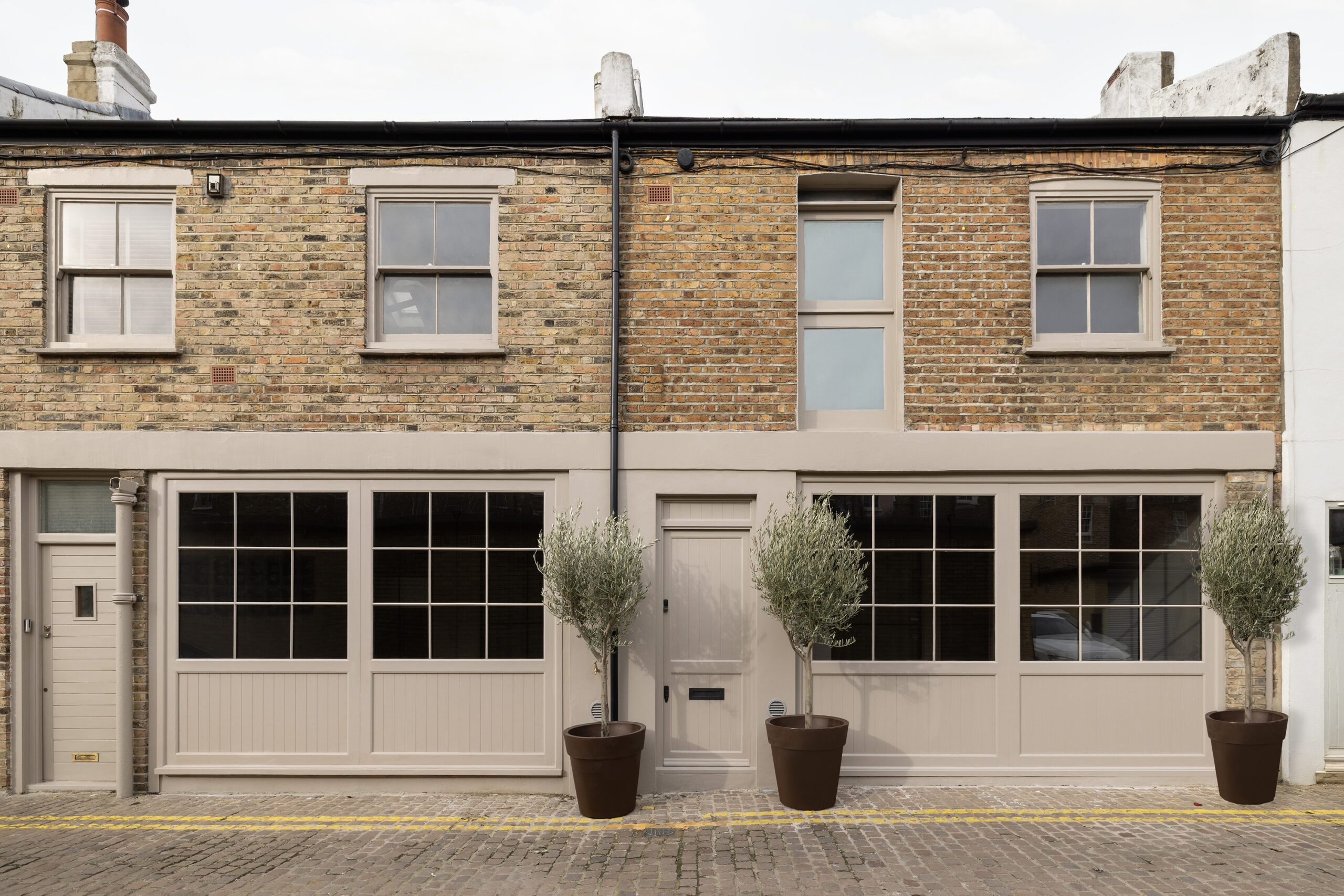
You can’t always judge a mews house by its cover.
From the street, Colville Mews appears modest – another quiet building in a row of former coach houses. Only on closer inspection does the subtle difference start to emerge: a rare double frontage hinting that something unusual lies behind the brickwork.
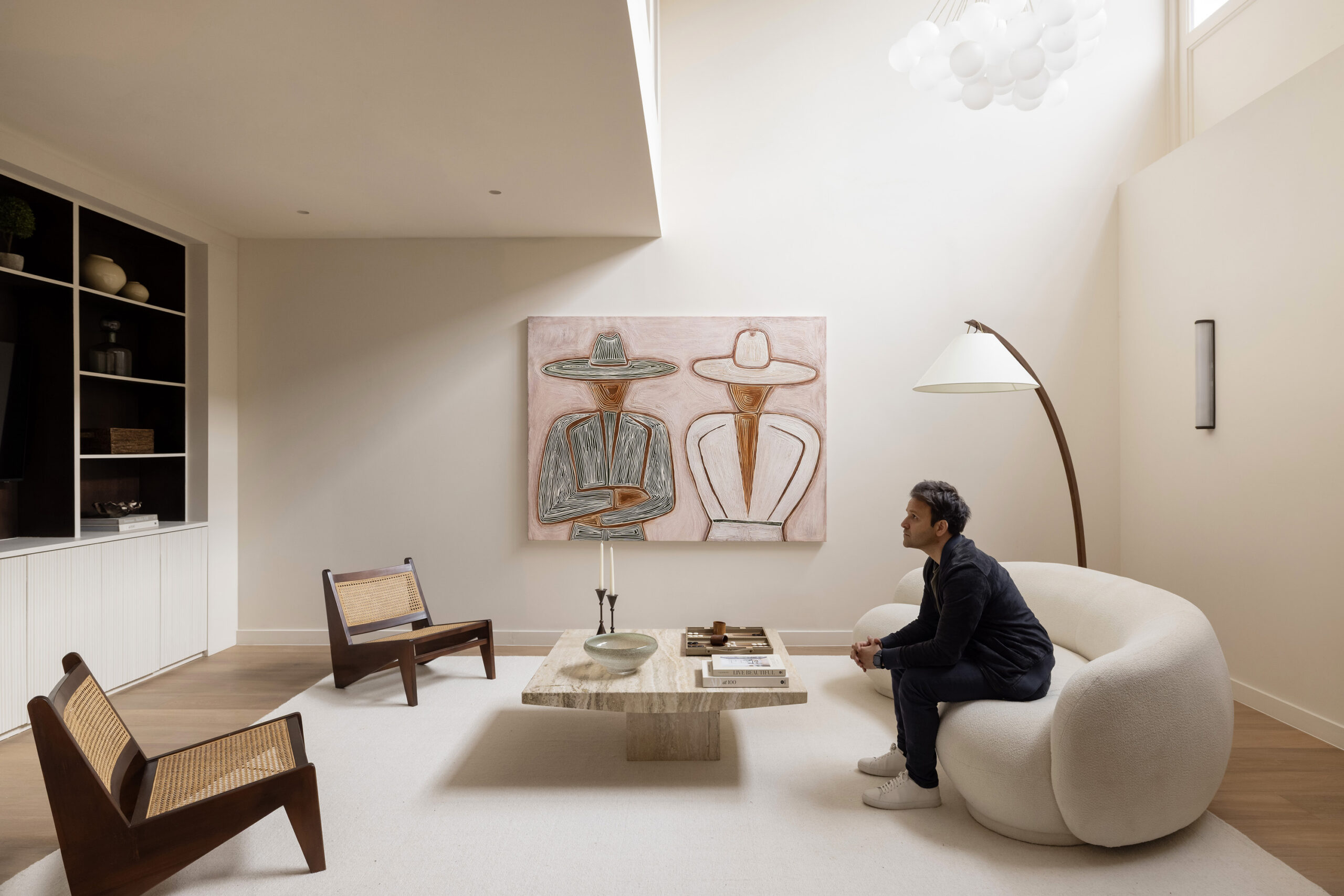
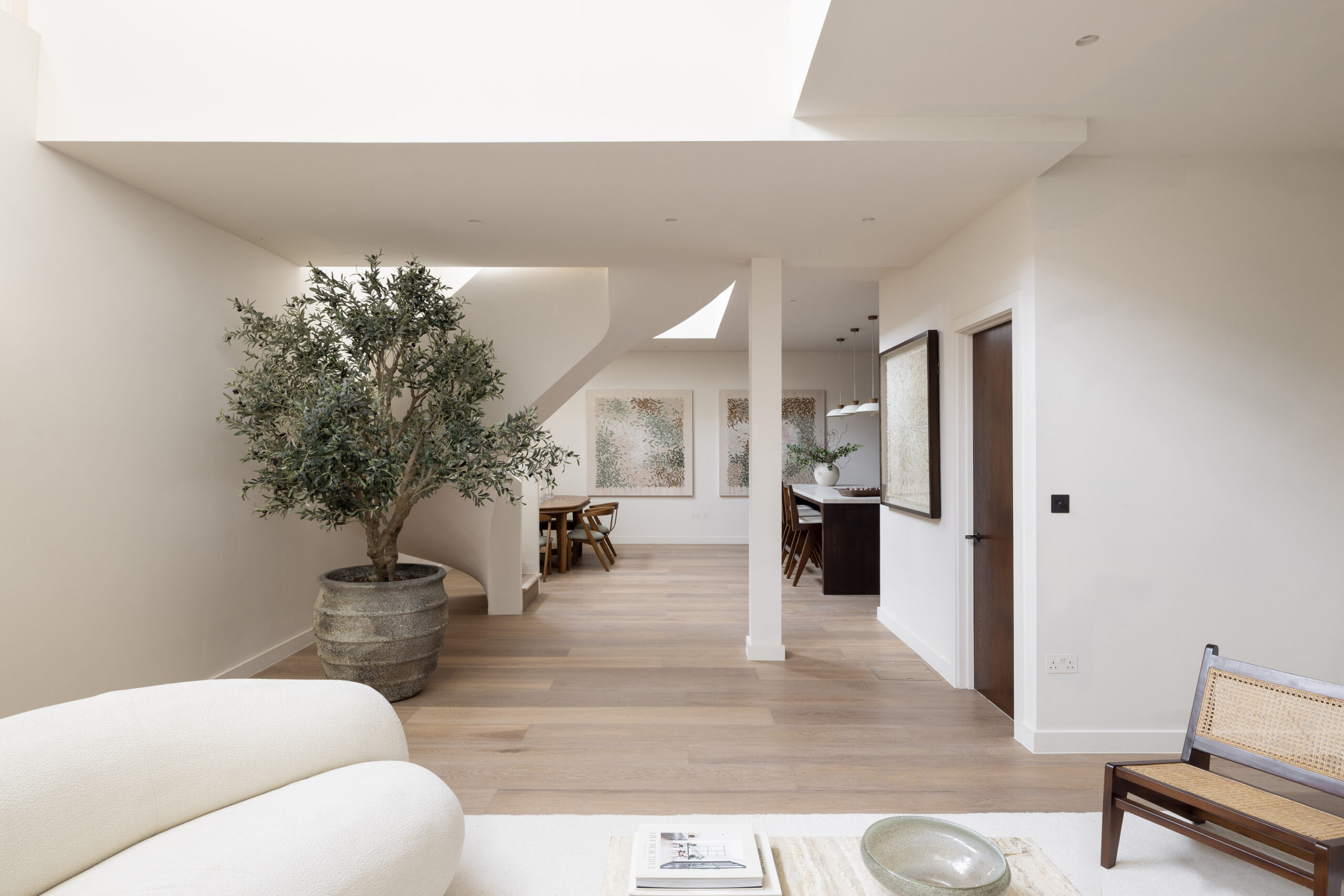
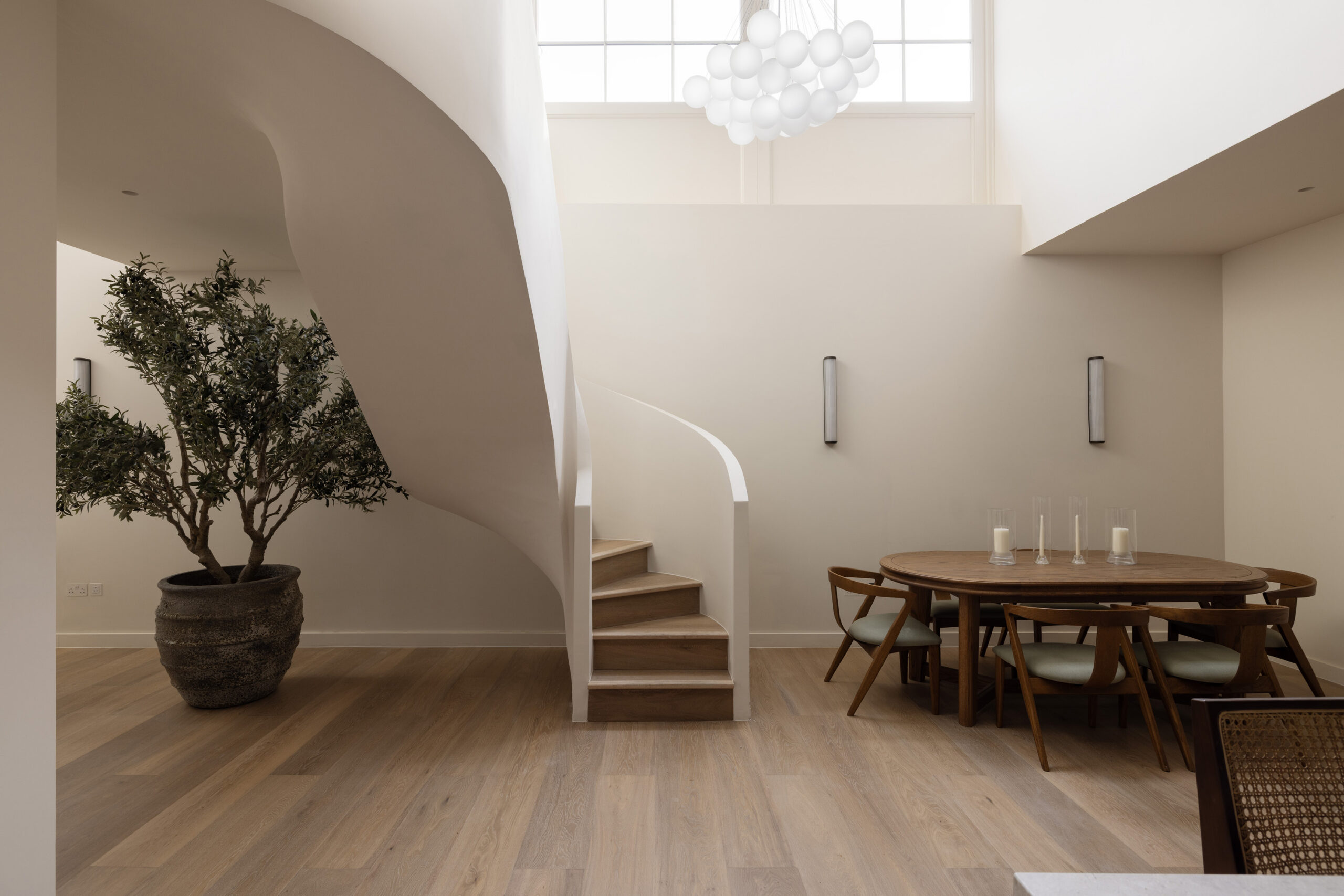
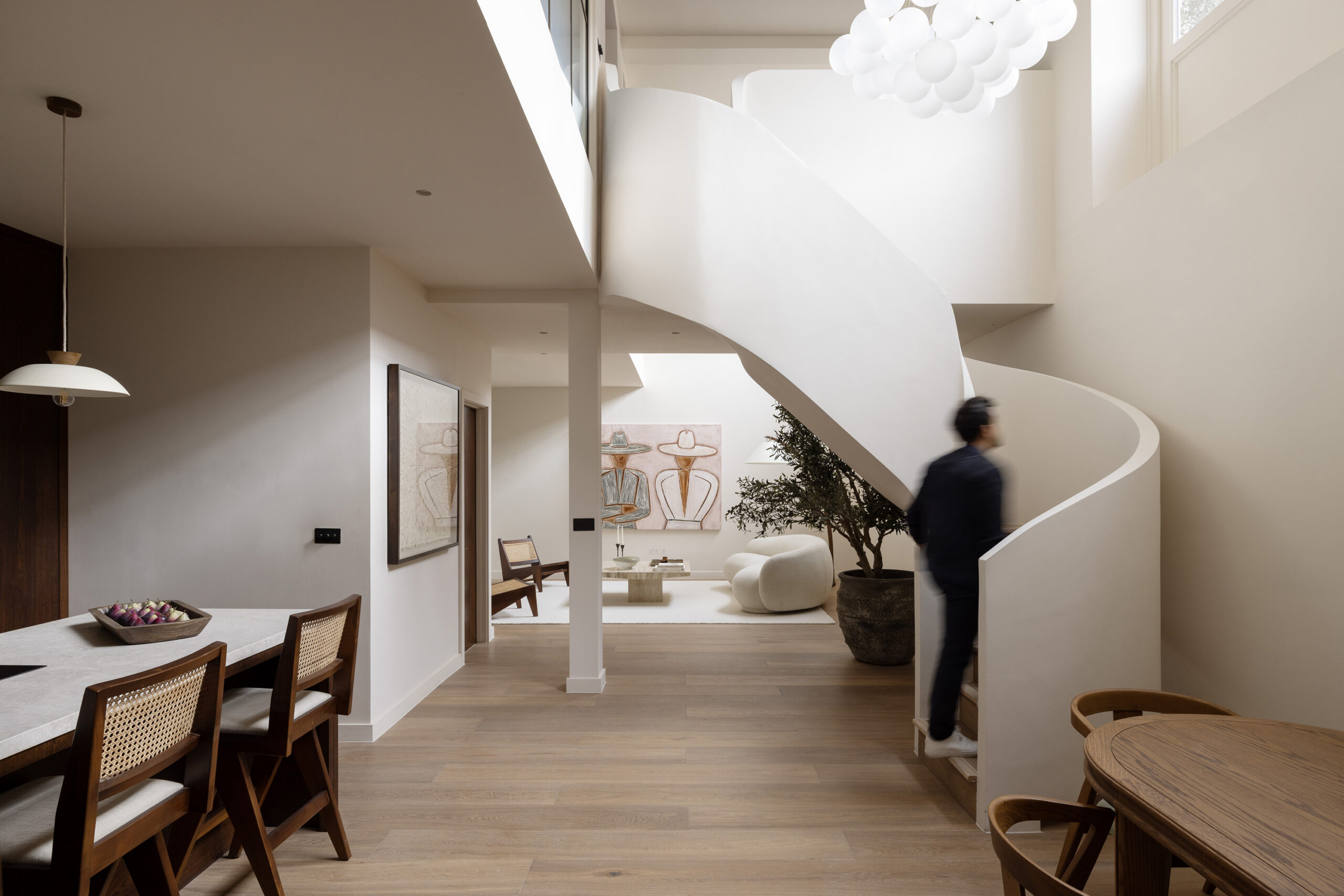
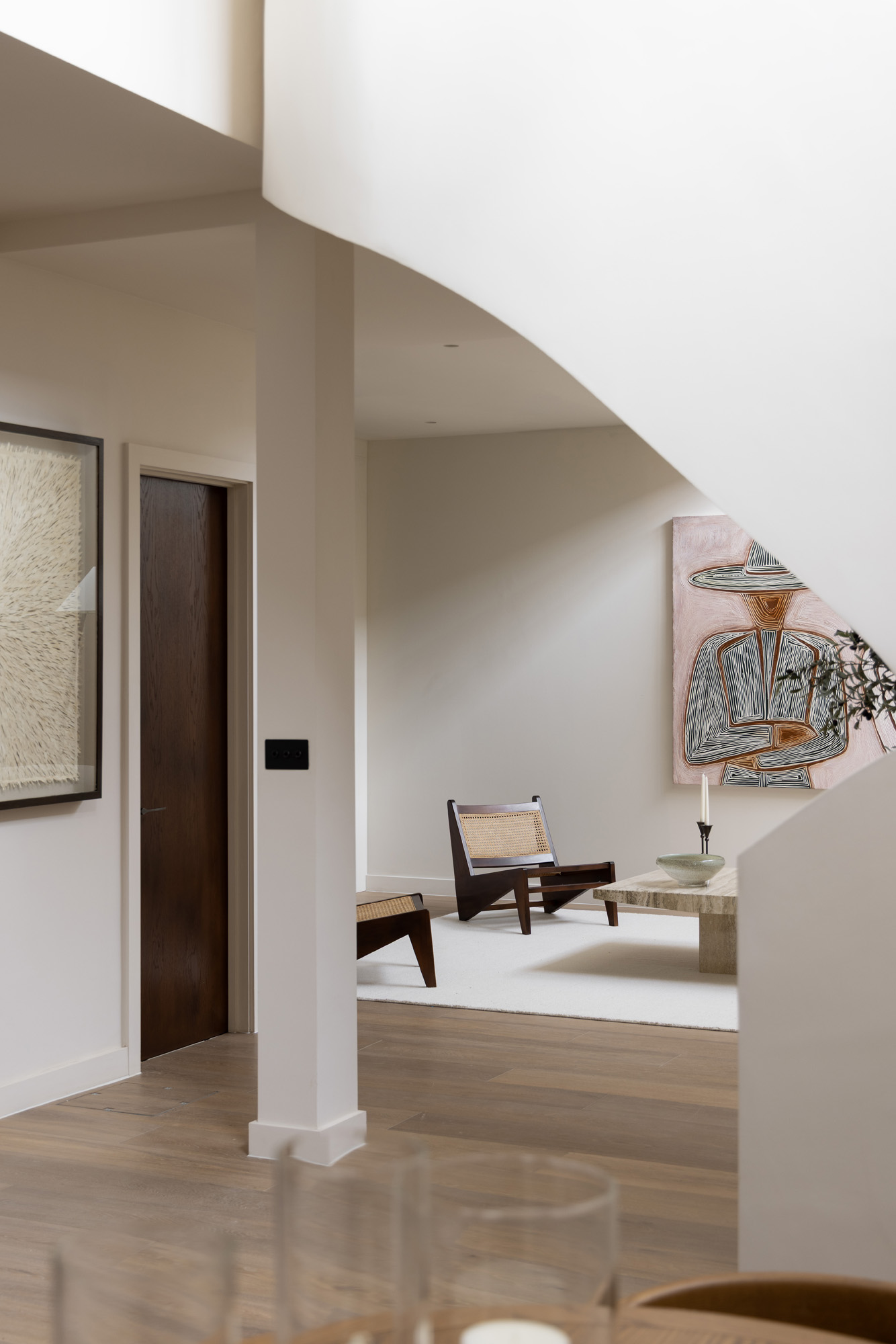
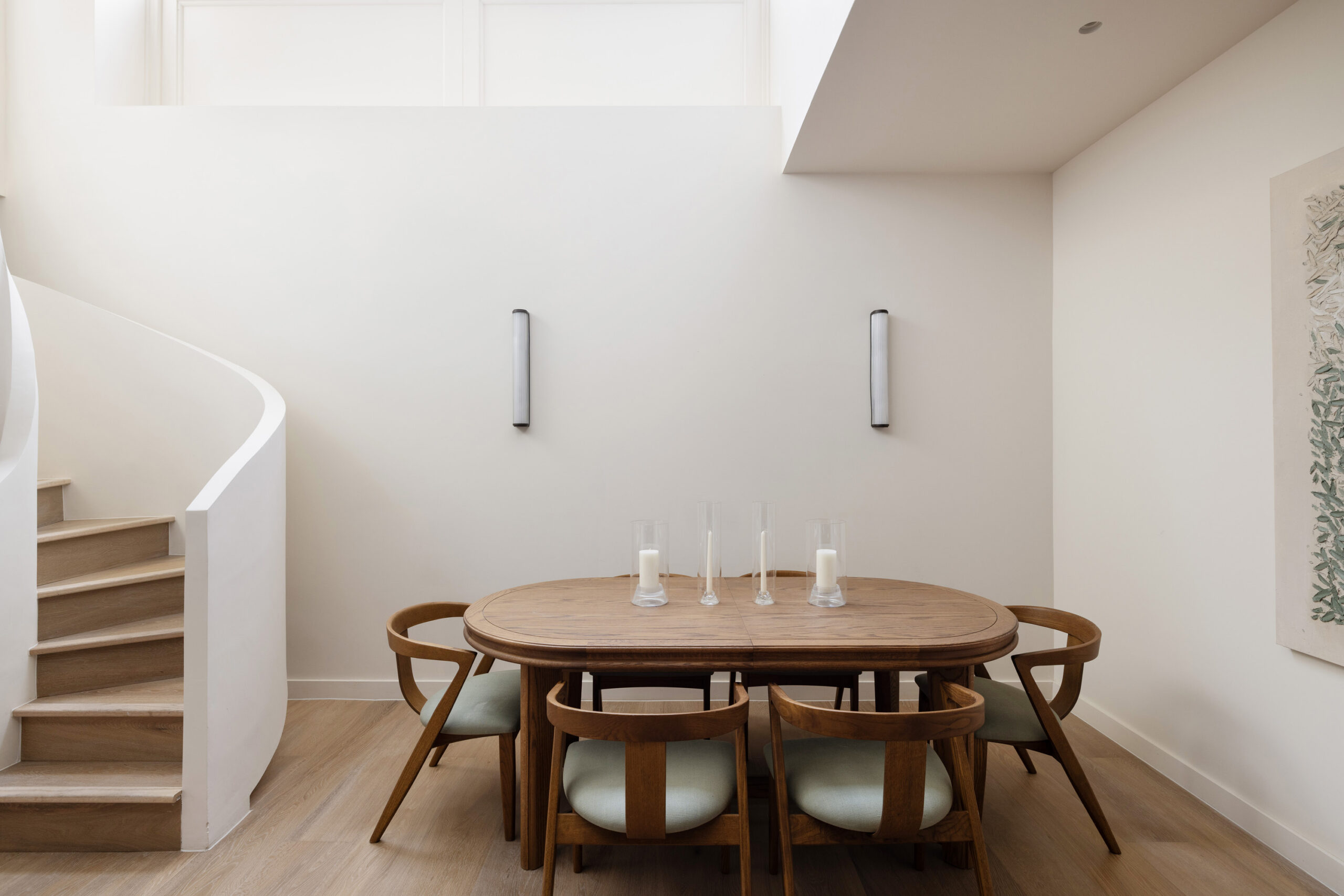
The real surprise lies inside. Transformed by architecture studio Arya Douge, the space defies its humble wrapper. Step through the front door and the house opens up at once. The entrance hall bridges a dramatic double-height void, suspended above the living space below. At its centre, a sweeping curved staircase becomes the showpiece, its sculptural form easing the geometry of the interior as it moves between floors.
“It’s a bold move,” says studio co-founder Adam Arya. “By placing the living space on the lower level, we were able to create a sense of volume that you don’t usually associate with the compact scale of a mews house.”


Colville Mews is defined by that volume. Floor-to-ceiling heights stretch to five and a half metres, while the lateral living area runs an impressive 12 metres across – an unexpected expanse within an architectural envelope typically known for its human proportions.
Behind the scenes, careful structural interventions have shaped the living experience. A basement extension expands the footprint, while space borrowed from the upper-floor bedrooms creates the central void that draws natural light deep into the home.
The result is a lesson in restraint, where impact comes as much from subtraction as addition: walls pared back, ceilings raised and bedrooms fitted with internal windows overlooking the space below. A soft, neutral palette that soothes rather than distracts, and allows the architecture to take centre stage.
Anchoring the living space, the staircase gently coils upwards – a focal point encased in whitewashed plaster that reinforces the home’s calm, sculptural character. “By definition, mews homes are quite square in form,” Adam notes. “That’s why we introduced something with a more organic shape, to blur the edges.”

“By definition, mews homes are quite square in form. That’s why we introduced something with a more organic shape, to blur the edges.”
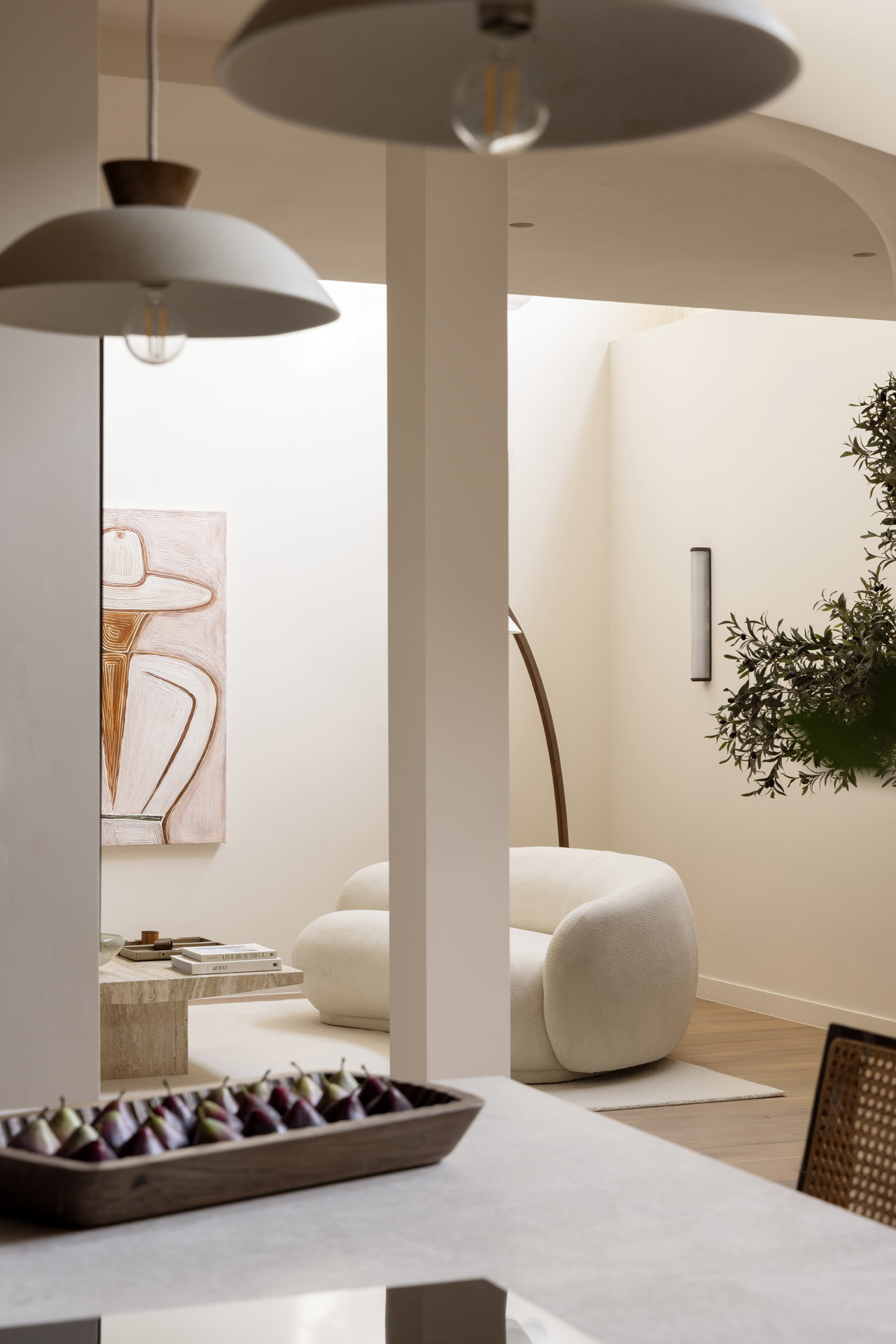
The lower level unfolds as a composed sequence of kitchen, dining and living areas that balance simplicity with considered materials. Light moves across the space throughout the day, shifting the mood from bright and energising to quietly atmospheric by evening.
Although it’s not obvious in the finished transformation, the biggest challenge – as with most mews homes – was daylight. Typically landlocked at the rear, the obvious solution would be to introduce rooflights. Here, however, an apartment above ruled that out.
“That’s why flipping the layout made sense,” Adam says. “We’ve sacrificed some bedroom space, but you gain much more in volume – particularly with those five-and-a-half-metre ceilings.”
If daylight shaped the design strategy, atmosphere completes it.
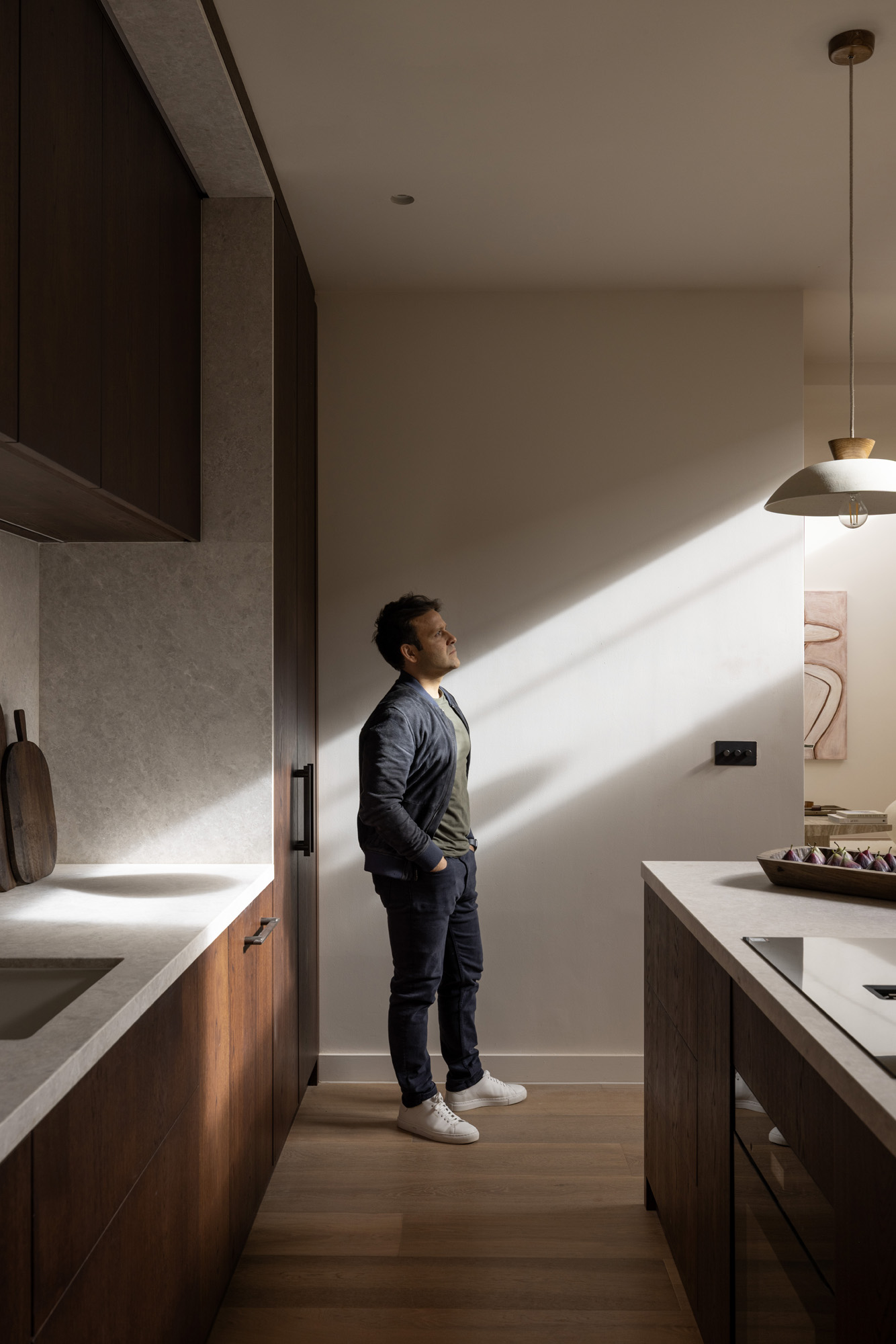

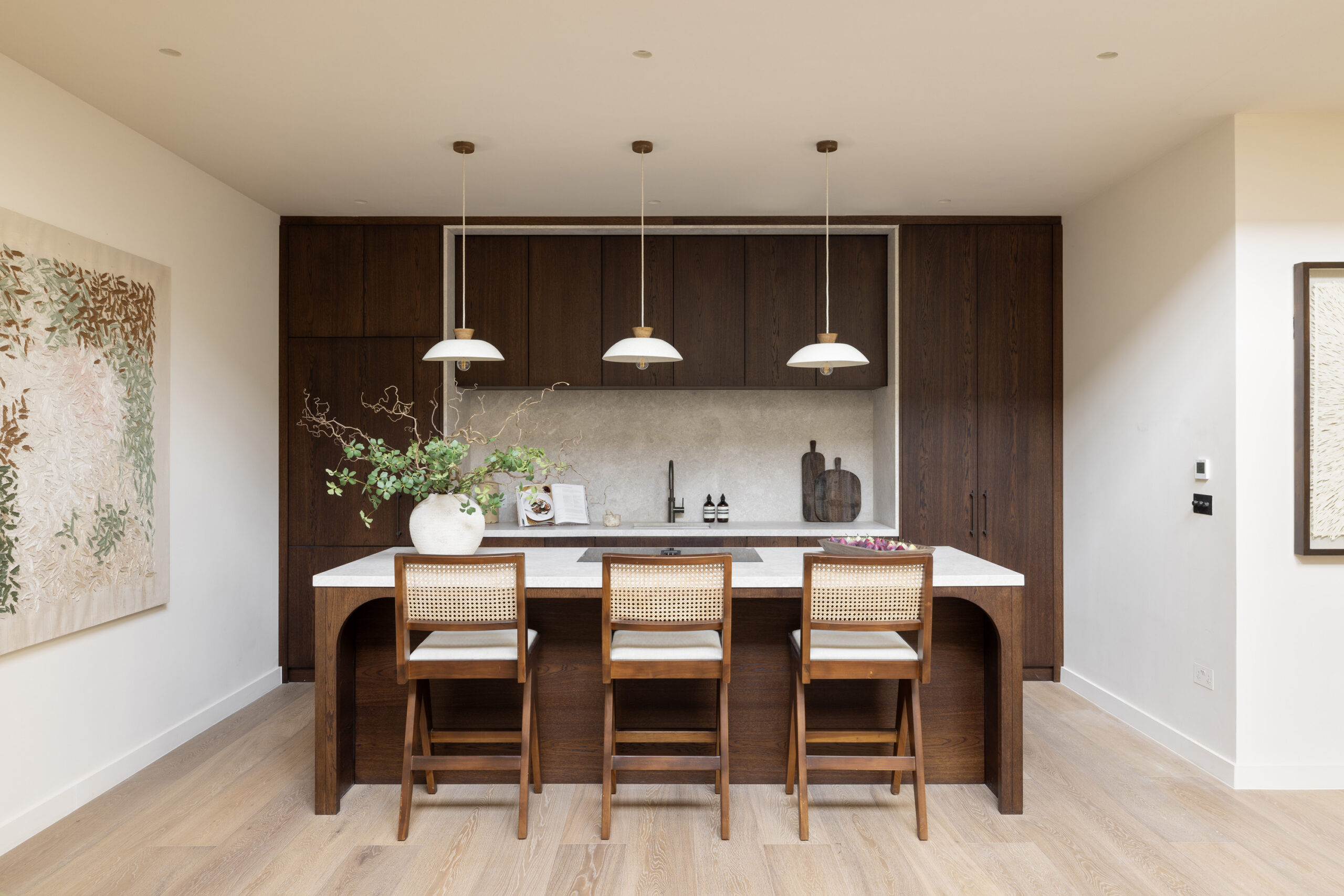
Materials have been carefully curated to bring warmth. The palette combines earthy Paint & Paper Library tones with darker joinery and antique bronze metalwork. Whitewashed walls sit alongside smoked oak flooring, while deeper tones introduce contrast and definition. “We wanted finishes that felt soft and comfortable – light and airy but with points of interest that add personality.”
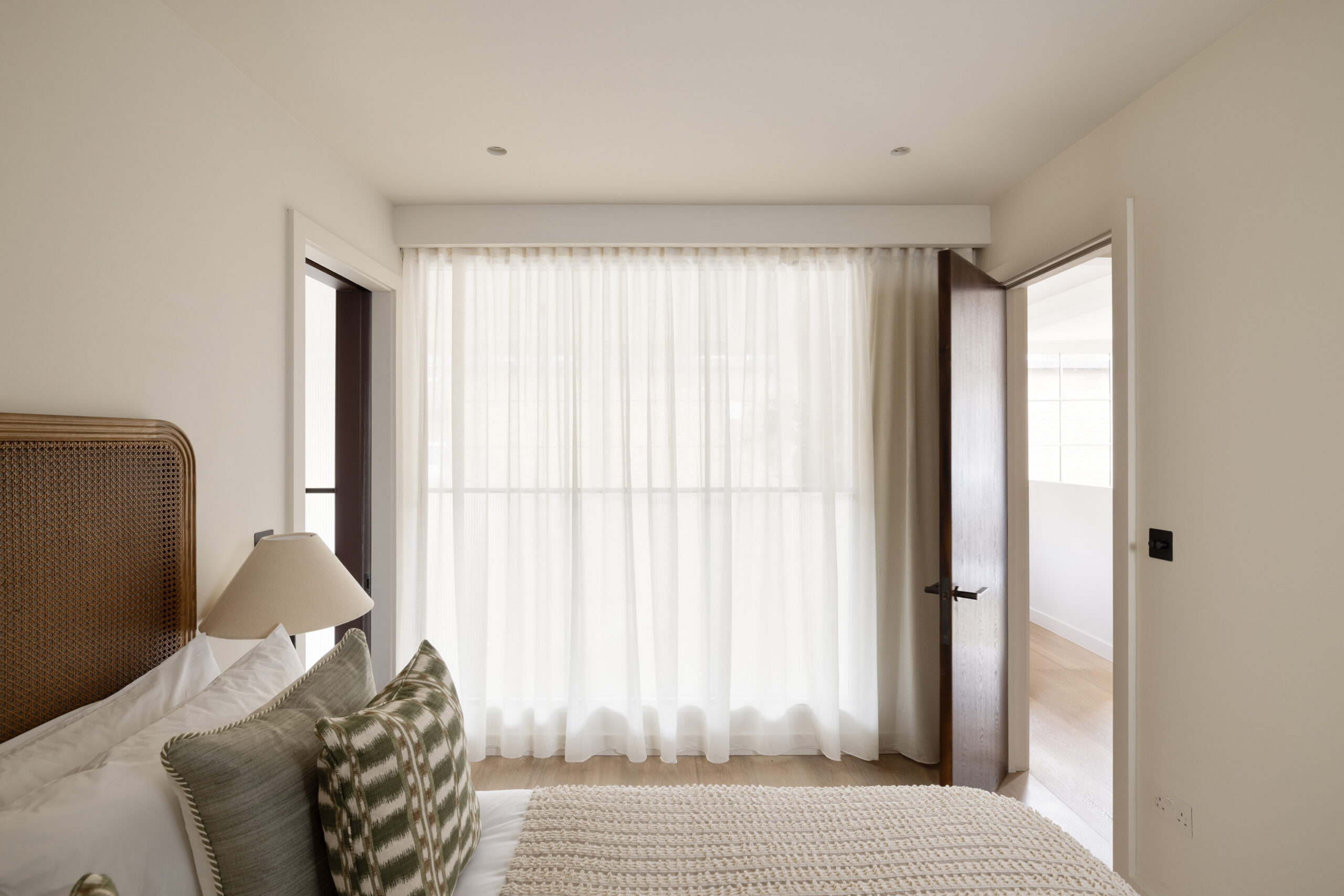
Upstairs, the bedrooms continue the theme, with rusty red accents set against bronze window frames. In the en suites, Bera and Beren fluted porcelain tiles introduce texture and tactility.
Everything feels in sync rather than for show – a home designed to support the rhythms of work, rest and play. Despite its dramatic height, the living space remains surprisingly intimate – tucked beneath the mews above yet expansive enough for entertaining. By day it fills with south-facing light; by night it takes on a more atmospheric character.


“It’s a brilliant dinner-party house,” Adam smiles. “As it gets dark it becomes somewhere cosy to hunker down, but still spacious enough to host.”
These everyday moments shape the finer details: a kitchen island designed as much for conversation as cooking; concealed pantry doors that hide the practicalities of daily life; large wall surfaces that call out for art
Just beyond the front door, Notting Hill’s restaurants and neighbourhood institutions are within easy reach. Evenings might unfold at Dorian or The Ledbury, while The Walmer Castle provides the perfect local just seconds away.
“It’s a brilliant dinner-party house. As it gets dark it becomes somewhere cosy to hunker down, but still spacious enough to host.”

Yet the true appeal of Colville Mews lies inside its walls – in a home conceived not as a showpiece or a stopgap, but as somewhere to settle.
That sense of ease is hard-won. Given their utilitarian origins, mews houses often come with constraints. But those limitations can also become opportunities for invention, admits Adam. “Those problems to solve inform the design – and that makes it more interesting than just starting with a blank canvas.”
From the outside, Colville Mews is a mews house like any other. Inside, it quietly rewrites the rulebook – a home shaped by light, volume and a willingness to rethink the expected. Proof that the most remarkable spaces are sometimes hidden in plain sight.
Colville Mews is for sale for £2,250,000
Related articles
“Is there anything more English than a mews?”
Architect Soledad Vaeza reflects on the grounding ability of architecture and the transformation of her quintessential mews home.
Dream weaver: The Frances Loom owner on layering her home in comfort
Interiors are an extension of us believes Heather Kane, whose self-renovated Leamington Road Villas duplex is as personal and peaceful as they come.