

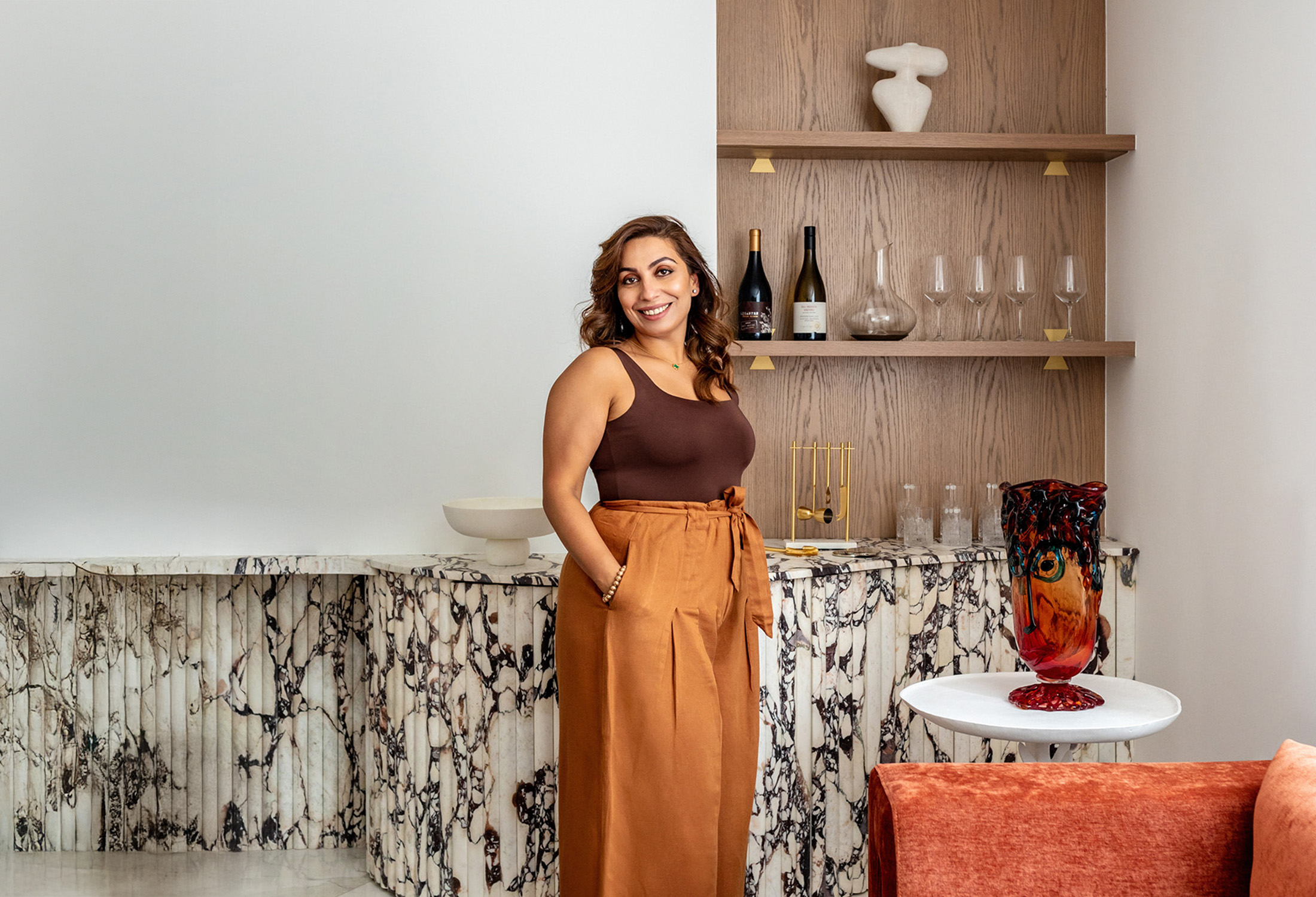

From bespoke craftsmanship to story-led architecture, Sameena Singh reveals the philosophies that shape her boutique studio.
In a world where words like timeless are often invoked but rarely defined, Sameena Singh has reclaimed the term with absolute sincerity. As founder and creative director of Little Venice-based studio Littlemore Design, she’s built a practice that resists imposing a signature aesthetic in favour of something rather more elusive: hyper-personalised spaces that emerge directly from clients’ own histories, memories and aspirations.
Sharpening her instinct for architectural storytelling at the Architectural Association in Bedford Square, it was here that Sameena first immersed herself in sustainable design, developing a keen sensitivity for context and narrative. Next, she moved into the world of large-scale practice, joining Aedas and later Wimberly Interiors and WATG, some of the industry’s most respected powerhouses.
The experience gave her technical mastery and an insider’s view of how global projects are delivered – while also affirming what she truly wanted from her career. “I didn’t want to leave a corporate practice to build something similar,” Sameena reflects. “That was never my dream.” And so, Littlemore Design was born, not with the ambition to scale endlessly, but with the intention to dig deeper. “We’re very selective about the projects we take on. Bigger isn’t the goal: stronger connections are.”
Each project at Littlemore begins with conversation, not a pre-defined process. “I don’t have a form or an onboarding procedure – we just have a chat. Somehow, people share their journeys. It’s never been planned; it just happens.”
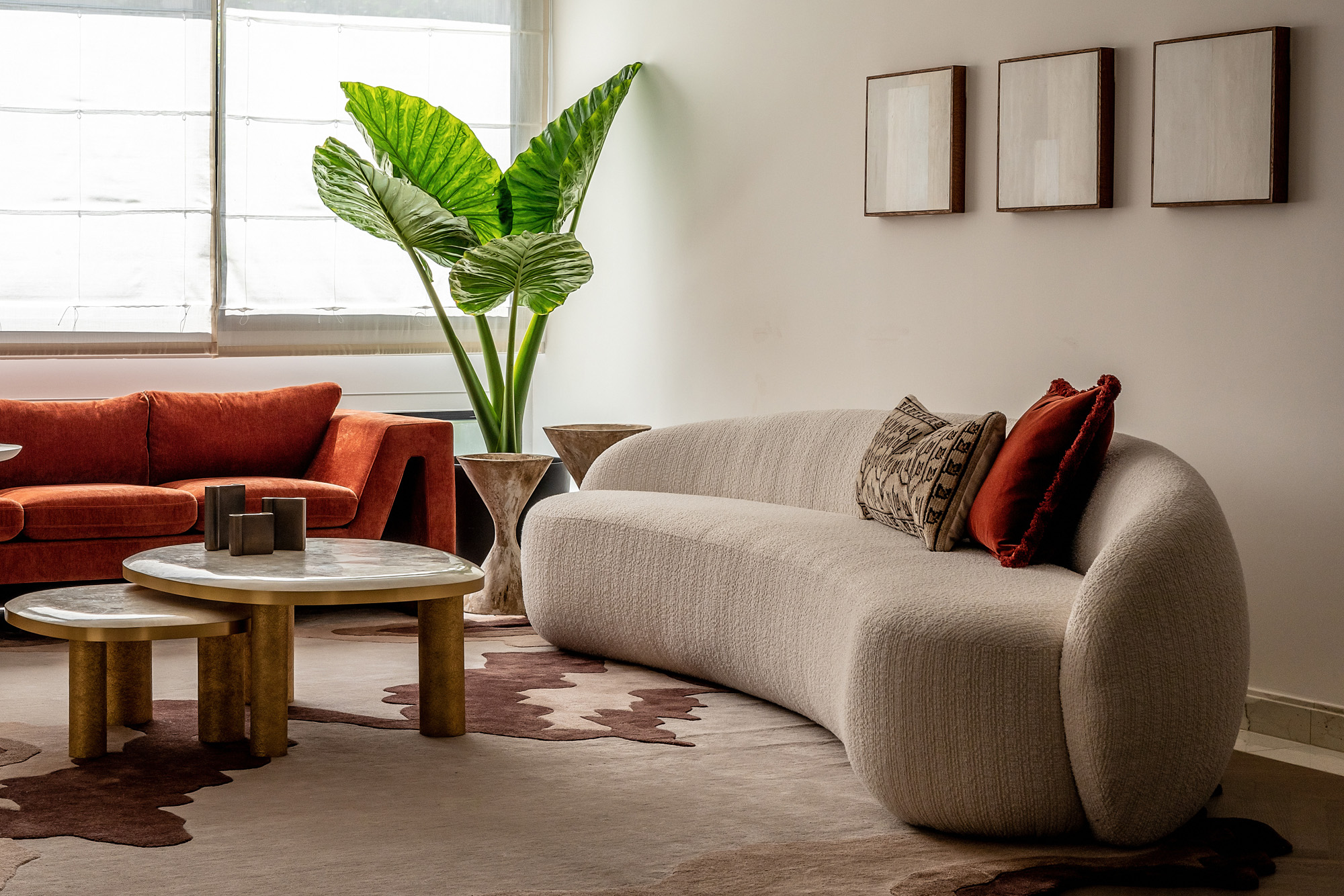
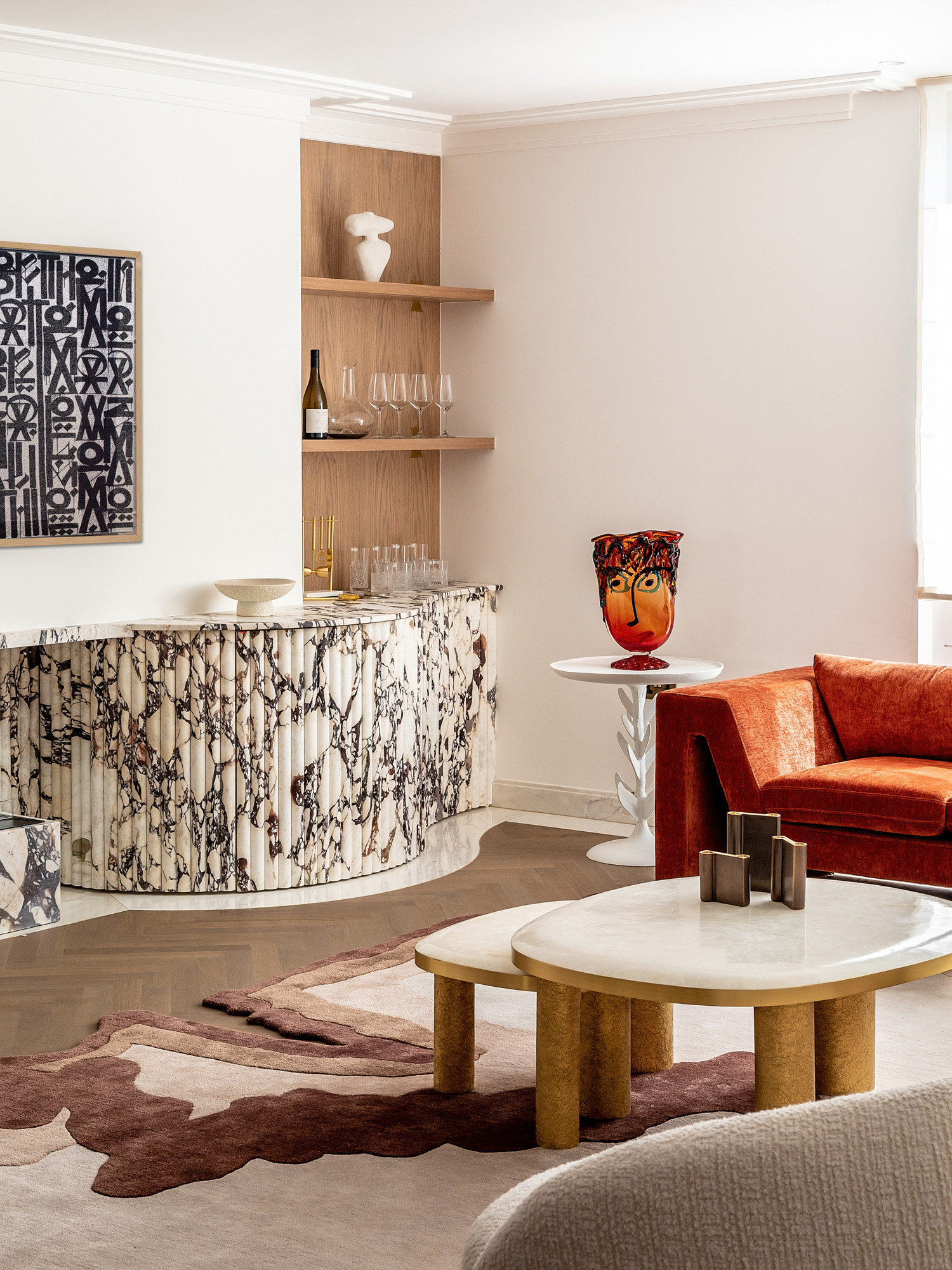
This openness shapes projects scattered across continents, which resist easy categorisation. “We have a DNA, but we don’t have an in-house style. You might not immediately recognise a Littlemore project. But if you follow us for long enough, there is an essence,” Sameena continues. “Clients, artisans and suppliers who know us well can see the stamp.”

“When you make a space minimalist in this way, you allow all the elements of your life – whether that’s your furniture, book collection or artwork – to reveal who you are”
That “stamp” is subtle but powerful, expressed through deeply personal layers. For a Rolls-Royce board member with a private jewel collection, Singh created interiors named after gemstones – translated not into superficial colour schemes, but through rare materials, commissioned artwork and bespoke craftsmanship from the client’s native region of India. “It had to connect at a much deeper level,” she explains.
Another project, for a Saudi couple in London, centred on a chandelier inscribed with contemporary Arabic calligraphy. “These are the kinds of details that resonate – details that you can’t put a price on.” Elsewhere, Sameena drew on local traditions to create artwork inspired by the desert Kriti tree –symbolic of resilience – for clients returning to India from London who were anxious about resettling. “The design became about perseverance and strength at exactly the moment they needed to hear it,” she recalls.
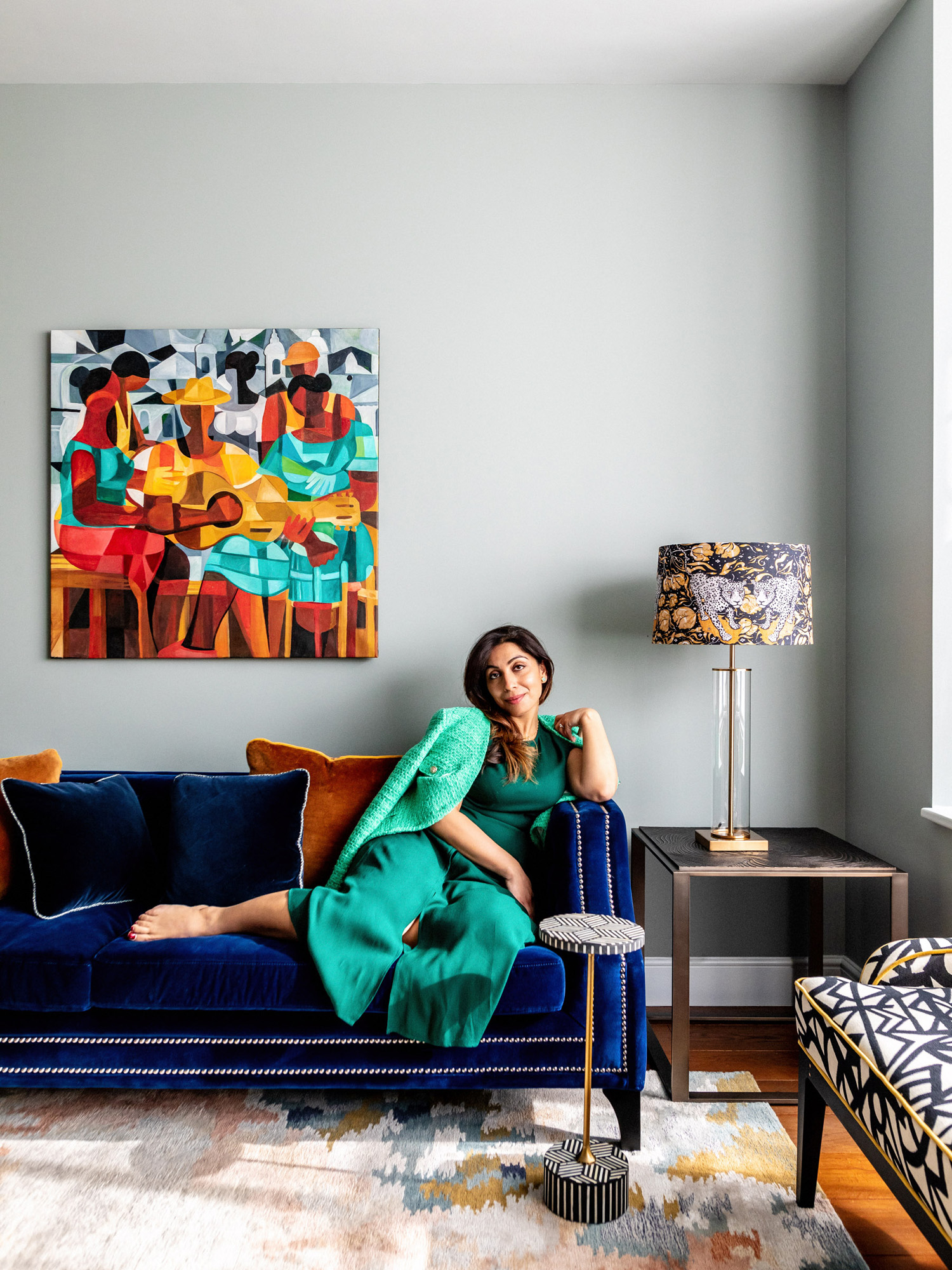

For Sameena, this is the true definition of longevity. “Timeless is not beige,” she says firmly. “It’s not about choosing neutrals because you think you won’t get bored. It’s when something is so personal you could never want to get rid of it.”
This belief also guides her vision for the studio’s future, aiming for carefully chosen collaborations that extend her skill for storytelling into new arenas. “I’d love to work with a fashion brand, a makeup brand, even a car brand. I have mood boards ready for the interiors of a 1960s Jaguar or Porsche,” she smiles. “It would be amazing to translate that design language into space.”
Her practice may take her from London to India to the Middle East, but Sameena’s compass is always orientated around the same points: intimacy, story and memory. She describes luxury not as polish or perfection, but as reflection. “It’s about a person’s journey – where they’ve come from, where they are and where they aspire to be.” In that sense, timelessness is deceptively simple, she notes. It’s design that feels like it could never have belonged to anyone else.
Take a look at Littlemore’s portfolio here
Related articles
A North Kensington duplex crafted for calm
Interior designer Zoë Walters has created an oasis of tranquillity at her grown-up yet playful family home.

Littlemore
Influenced by an array of cultures, this London-based studio brings diverse design to interiors across the globe.