

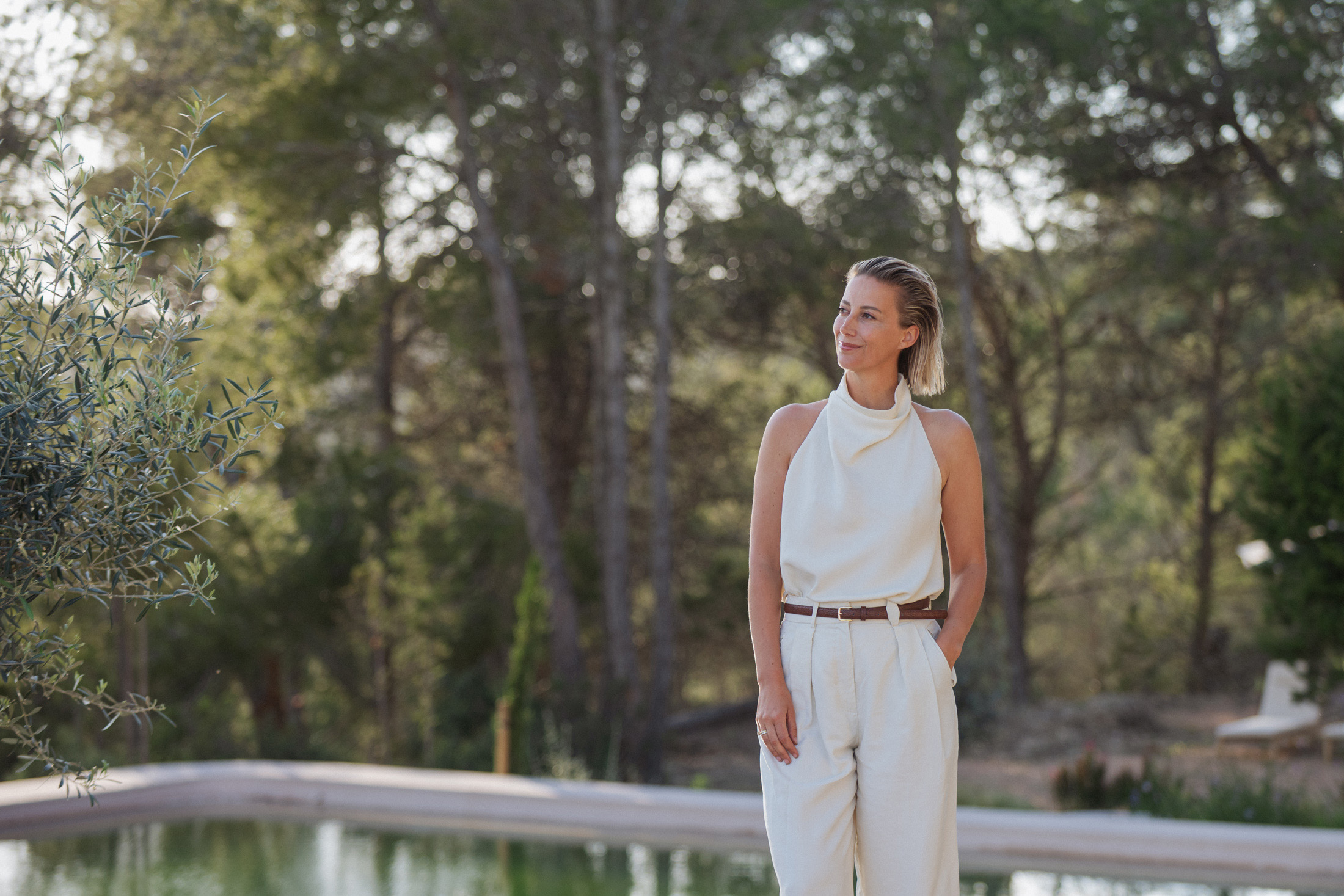
High in the Sant Mateu hills, Ren De Bruine’s farmhouse offers a quieter vision of Ibiza – one shaped by silence, solar power and an all-encompassing sense of calm.
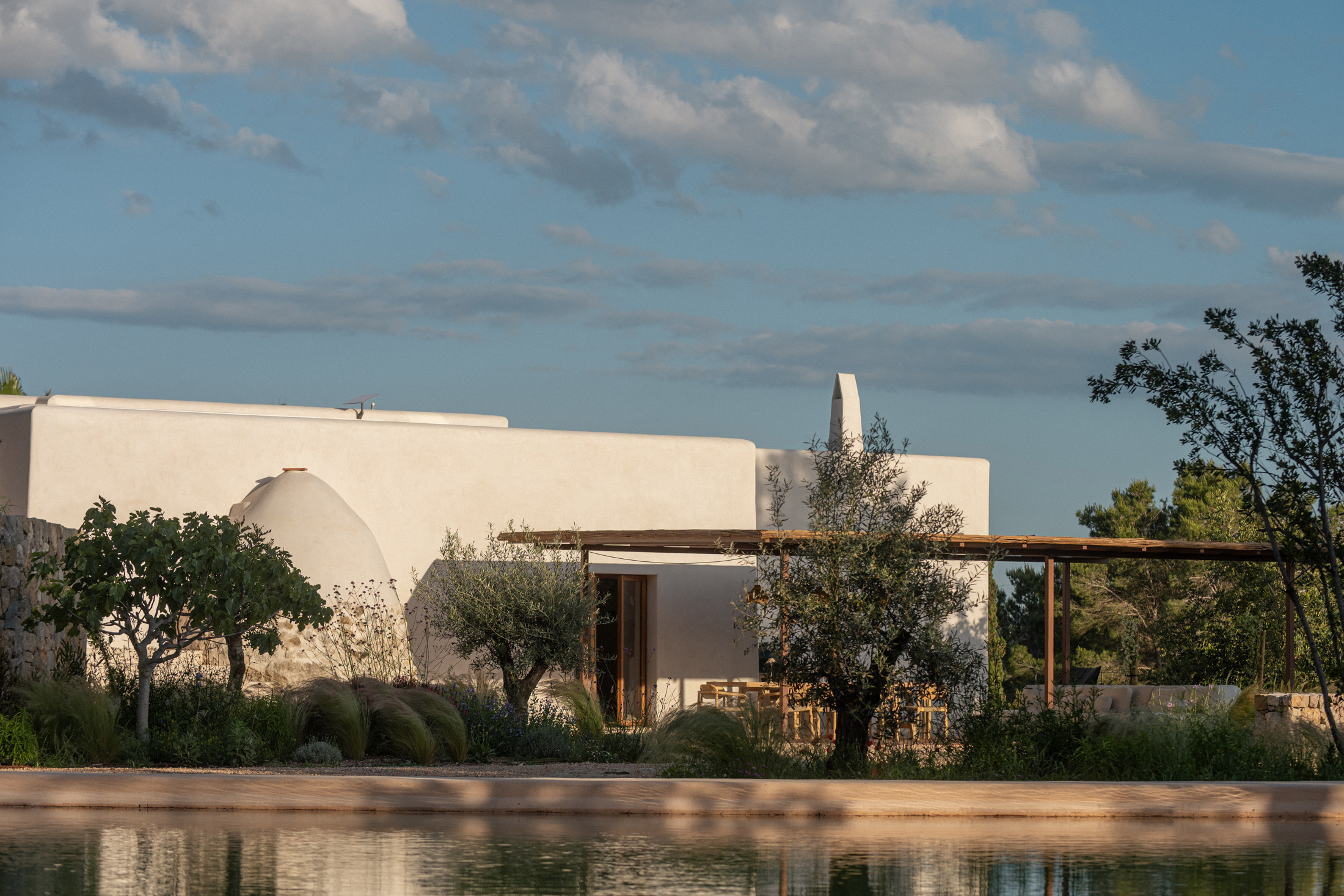
Ibiza has never been short of places to slow down. Few, however, seem to exhale quite as deeply as this 1700s finca in the island’s north. Set within the folds of 14 hectares of farmland and ancient olive groves, the house is perched at one of the island’s highest points. Below, the valley falls away in deep green brushstrokes and the usual soundtrack fades almost entirely.
For Ren and her husband Mark, that quiet was the beginning of a dream. In Amsterdam, where they live in the heart of Museum Square, life is always in motion. Ibiza offered the possibility of something else: land, privacy and a different relationship with time.
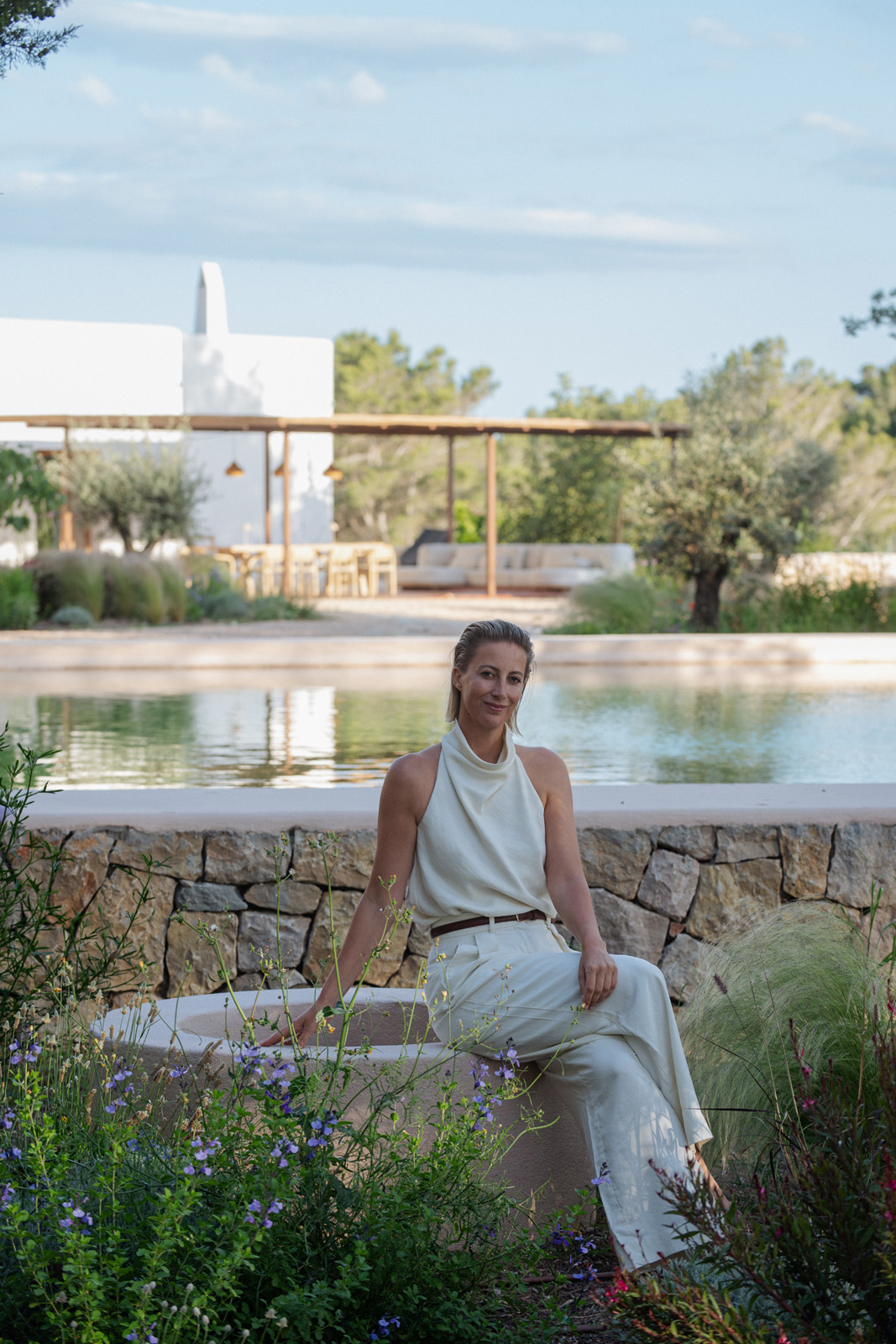
When they first came across the finca in October 2021, it required considerable imagination. The building had been squatted in for 16 years and altered in ways that did little justice to its history. Yet the setting was impossible to ignore: a protected farmhouse, surrounded by nature, with the potential to become not just a holiday house, but a place to escape.
“We were mad,” Ren says, laughing. “In the beginning we didn’t really know what we had bought. But my husband and I are both entrepreneurs – we like a challenge.”
Challenge might be putting it lightly. Before any real transformation could begin there were archaeological reports, structural investigations, rethinks and pivots. Floors came up. Ceilings came down. An illegal second floor, added by previous owners, had to be dealt with. Outside, pine trees had overtaken land that was once terraced for farming.
For a while, the house only seemed to move backwards. But Ren recognised something familiar in the uncertainty: the same zero-to-one energy that drives a start-up, where the vision gradually sharpens through each problem solved.
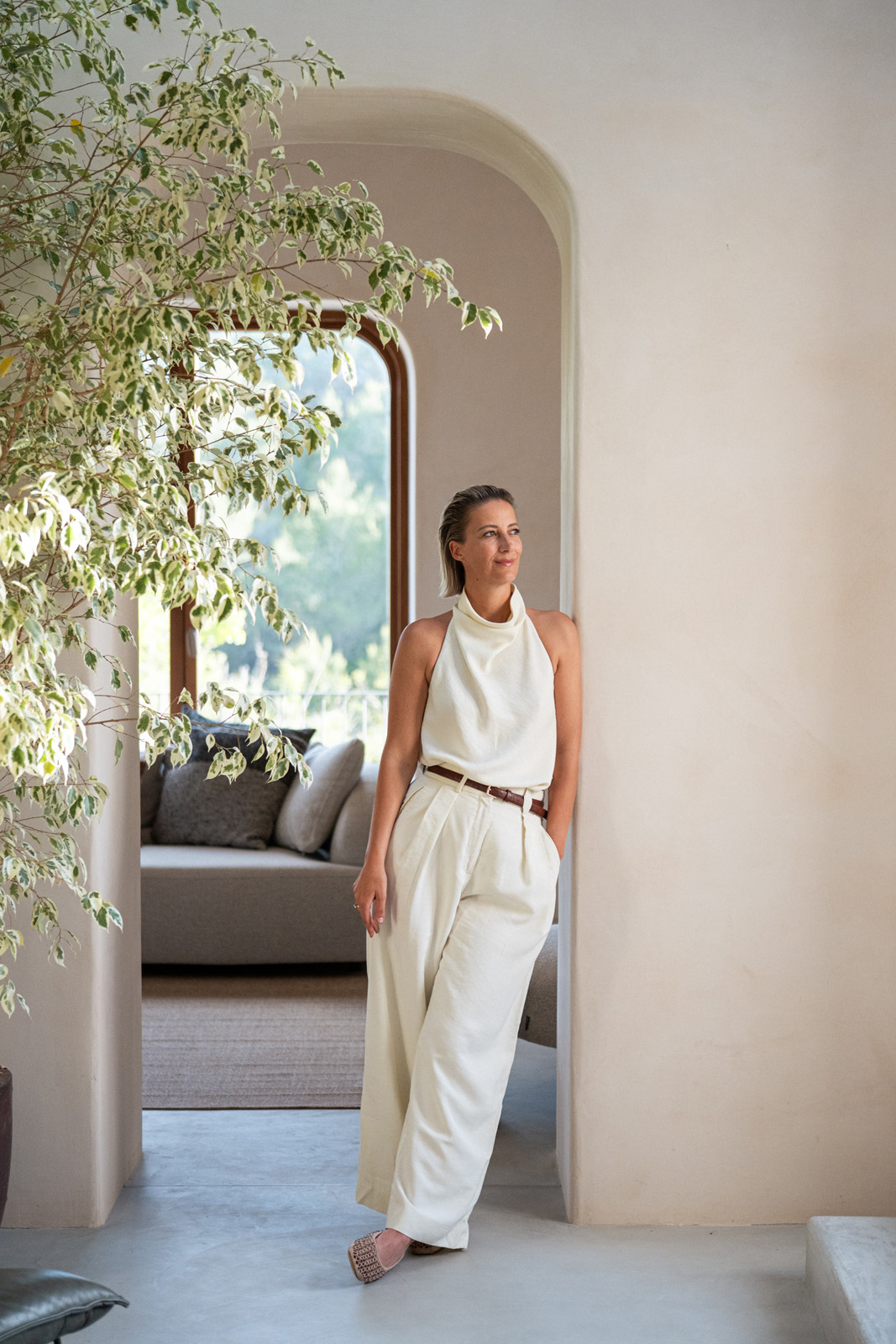
We wanted to create somewhere we never wanted to leave. That was the dream.
The task of bringing that vision into architectural form fell to Ibicenco architect Jordi Carreño. His role was not to impose a new identity, but to help reveal the one already there. The approach was careful and restrained: peel away the damage, restore the bones, then introduce contemporary updates with a light touch, balancing the practical demands of living with the irregular beauty of the house’s past.
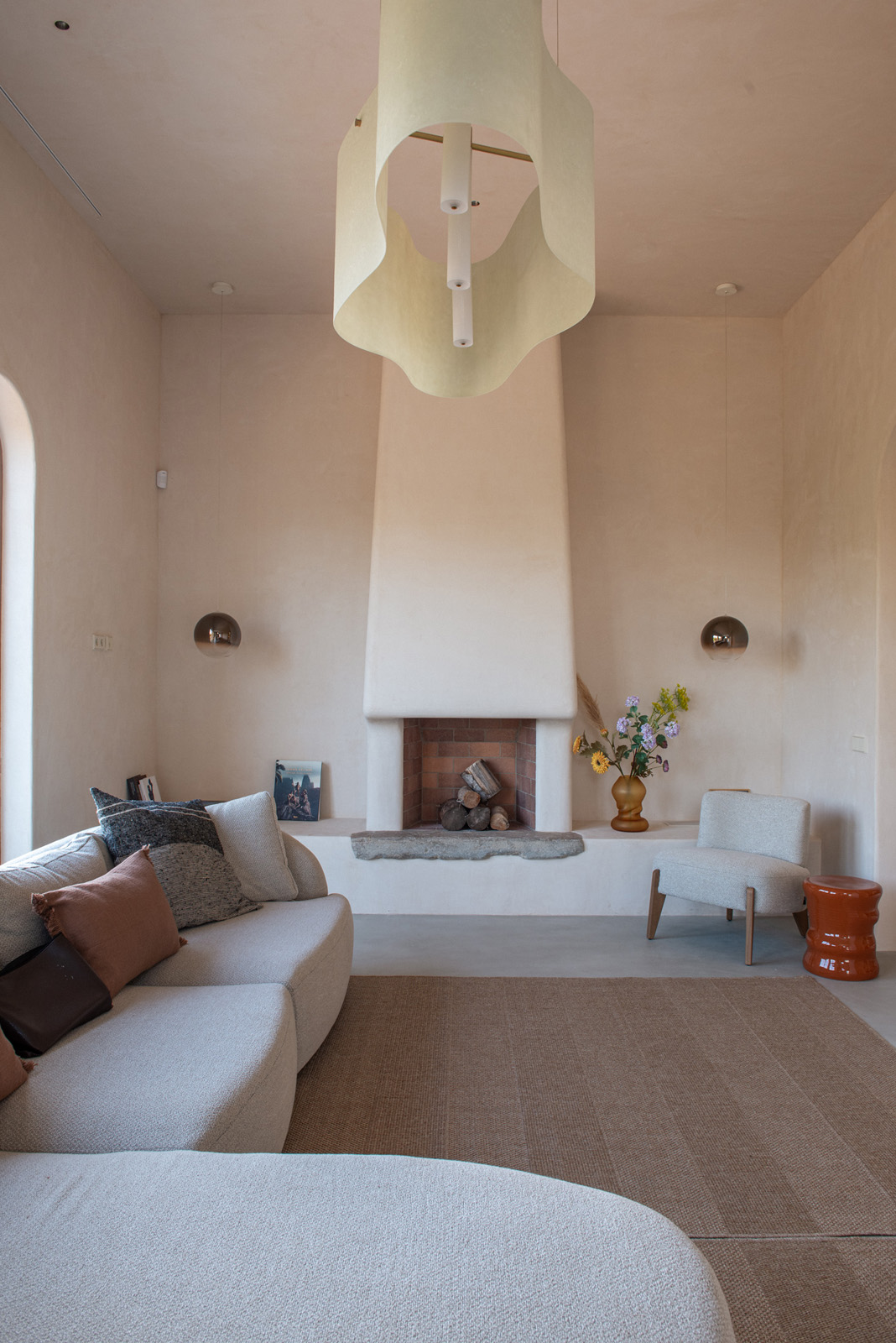
The result is a home that feels restored rather than remade. Thick limewashed walls remain uneven, their undulations left visible rather than corrected. Ren was clear from the outset that the finca’s imperfections should not be concealed. “The house itself is the art,” she says. “In the 1700s they didn’t build straight walls, and that’s what makes it so beautiful.”
Those curves and inconsistencies have shaped new interventions too: arched openings, softened window frames and curved details subtly echo the finca’s original language. Old and new meet quietly: natural stone against clean-lined cabinetry, limewash alongside travertine, rugged texture balanced with calm precision.
Inside, the finca’s former life is still legible. In the kitchen, an old oven sits within the original stone wall, now lit from below so that it becomes almost sculptural. In one guest bedroom, once a stable, the original trough remains illuminated in the corner.
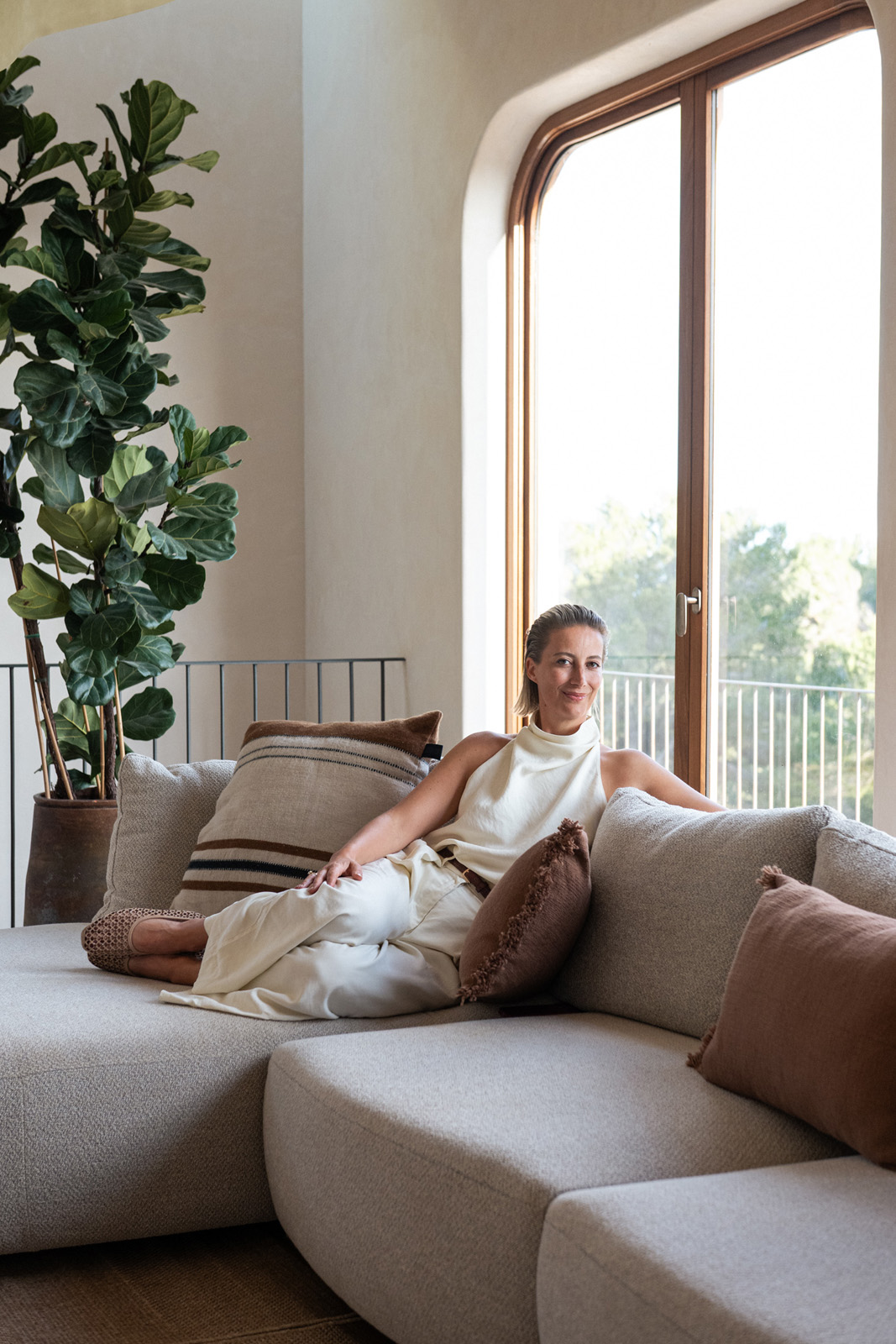
The layout, too, has retained its higgledy-piggledy charm. Across the main house and casita, five bedrooms, four bathrooms and a trio of living spaces unfold beneath soaring ceilings that honour the simplicity of the original structure, with modern additions – underfloor heating, air conditioning – absorbed almost invisibly. Comfort has been added, but the house’s character has not been smoothed away.
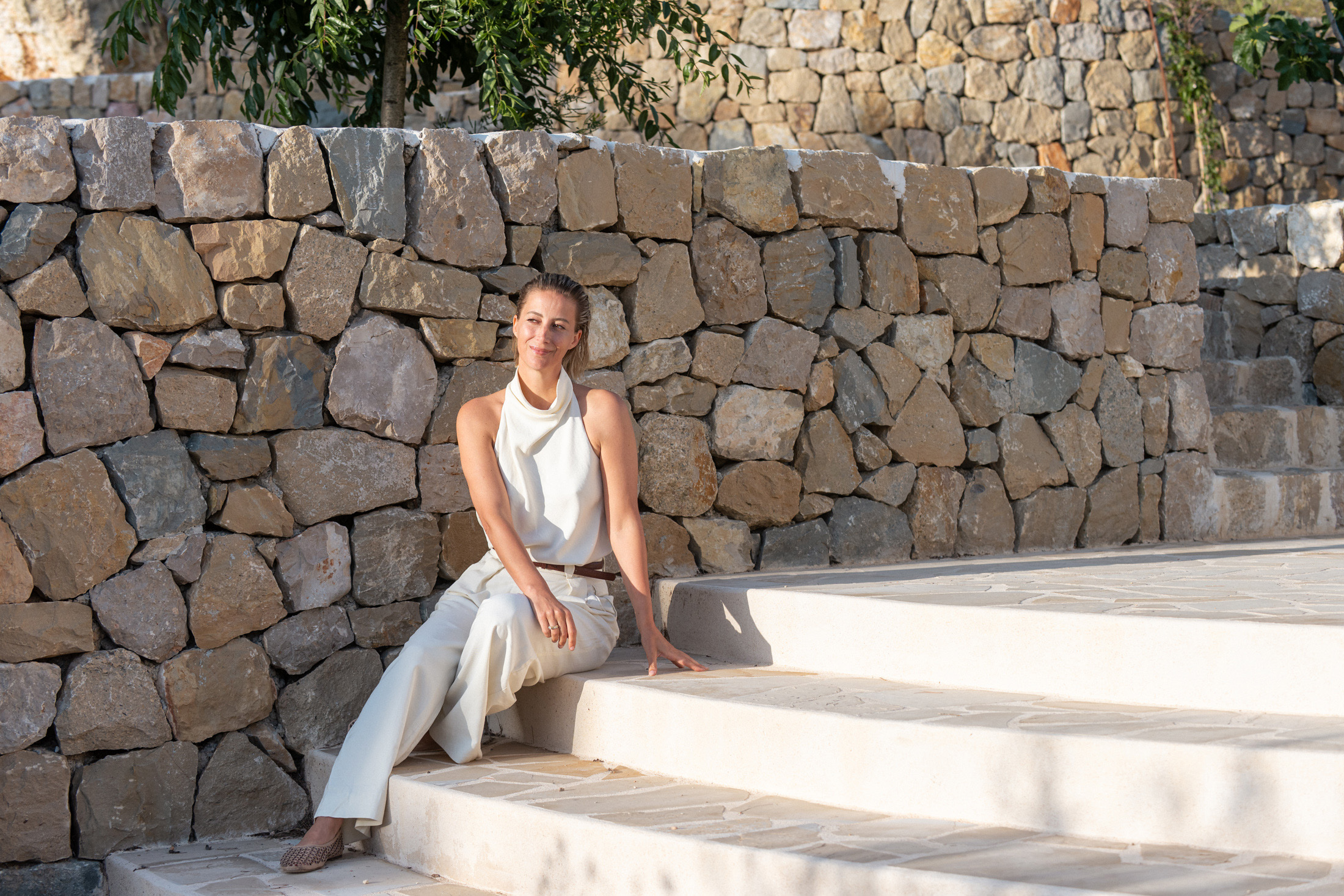
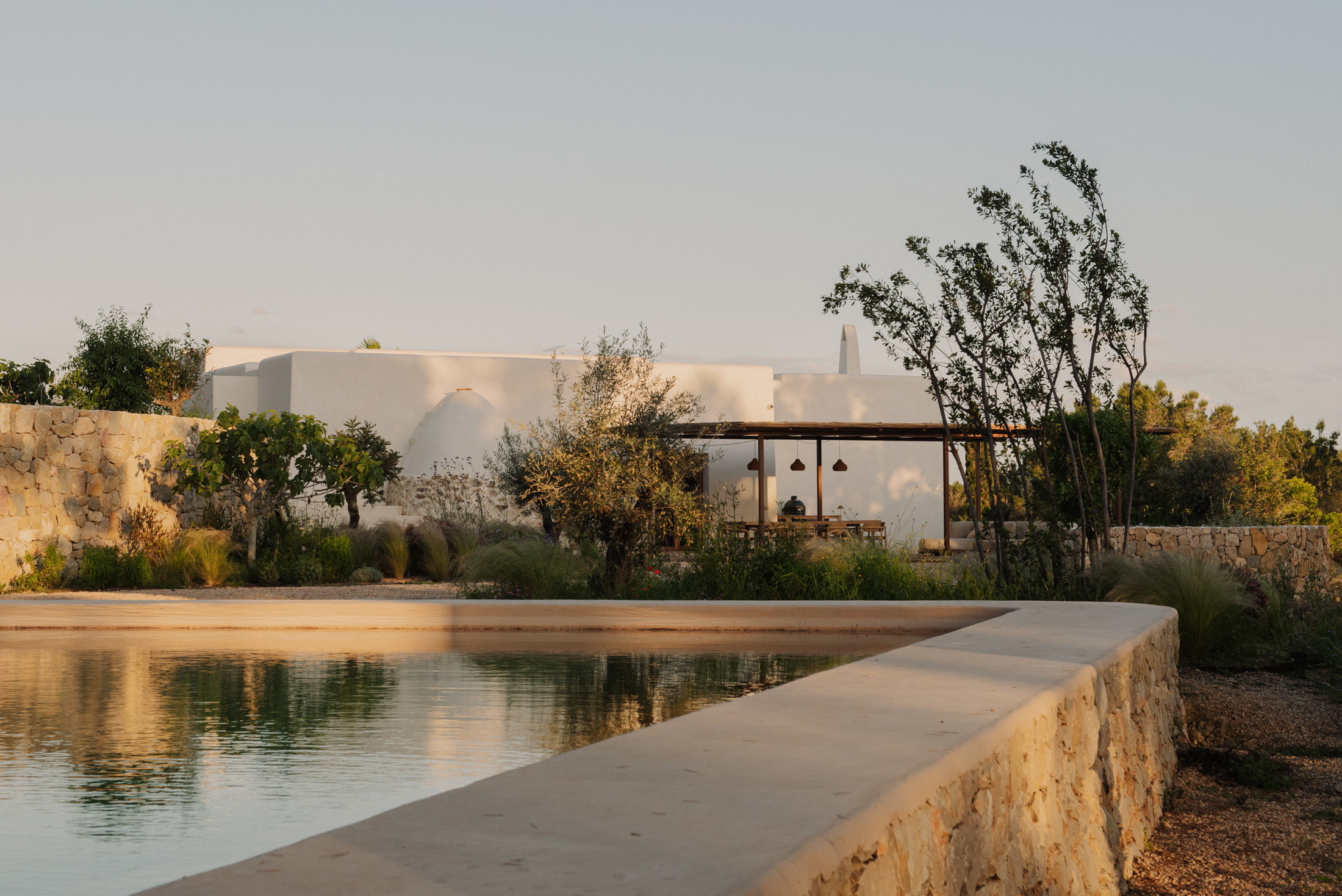
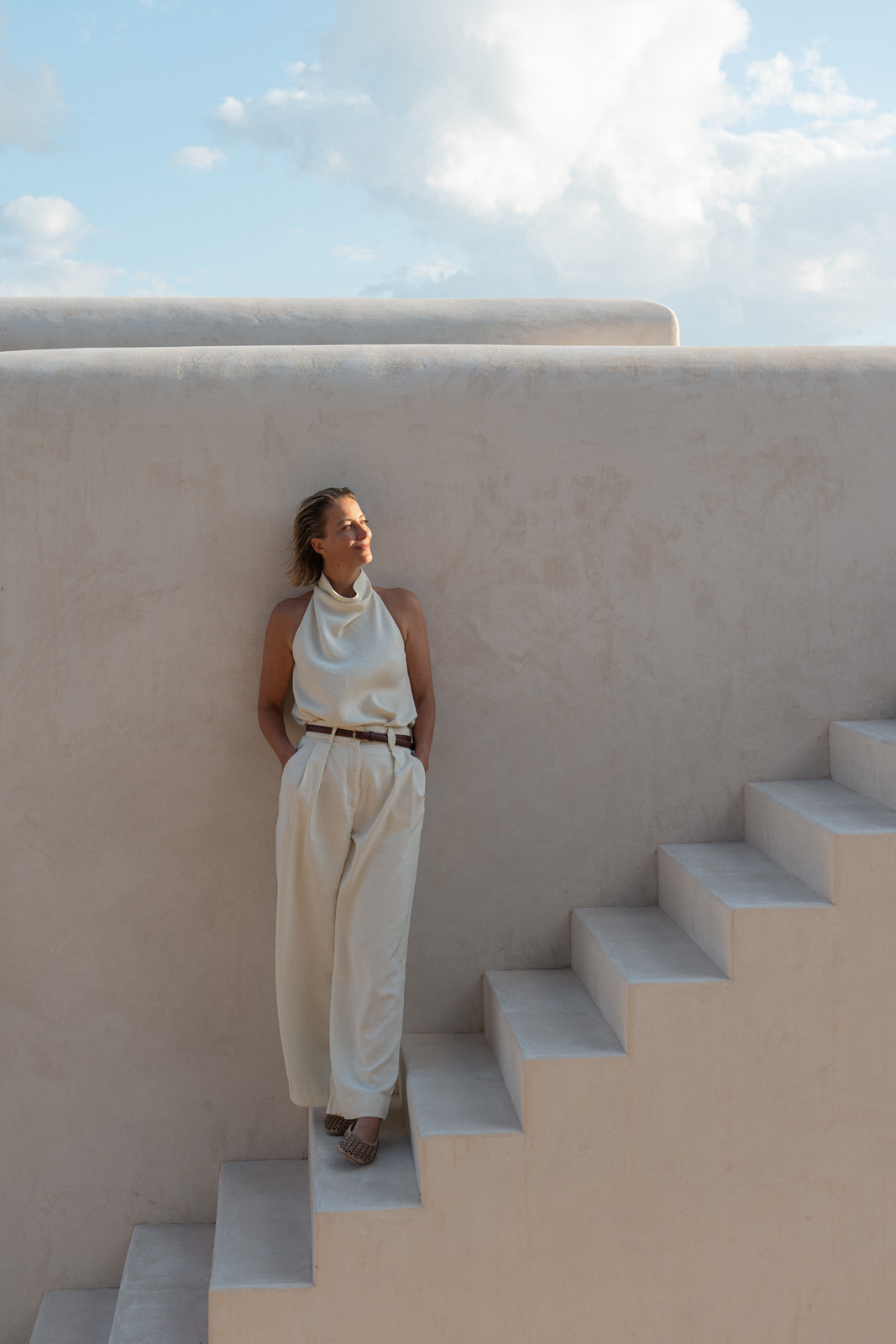
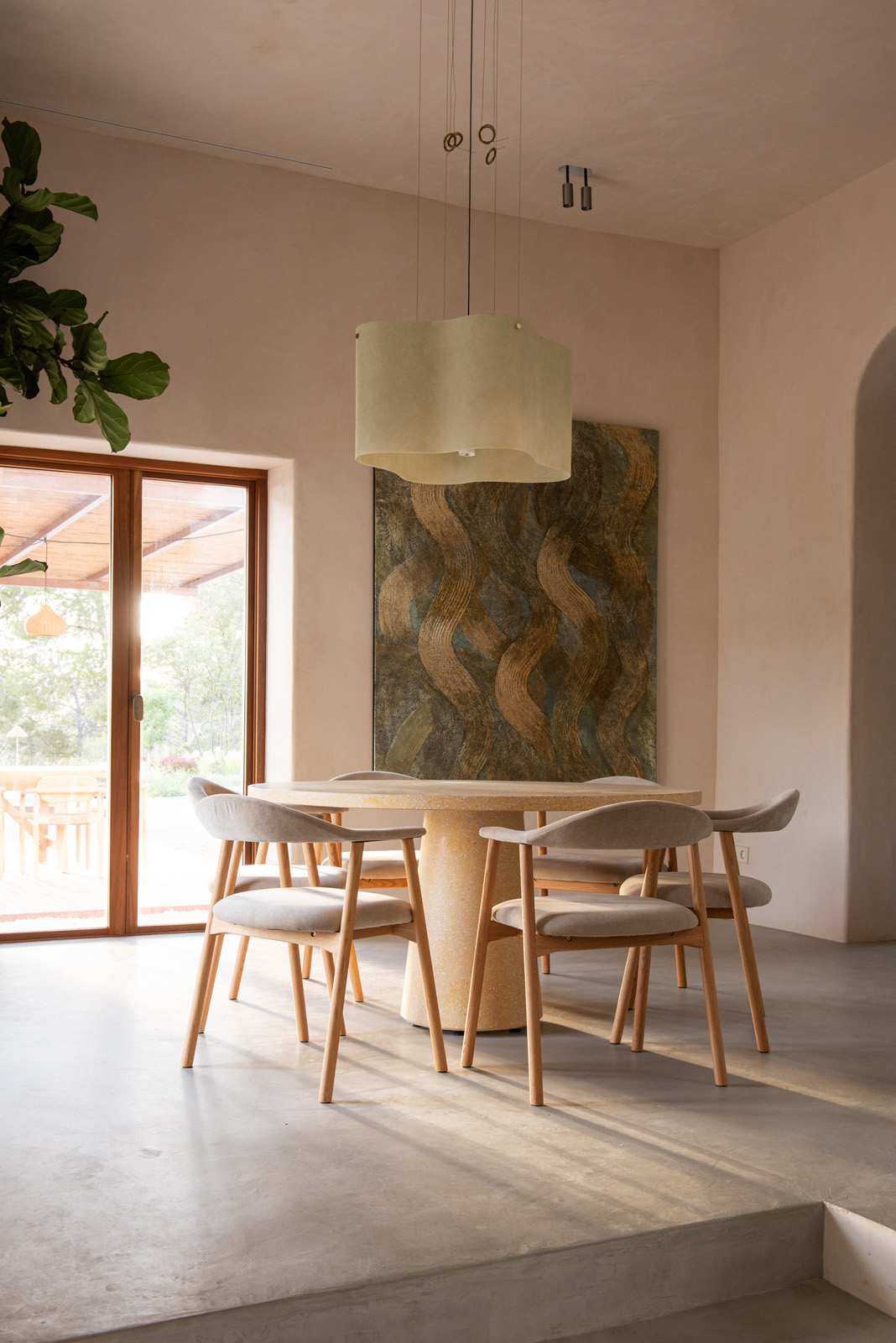
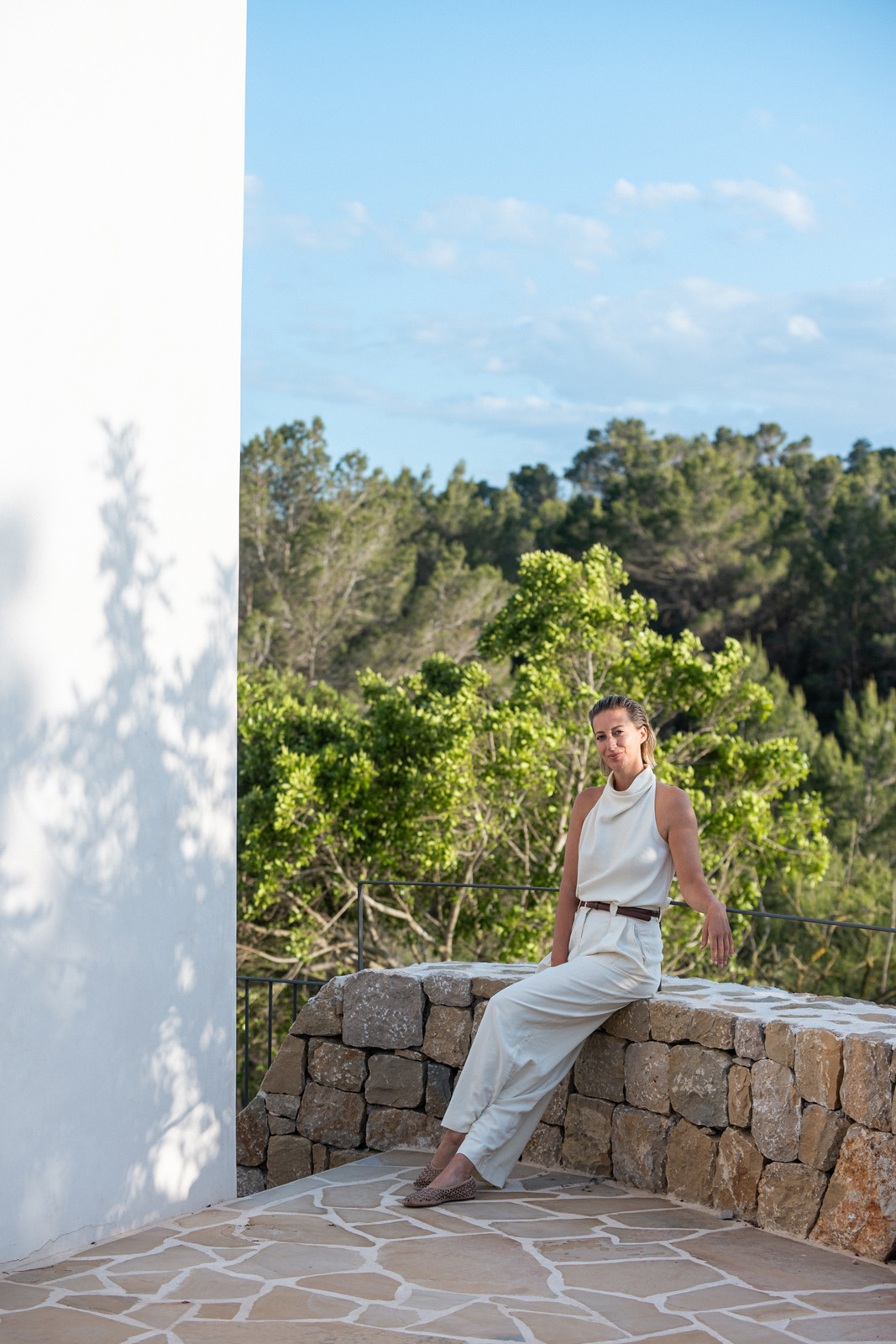
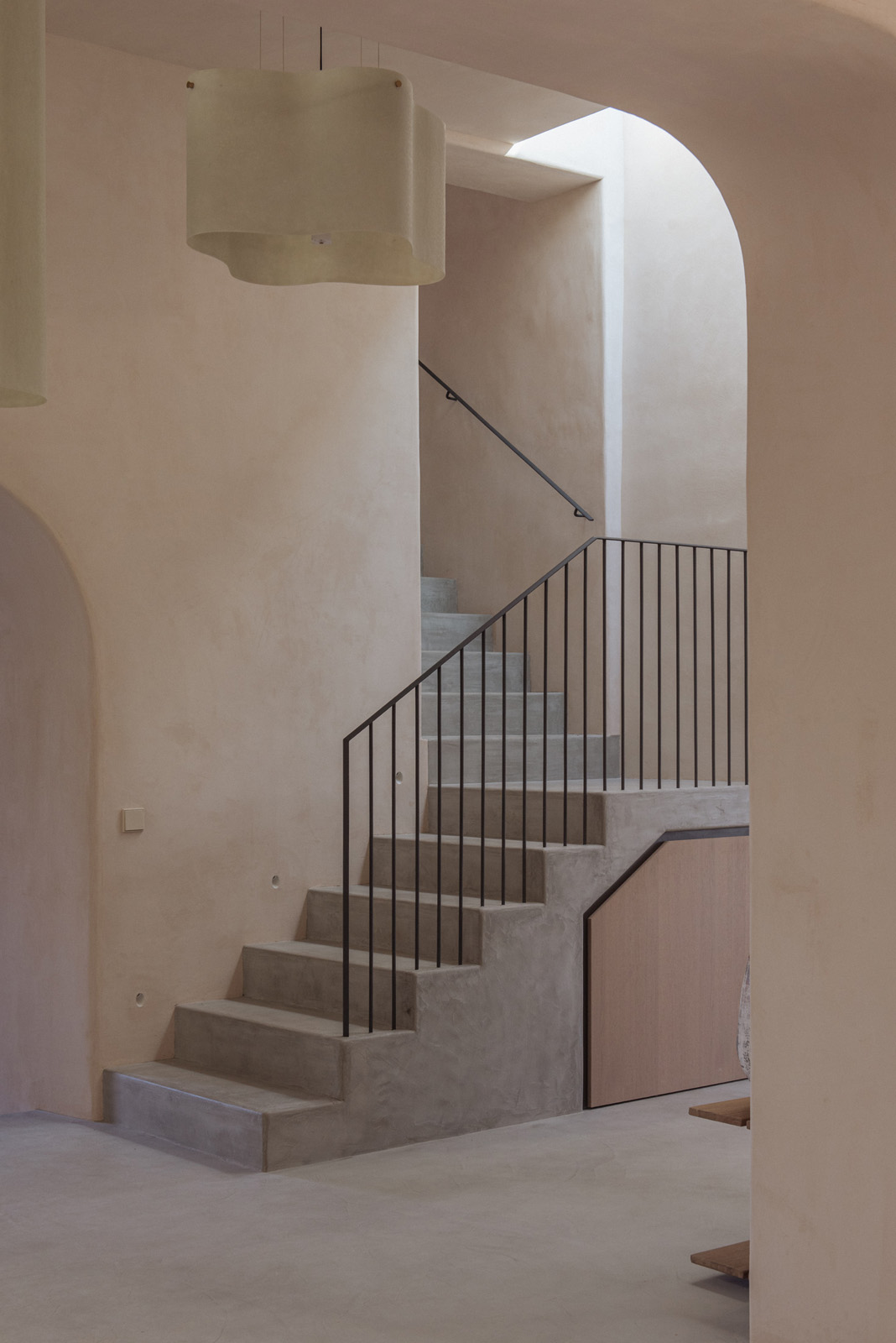
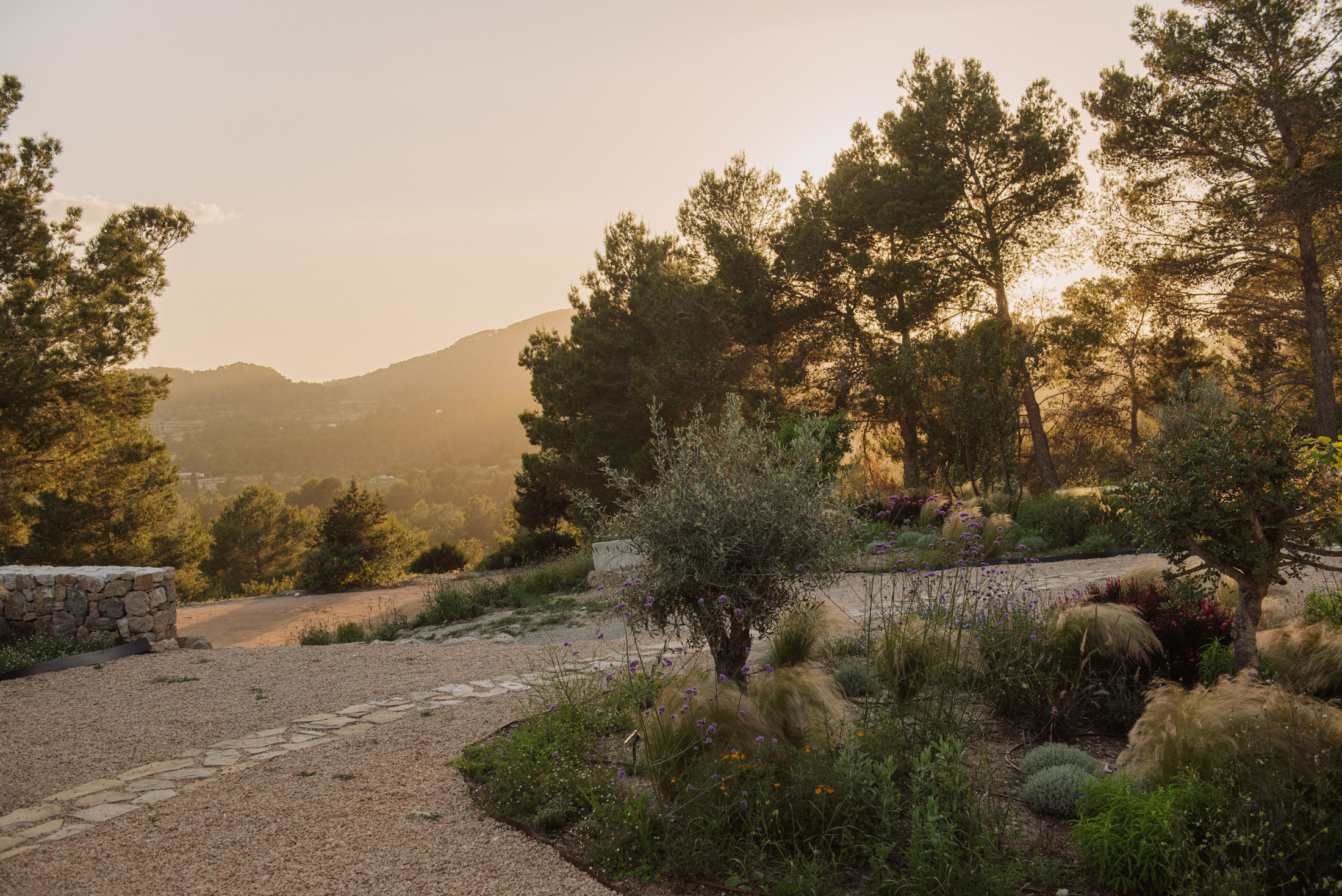
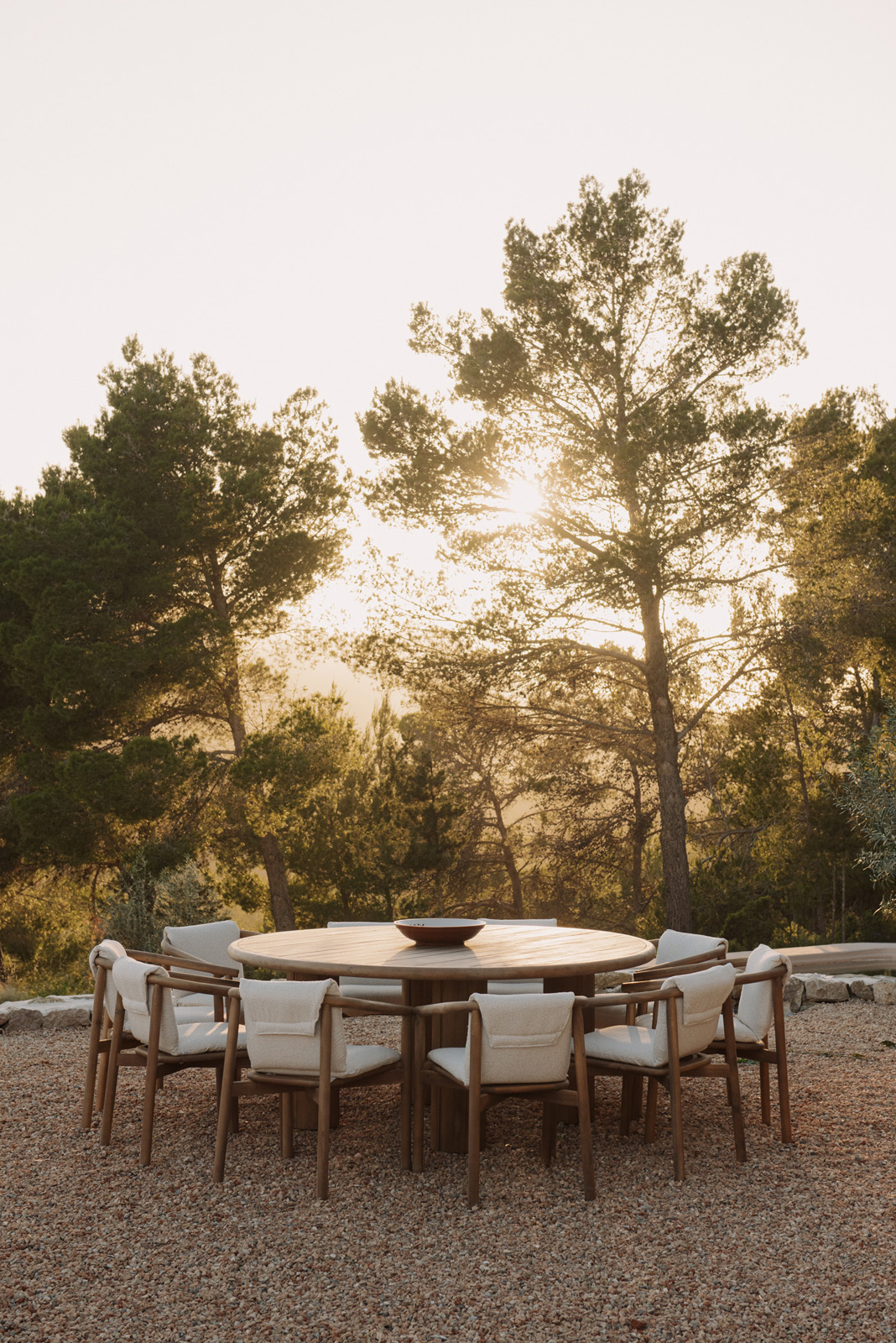
From the beginning, the ambition was for the interiors and landscape to feel inseparable. “Outside and inside needed to be one experience,” says Ren. Because the finca is built on rock, travertine was chosen for the interiors, while a palette of natural tones allows the house to sit well within its setting. Materials are tactile, earthy and deliberately recessive so that nothing competes with the view.
The landscape, after all, is the house’s greatest pull. From its elevated position, the finca looks out across some of the island’s most expansive scenes. The light changes constantly. The sense of privacy is total. For all the craft of the restoration, the design succeeds because it knows when to step back.
That same instinct informs the finca’s off-grid systems. Powered by solar energy, rainwater collection and a private well, the house supports a more self-sufficient way of living. Even the old balsa has been reimagined. Rather than adding a conventional pool, Ren and Mark worked with the existing agricultural water basin, transforming it into a UV-filtered swimming spot – somewhere to cool down that feels entirely in keeping with the spirit of the place. “It pushed everyone’s boundaries,” reflects Ren. “But we didn’t want to do what had been done before.”
The next phase will turn more fully to the land itself. With 14 hectares to work with, Ren is already thinking about clearing the overgrown pines, restoring the terraces and beginning with figs and table grapes to help neutralise the soil. A vegetable garden is still on the list. Across the grounds, old lime kilns, horse trails and agricultural traces speak of another way of life – one the couple are keen to immerse themselves in.
Their own vision of slow living was partly inspired by an off-grid farmhouse stay elsewhere on the island: a place with a vegetable patch, all-day breakfasts, food cooked from the land and music curated hour by hour.
“We thought, if we can find something like this for ourselves, something we never want to leave, that’s the dream,” says Ren. “And that’s what we tried to do.”
The renovation also reflects their changing relationship with Ibiza itself. Ren has been coming to the island for more than two decades, first drawn – like many – to its nightlife. Over the years, another Ibiza came into focus: quieter, more grounded, shaped by community and the subtle pleasures of the shoulder seasons.
“Being in the north in the wintertime, you see that there is so much more happening,” she says. “There’s a year-round community and a liveliness that you don’t always get in the south or the west. That’s what we love. This house isn’t only for summer.”
On the doorstep, hiking and cycling routes lead into the hills, with views stretching towards Dalt Vila, Es Vedrà and Formentera. Santa Gertrudis is close enough, as are Juntos Farm and Soho Farmhouse, yet the finca itself feels worlds away – private without being isolated; secluded but not cut off.
For Ren, that contrast is exactly the point. Ibiza can still offer everything: nature, sport, swimming, and the occasional party when the mood strikes. But here, the island’s energy is filtered through silence and space.
Still, the house makes a persuasive case for staying put. Its beauty lies in the atmosphere: the sunrise over the valley, the lingering light – and the slow surrender to the view, the seasons and a slower way of being.
“A lot of people come to Ibiza wanting to go out,” says Ren. “This is somewhere you want to stay in.”
Related articles
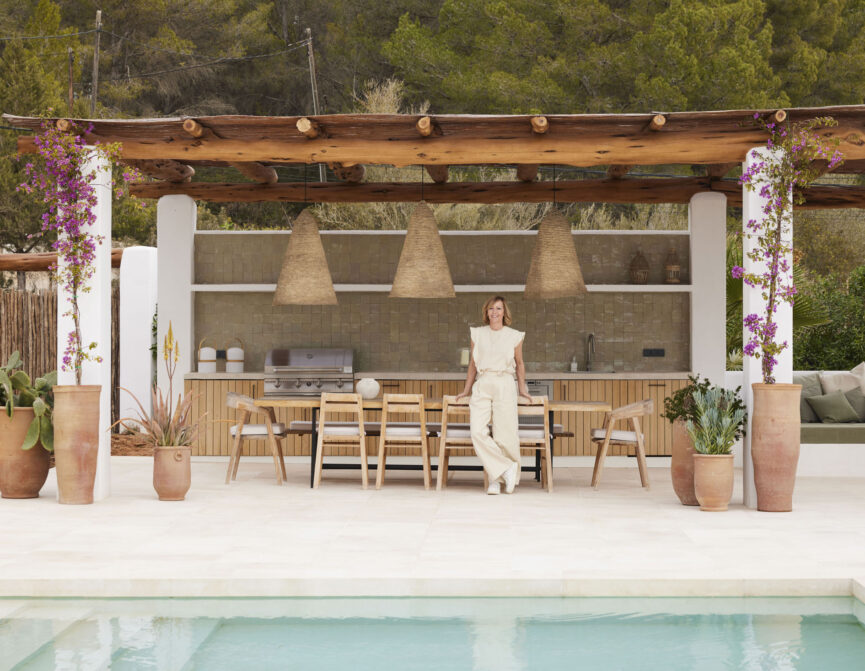
Villa Bourgainville: A house to lift the spirits
Drawn to the 18th-century finca’s calming aura, homeowner Louise Cable-Alexander was determined to preserve its monastic charm.
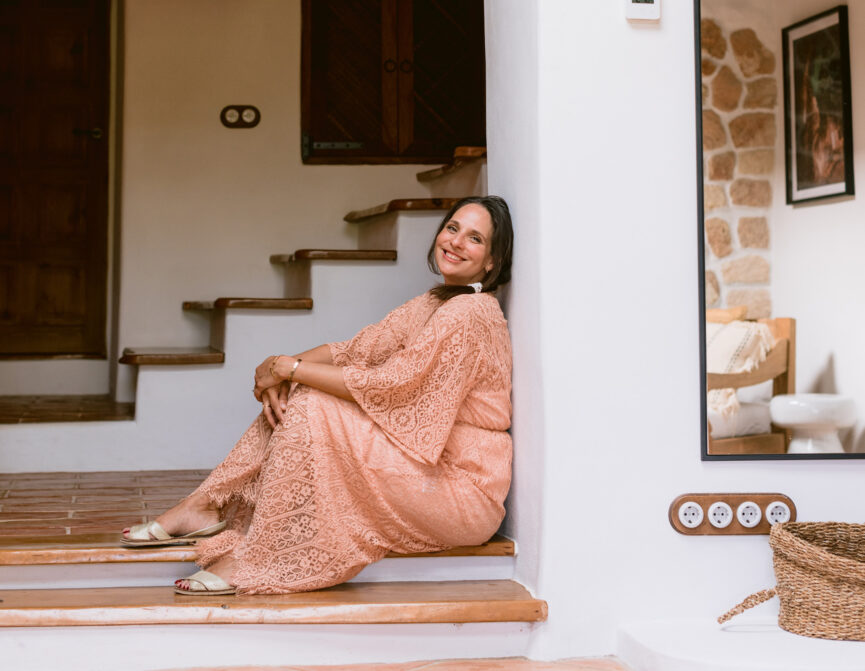
New Vision: Sharon Costi of Villa Mariposa
Take a look around Villa Mariposa. Designed by architecture virtuoso Rolph Blakstad, it typifies his approach to celebrating traditional architecture while adding contemporary comfort.