

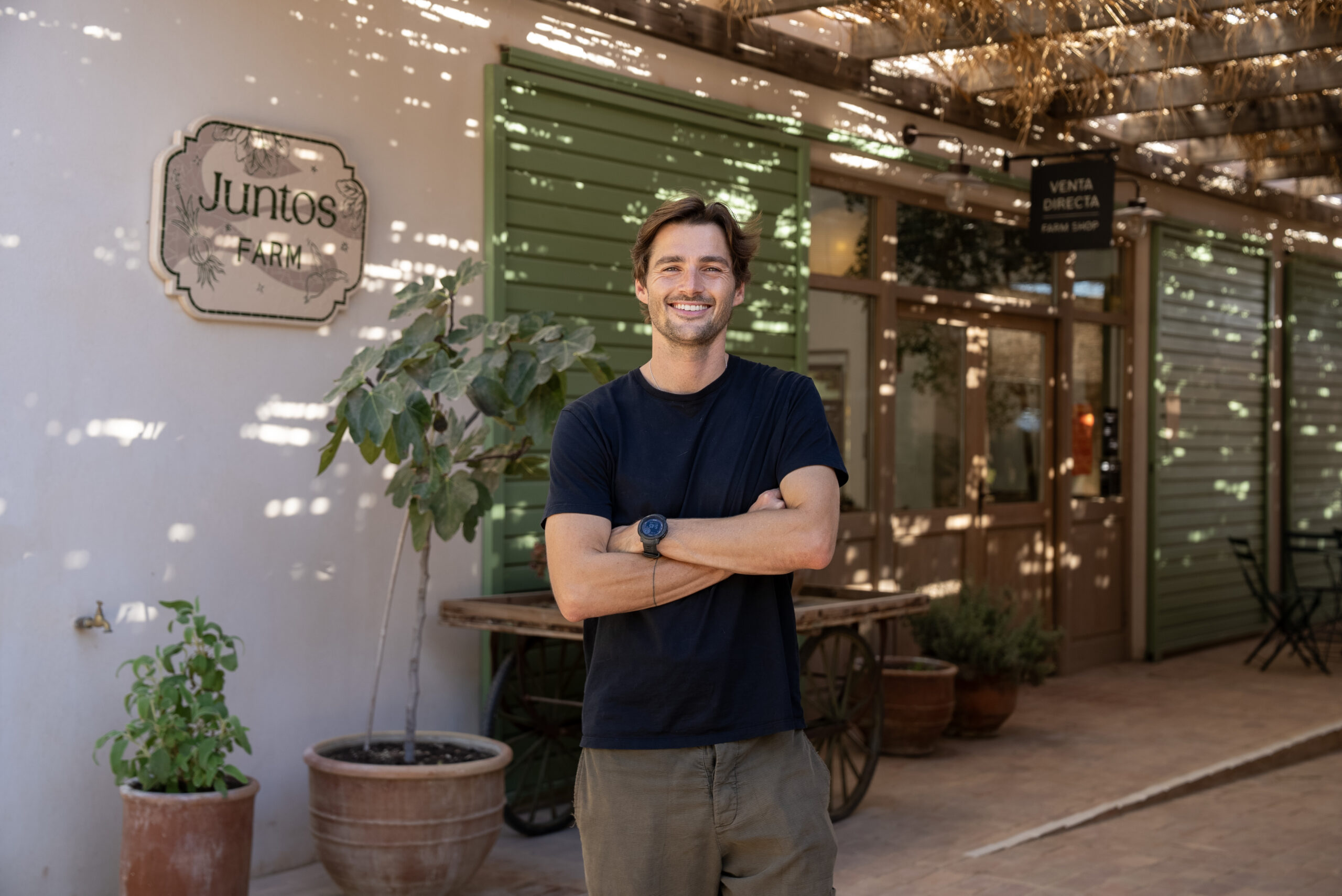

Co-founder Finn Harries discusses regenerative design, local community and building a new food culture from the soil up.
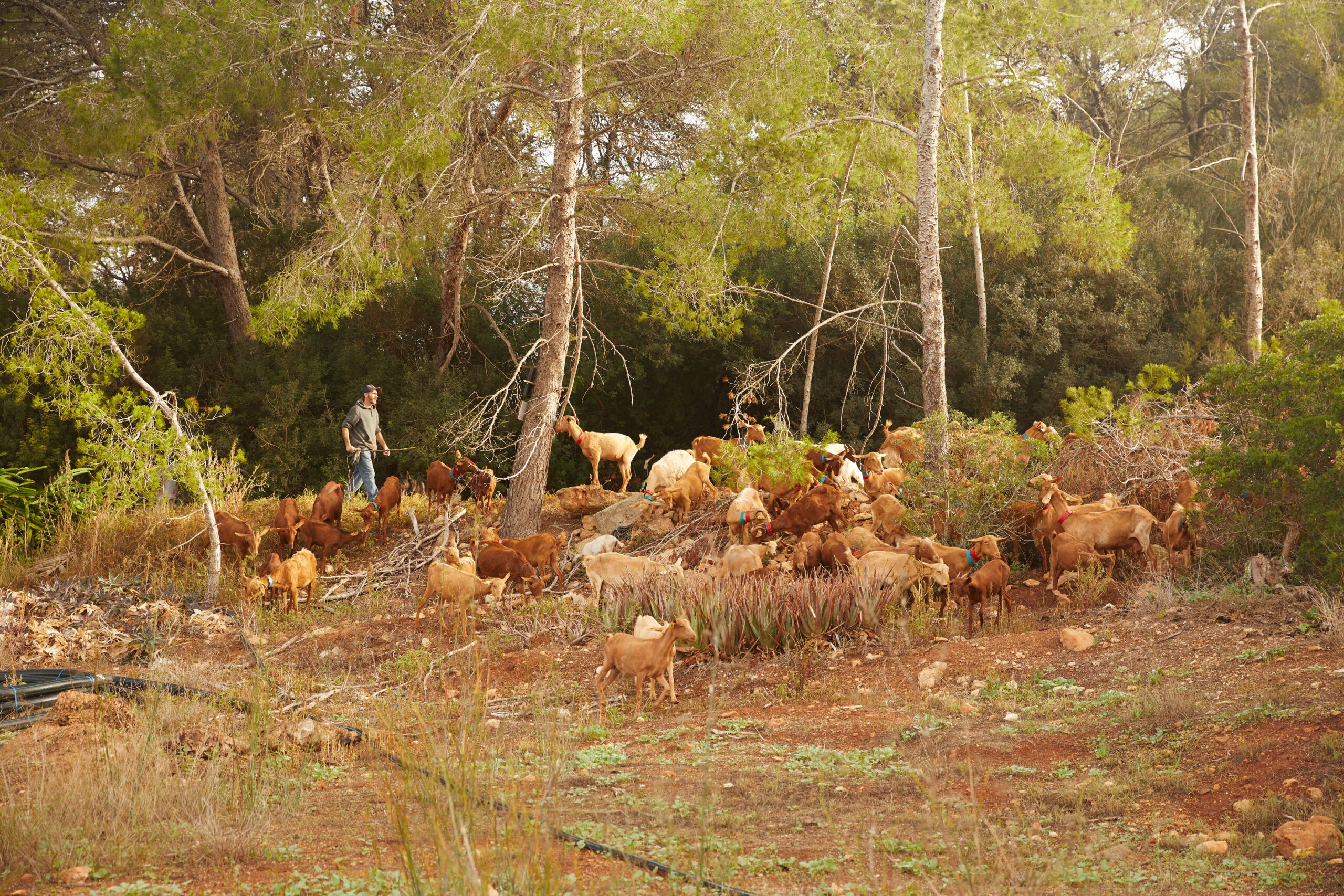
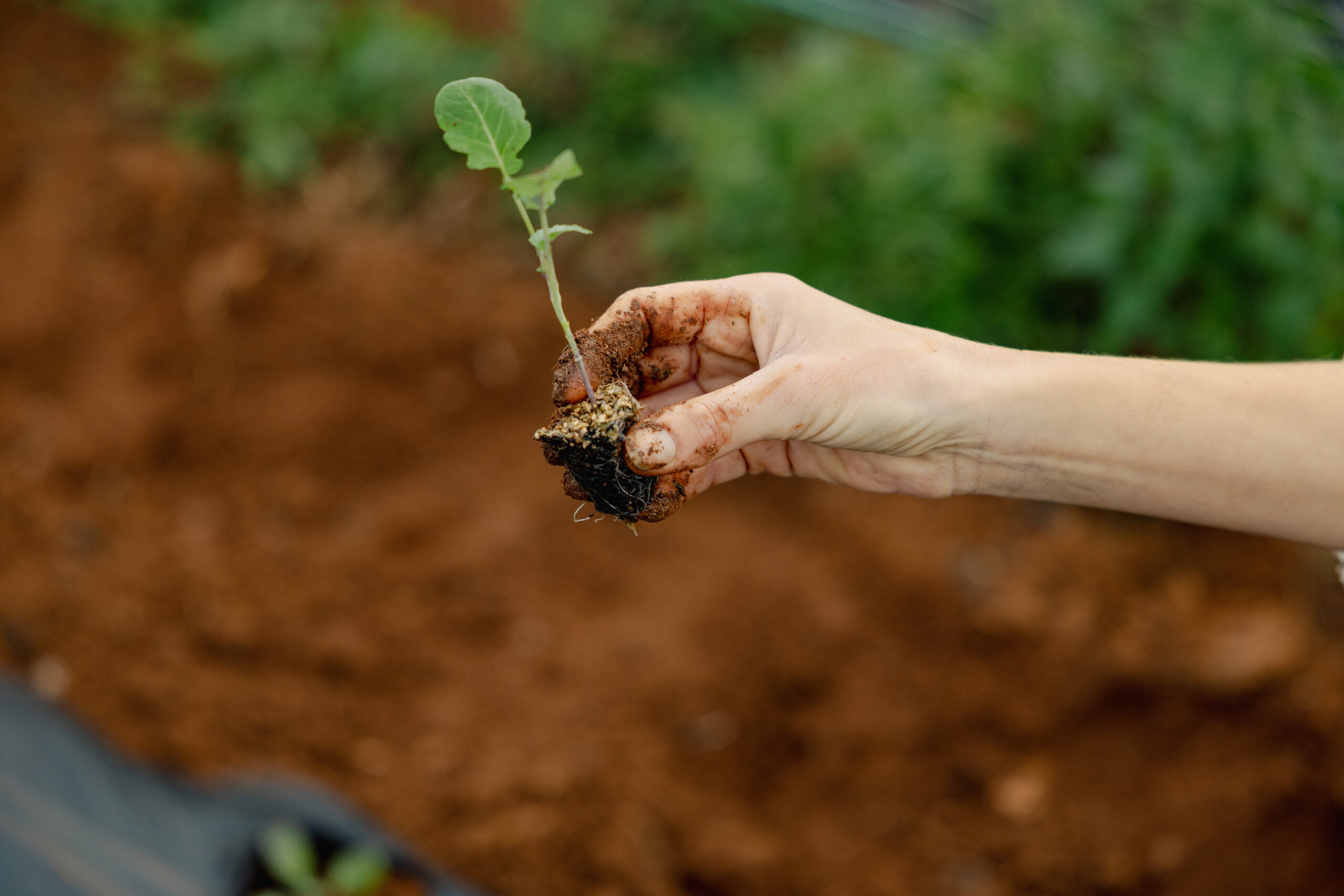
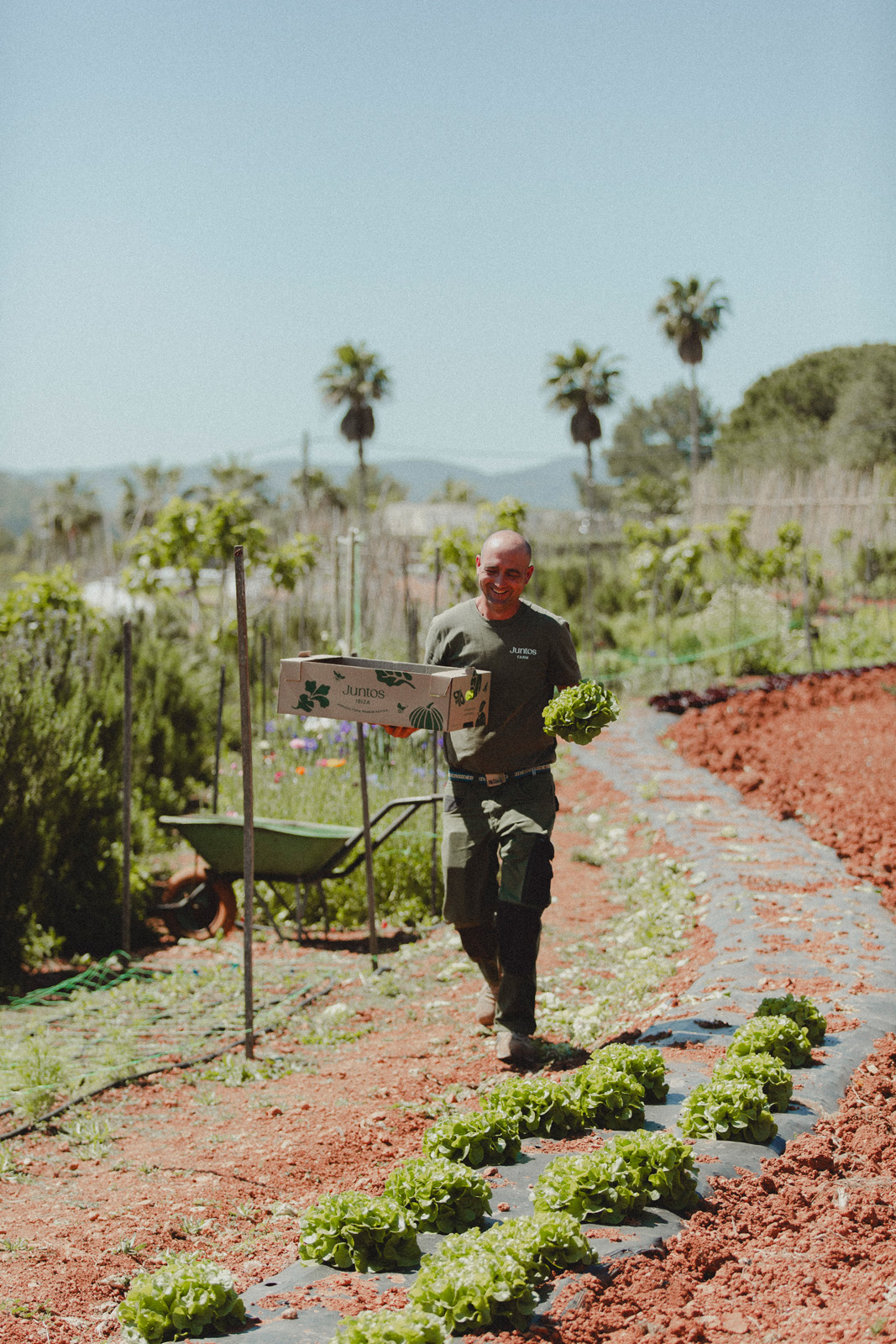
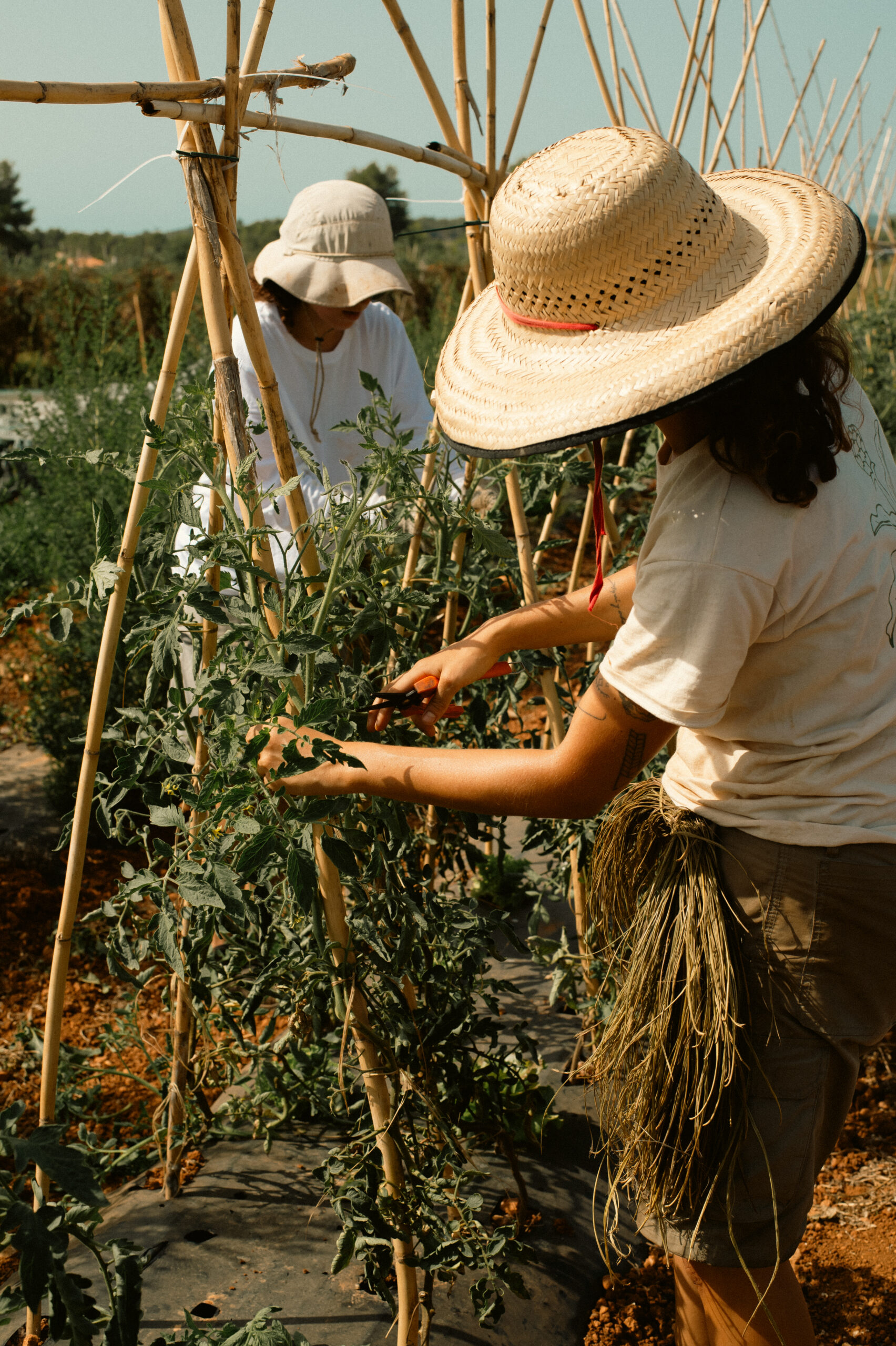
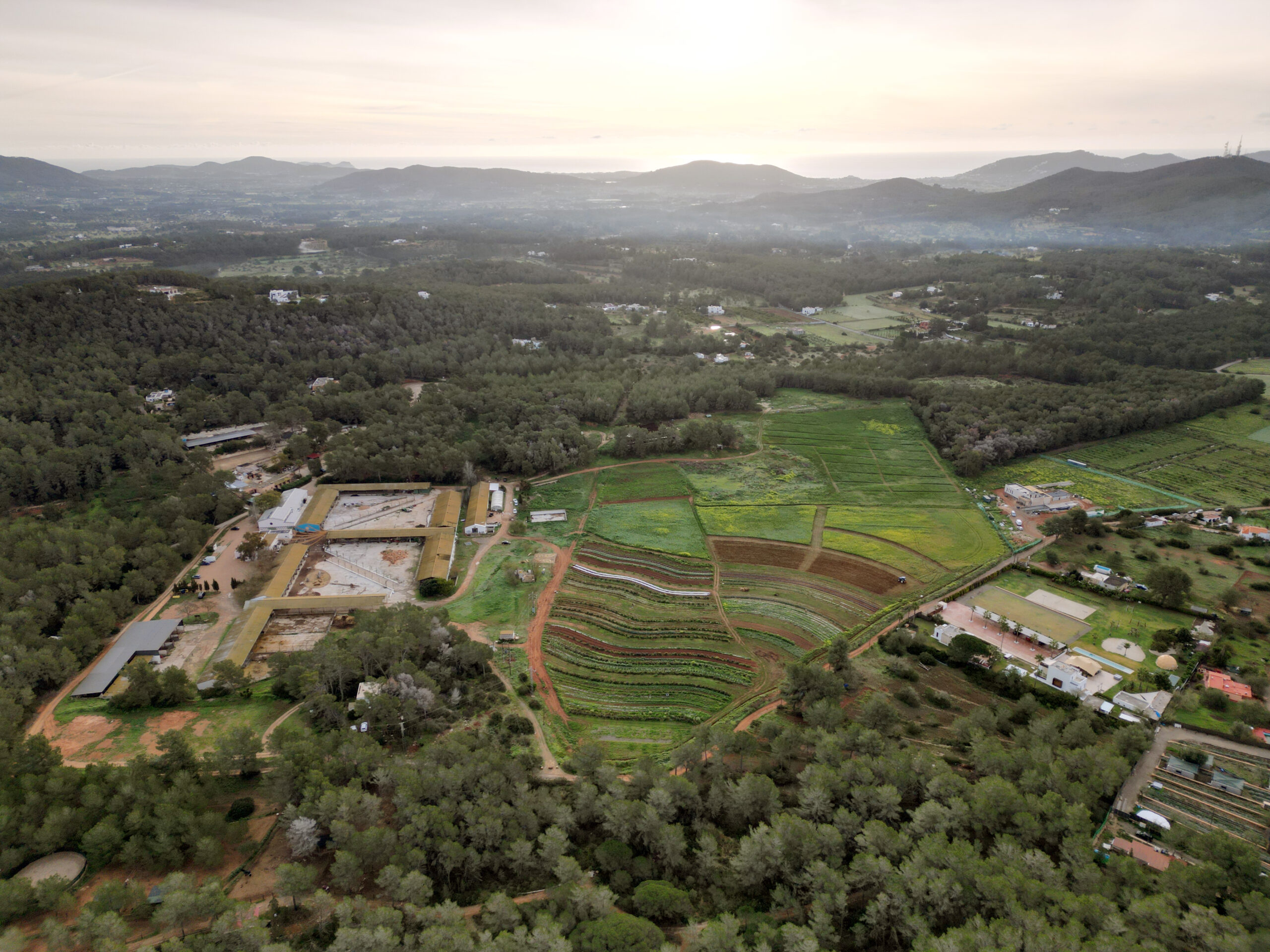
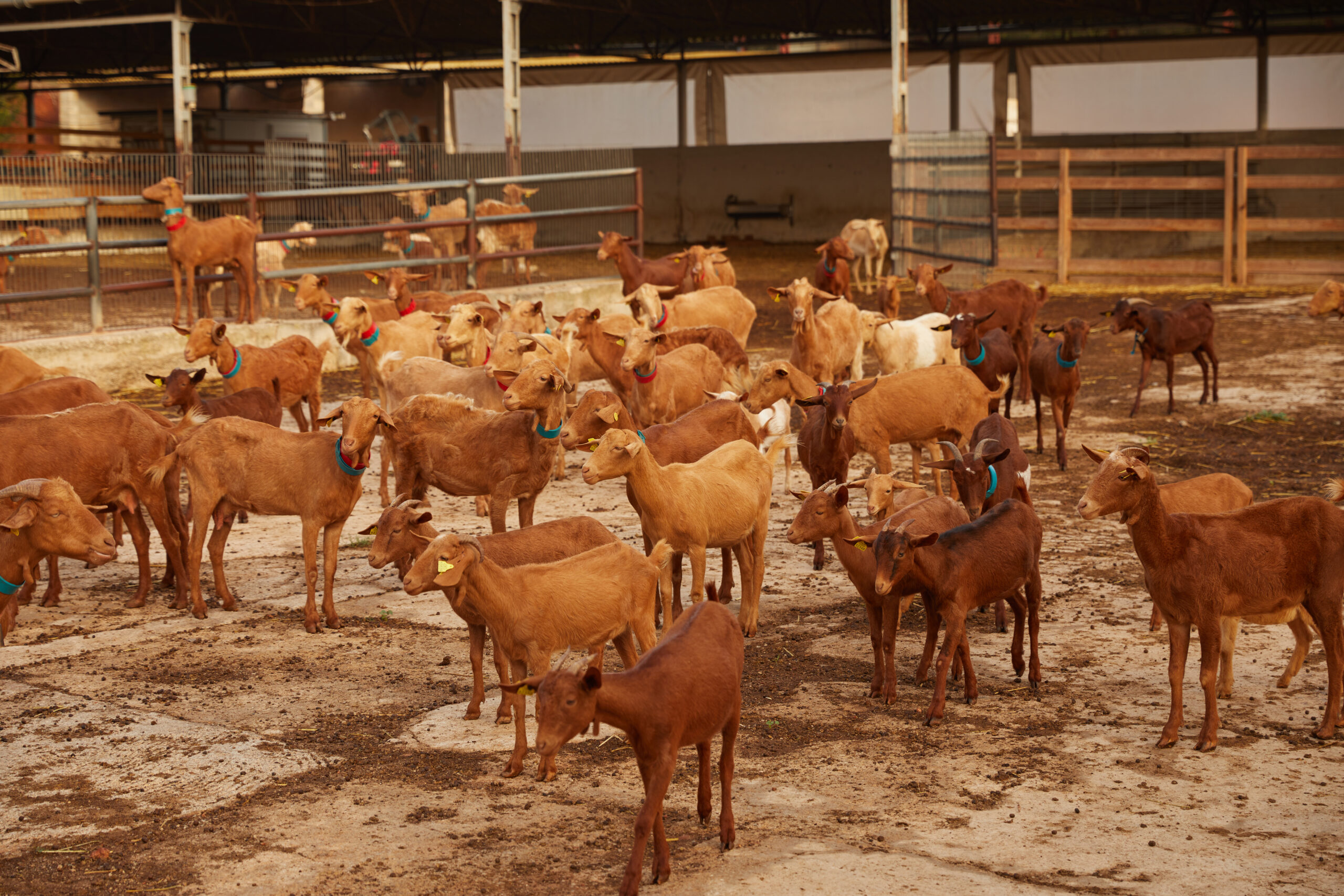
On an island more often associated with hedonism than harvests, Juntos Farm is nurturing a different kind of abundance – one rooted in soil health, thoughtful design and a renewed connection to place. Across 20 hectares in northern Ibiza, goats graze, chefs work with just-picked produce and children trace the journey of food long before it reaches the plate.
This is the work of Finn Harries, designer and co-founder of Juntos, who, alongside Swedish entrepreneur Christian Jochnick, is building far more than a farm. Their vision is a regenerative hub: at once an agricultural cooperative, food laboratory and community meeting point, designed to reshape how the island eats, grows and gathers.

“Our role is to connect growers, transform their produce into higher-value products and create experiences that bring the community together.”
For Finn, the route into farming began with design. Trained at Parsons School of Design in New York, he became interested in systems thinking: the idea that when existing structures fail, they must be redesigned from the ground up. A year at the Architectural Association in London sharpened his interest in climate-responsive architecture, which later evolved into research at Cambridge University.
“I wanted to understand what regenerative design actually means,” he explains. “We hear the term often, but sometimes it feels a bit nebulous. I was curious what a framework would look like. Farming and food systems turned out to be the clearest, most practical example.”
Finn chose Ibiza as the subject of his research proposal – an island he knew well, having spent childhood summers there. Seven years earlier, his family had bought a derelict farm there, a project that revealed just how difficult small-scale farming had become.
“You quickly realise why so many people let their land go fallow,” Finn says. “Tourism is more lucrative, the infrastructure for farming has collapsed and there’s little systemic support.”
While conducting fieldwork, Finn met Christian Jochnick, an entrepreneur based on the island who had purchased land and was beginning to explore regenerative approaches to food production. Both were grappling with the same question: how do you make farming resilient in a vulnerable landscape?
“We just met at the right time,” Finn says. “Christian had found this abandoned dairy farm and I was deep in research. It felt serendipitous – we had parallel ideas and realised they could converge into something real. We had this amazing opportunity for land to be reimagined as a model for regenerative agriculture.”
Three years later, a project that started with just five people has grown into a team of 60. The support, Finn says, has been extraordinary. “People feel aligned with the philosophy. They want to be part of something hopeful.”
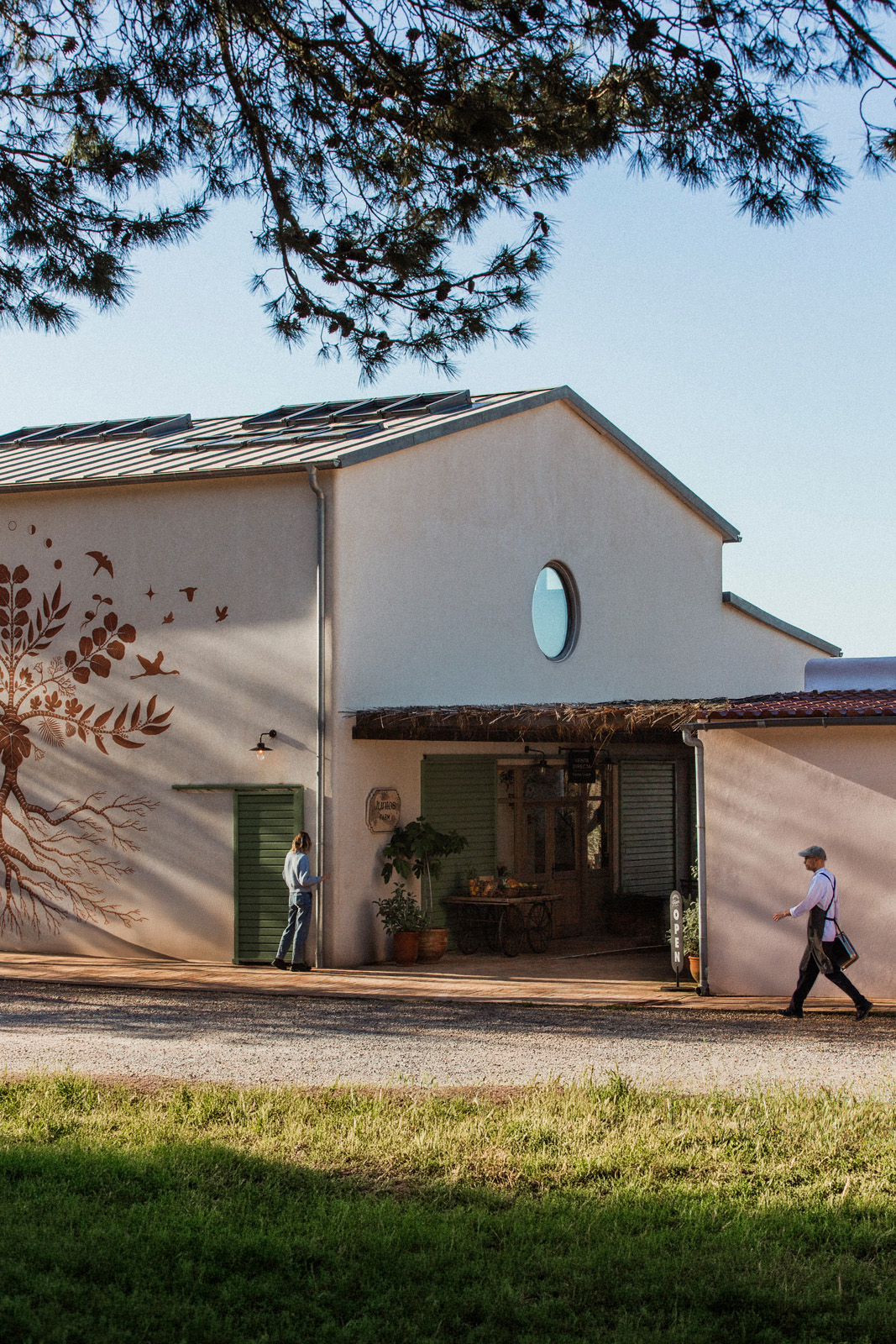
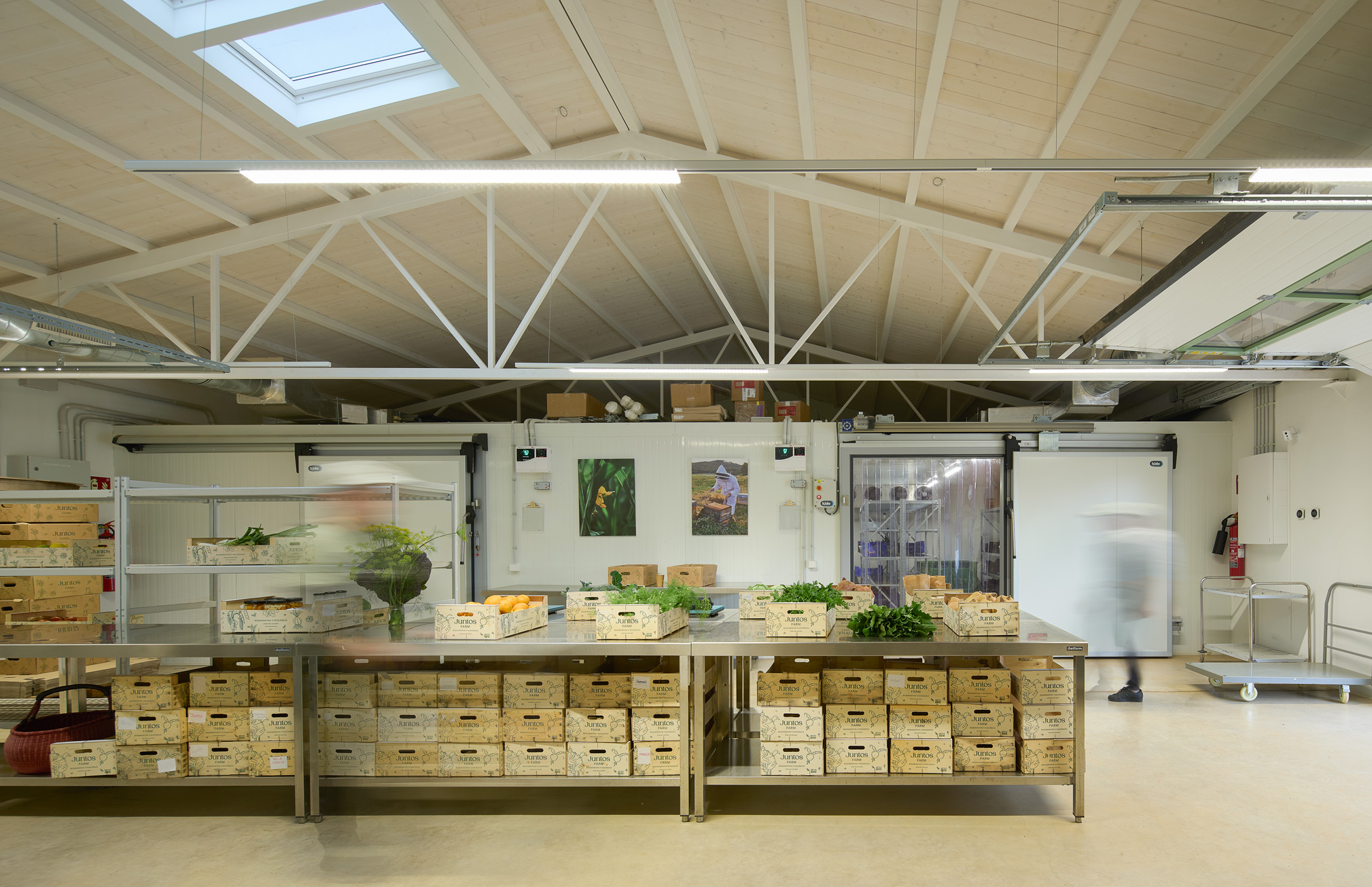
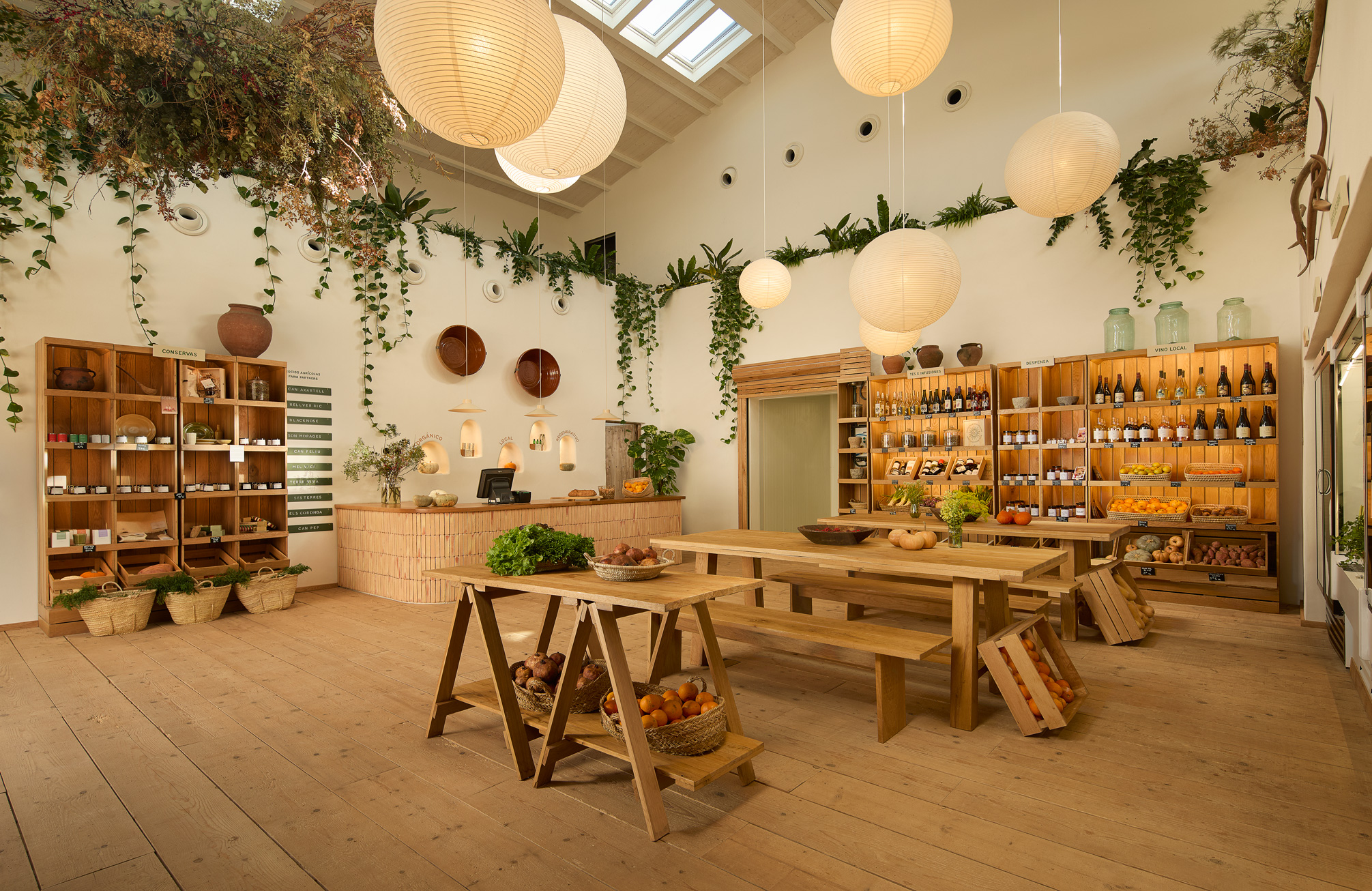
At the heart of Juntos Farm stands the House of Harvest, a striking 650-square-metre former hamburger-processing plant. Once home to abattoir drains and meat hooks, the building has been transformed into a light-filled space where farming, processing and community converge.
“Retrofitting is such an important architectural idea today,” Finn says. “How do we take industrial infrastructure and reimagine it for a new purpose?”
The renovation was carried out with natural materials including clay, cork, lime and compressed wood fibre, creating an energy-efficient shell. More than 100 solar panels now power a third of the building’s needs, while rainwater is harvested and cycled back into the fields.
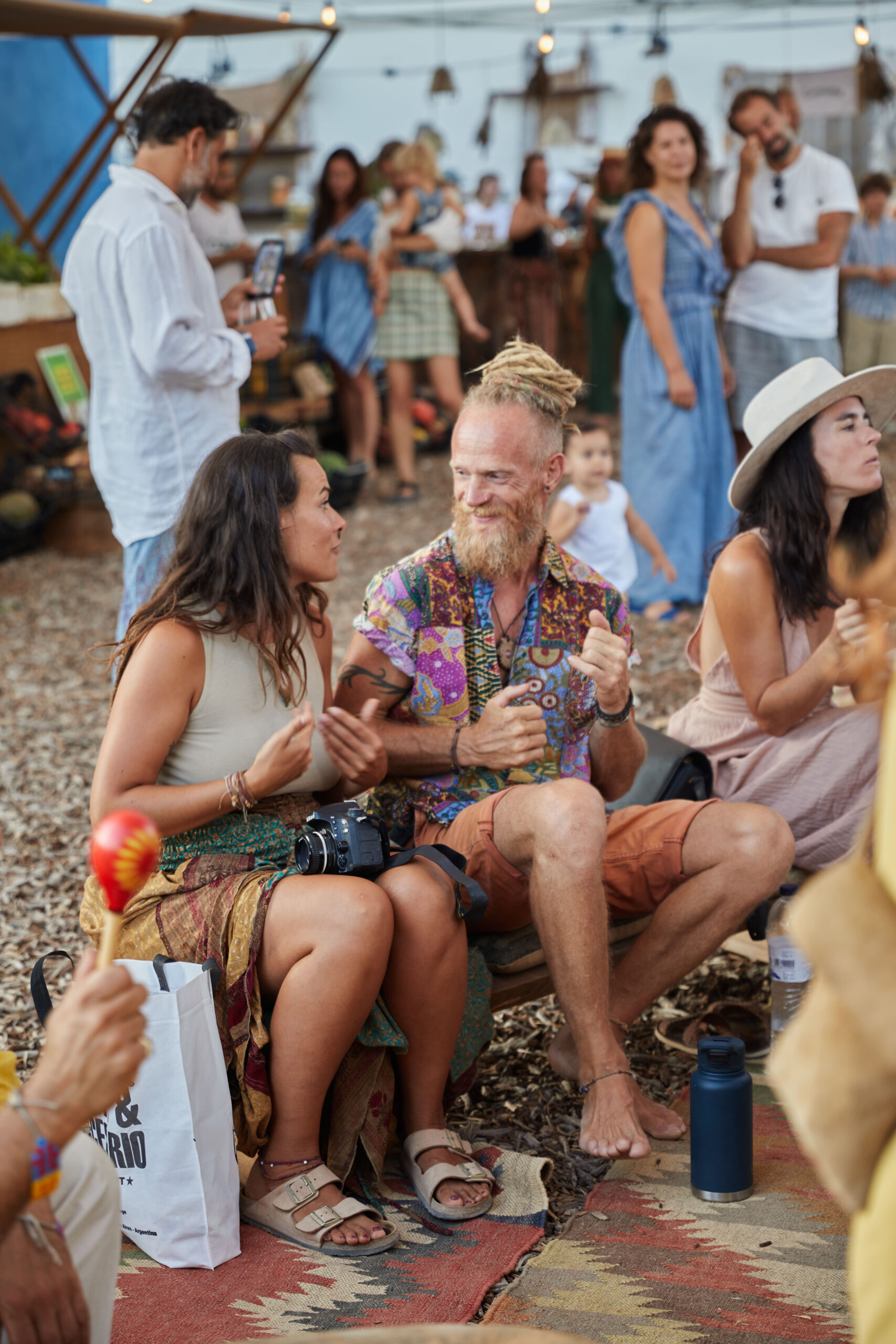
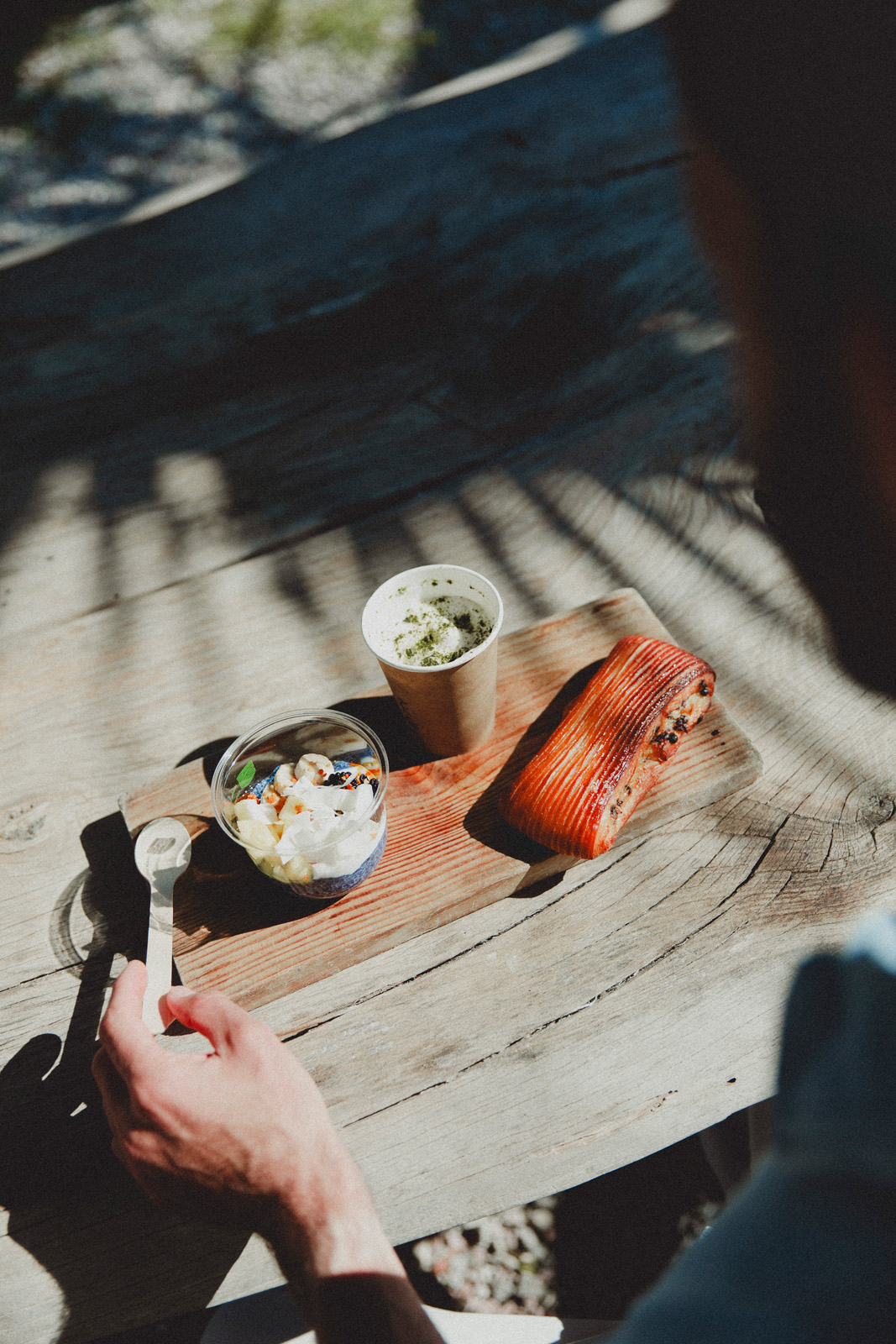
“We had this amazing opportunity for land to be reimagined as a model for regenerative agriculture.”
Standing in the double-height space of the House of Harvest – which Finn affectionately calls the “church of food” – it’s hard not to feel the optimism of the project. Fresh produce enters through a large bay door each morning and makes a kind of pilgrimage through the space – passing through a series of processing stages before emerging as a packaged product or plated seasonal dish.
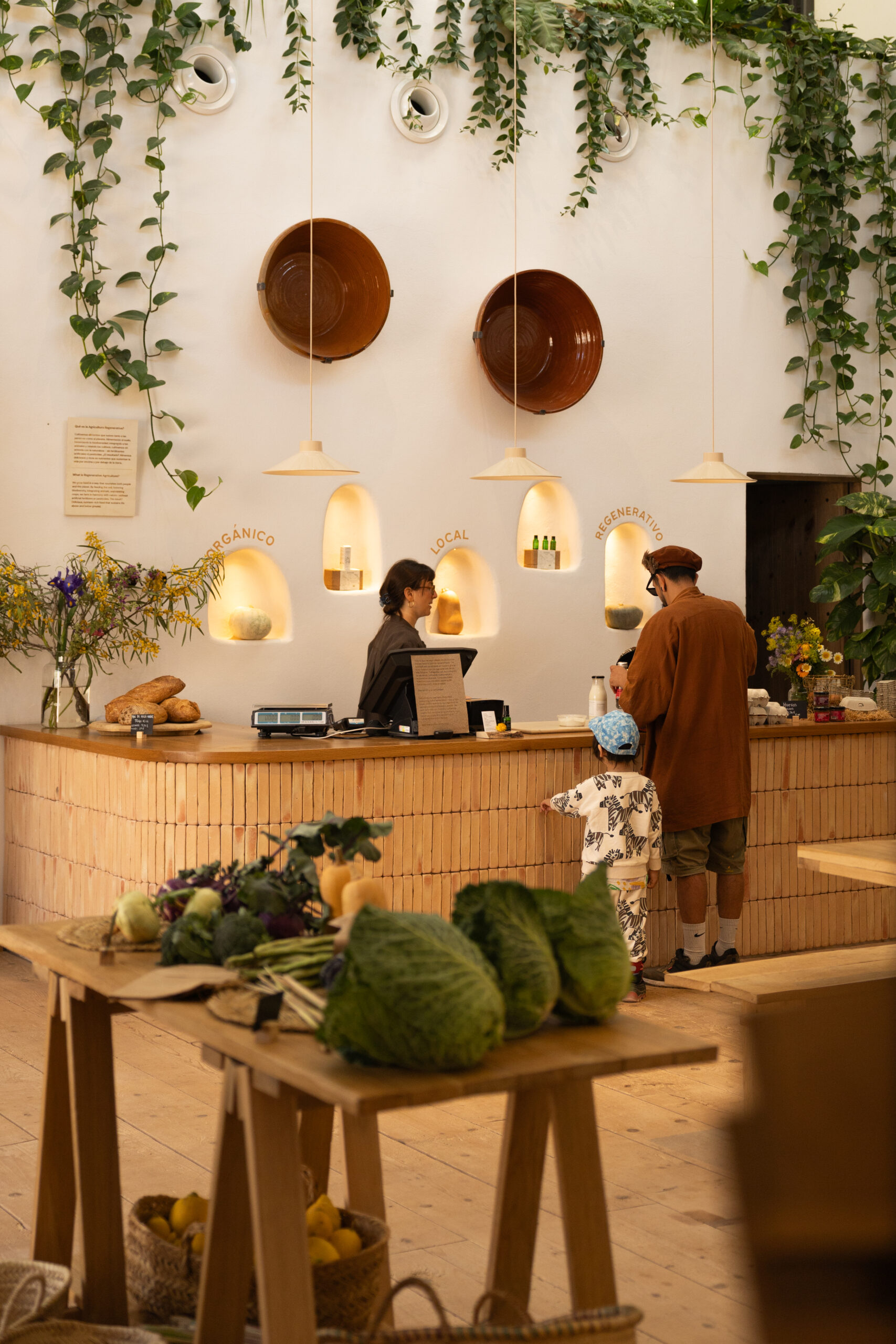
Visitors can even peer through windows and watch the process in real time. “Agriculture has become invisible in the industrialised world,” says Finn. “We wanted total transparency. It’s about reconnecting people to their own nutrition.”
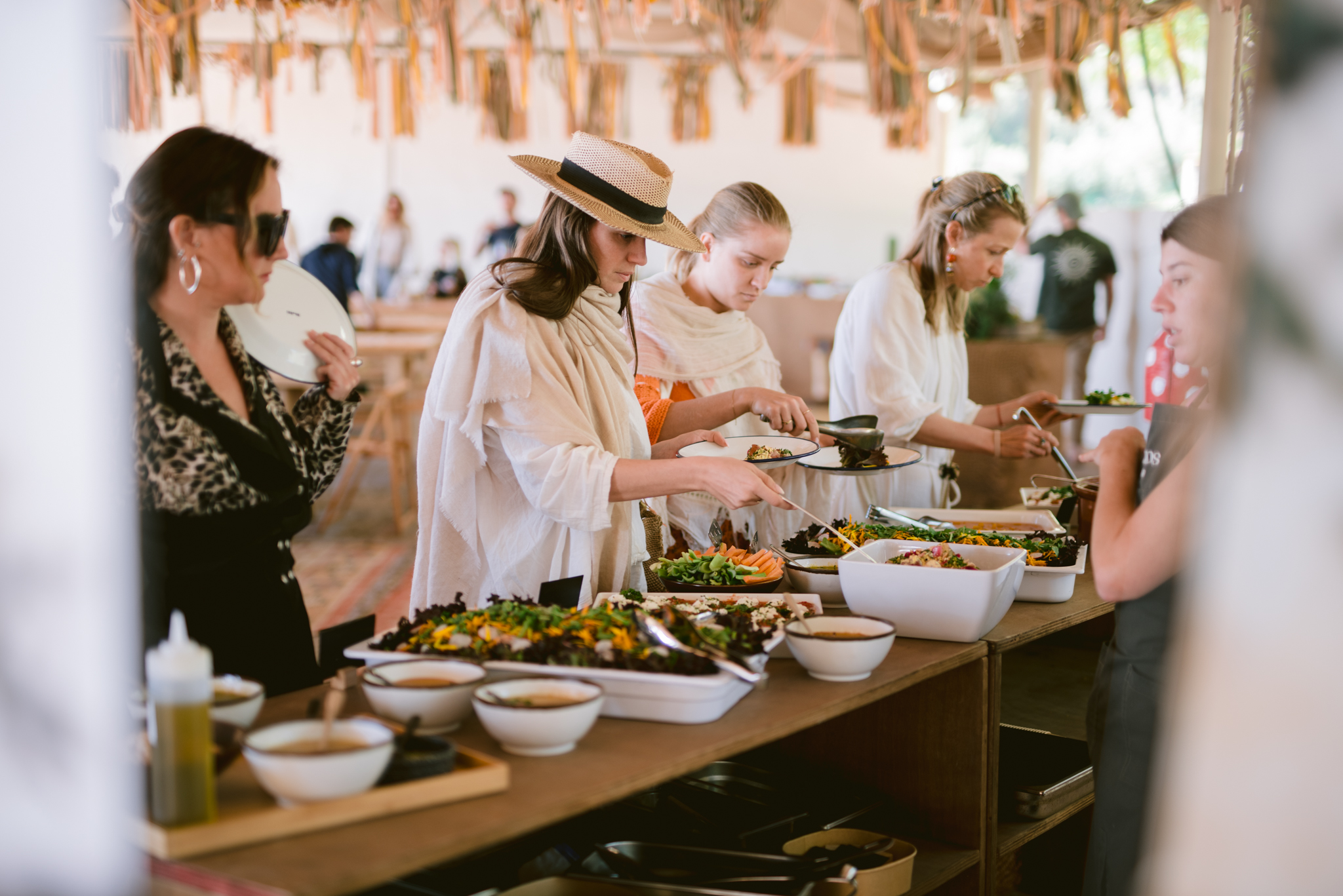
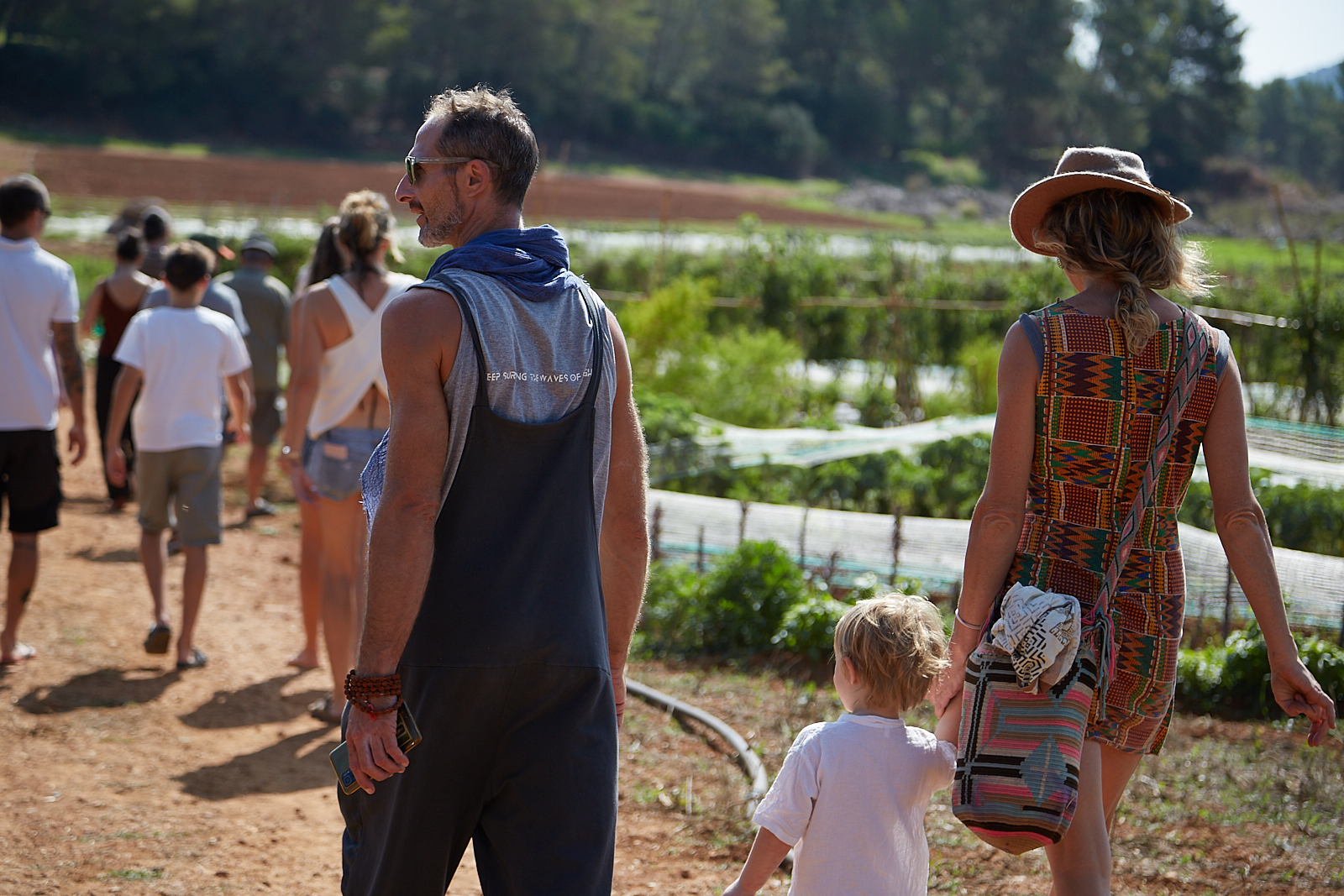
Winning trust in Ibiza, however, is no small feat. “This island has seen a lot of change: motorways, mass tourism, outside investment. People are sceptical of new projects and rightly so,” he acknowledges. Juntos’ answer has been to act respectfully and tangibly, measuring success through impact: 16 farms across the Balearic Islands now supported, dozens of products developed and a community that congregates weekly at the farm’s shop and tasting room.
The long-term ambition is to transform the vast 12-building site into a bio-regional hub for food, farming and culture. “It’s a farm of farms,” Finn explains. “Our role is to connect growers, transform their produce into higher-value products and create experiences that bring the community together.” That way, he believes, regenerative food can begin to compete with industrial food systems.
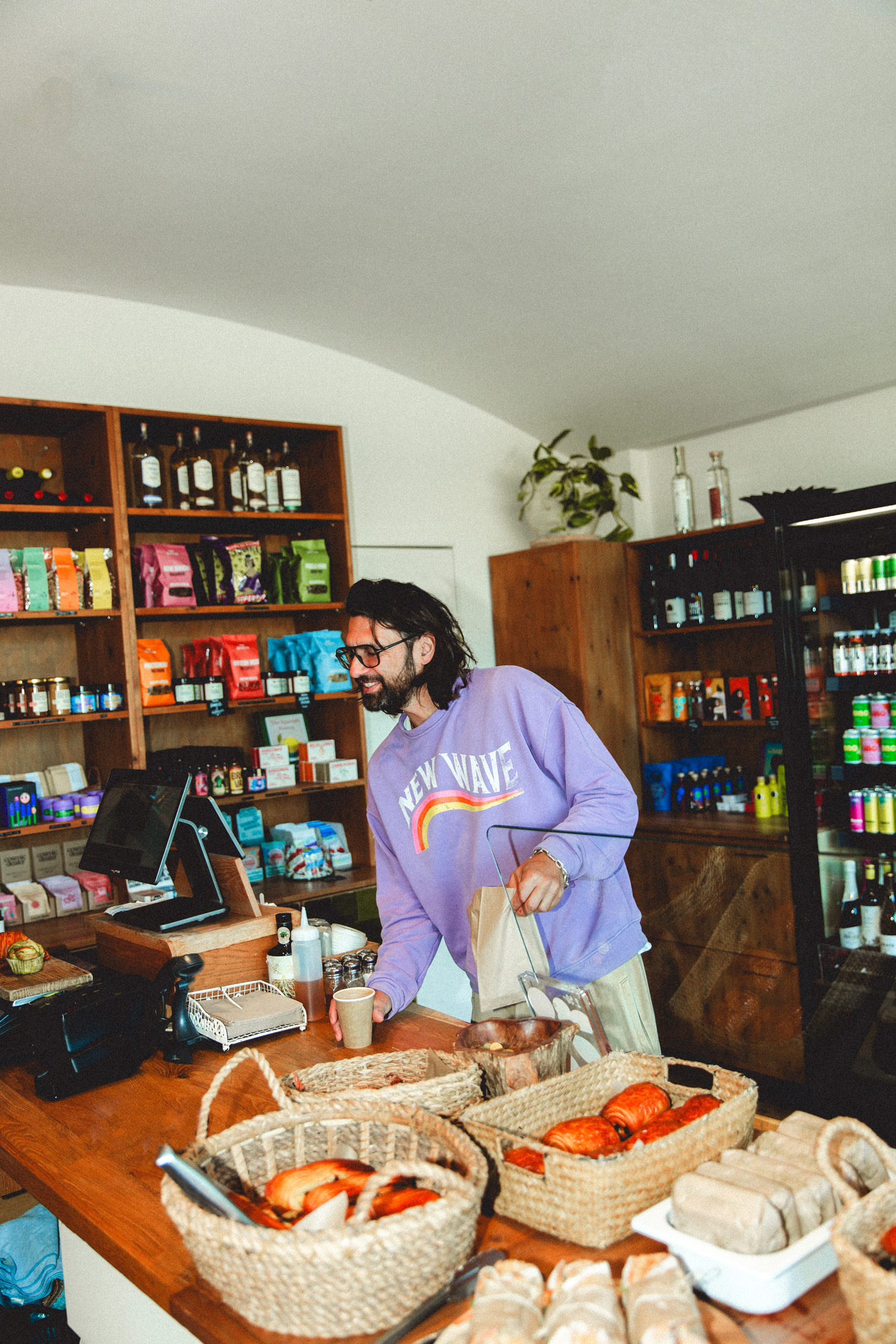

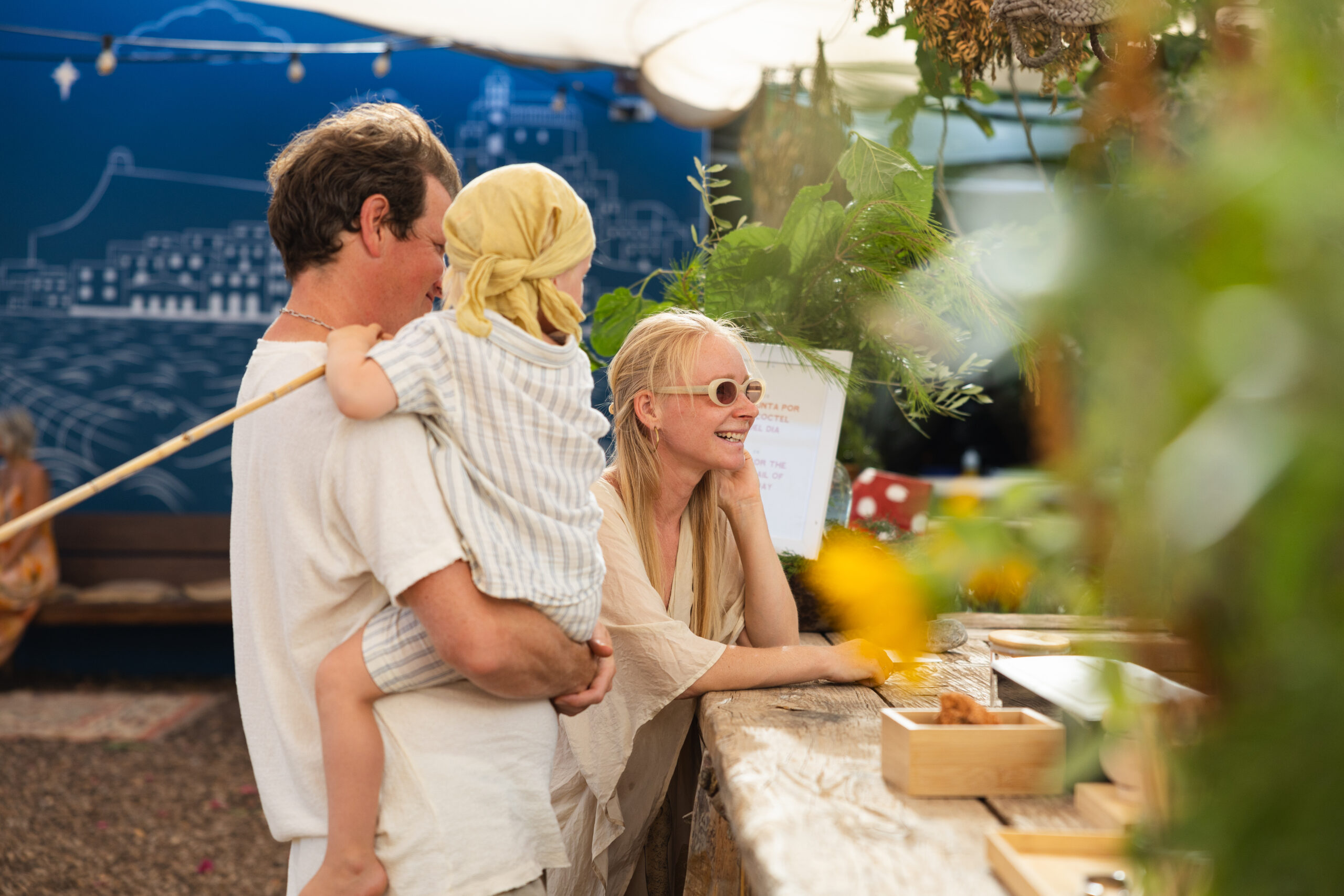
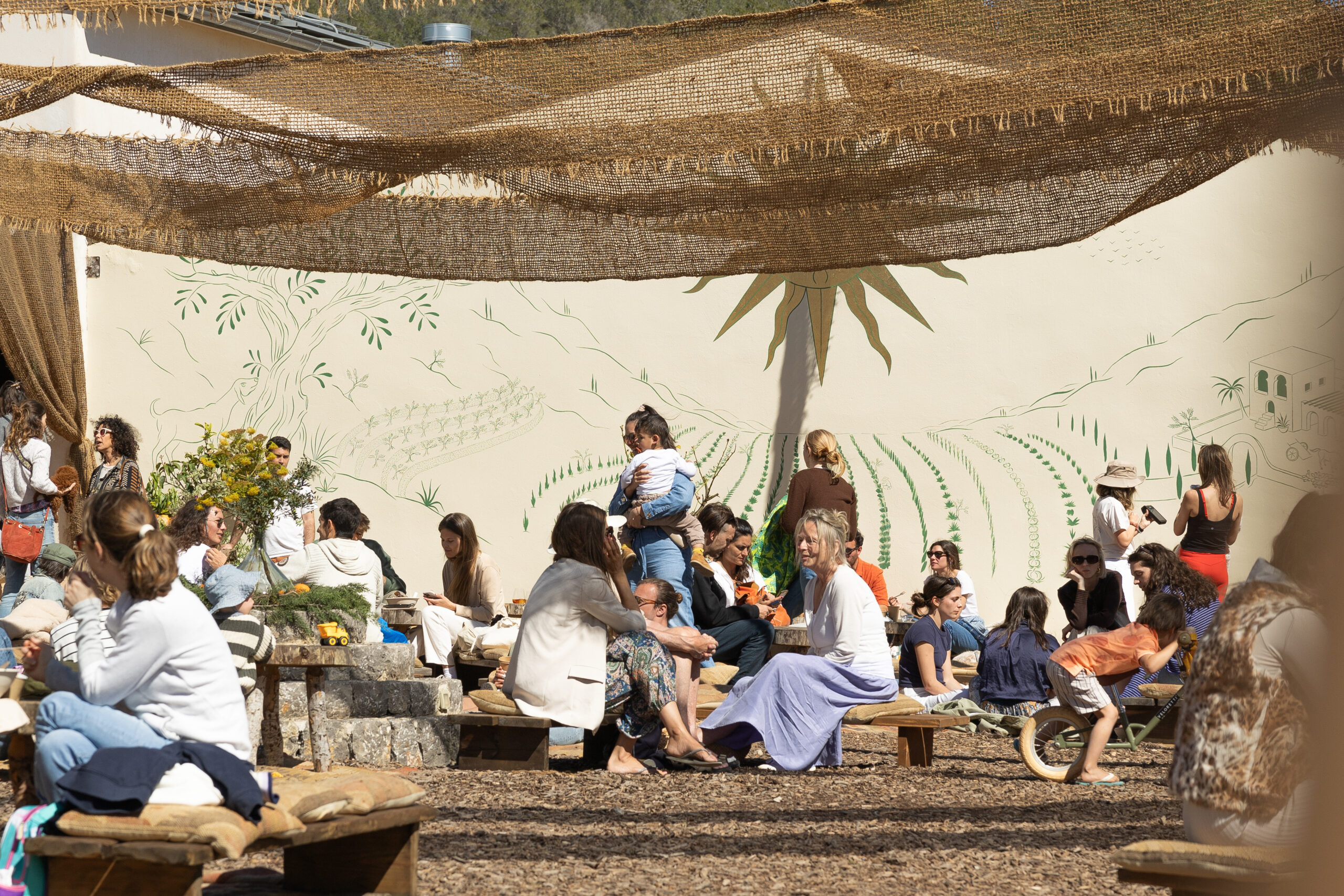
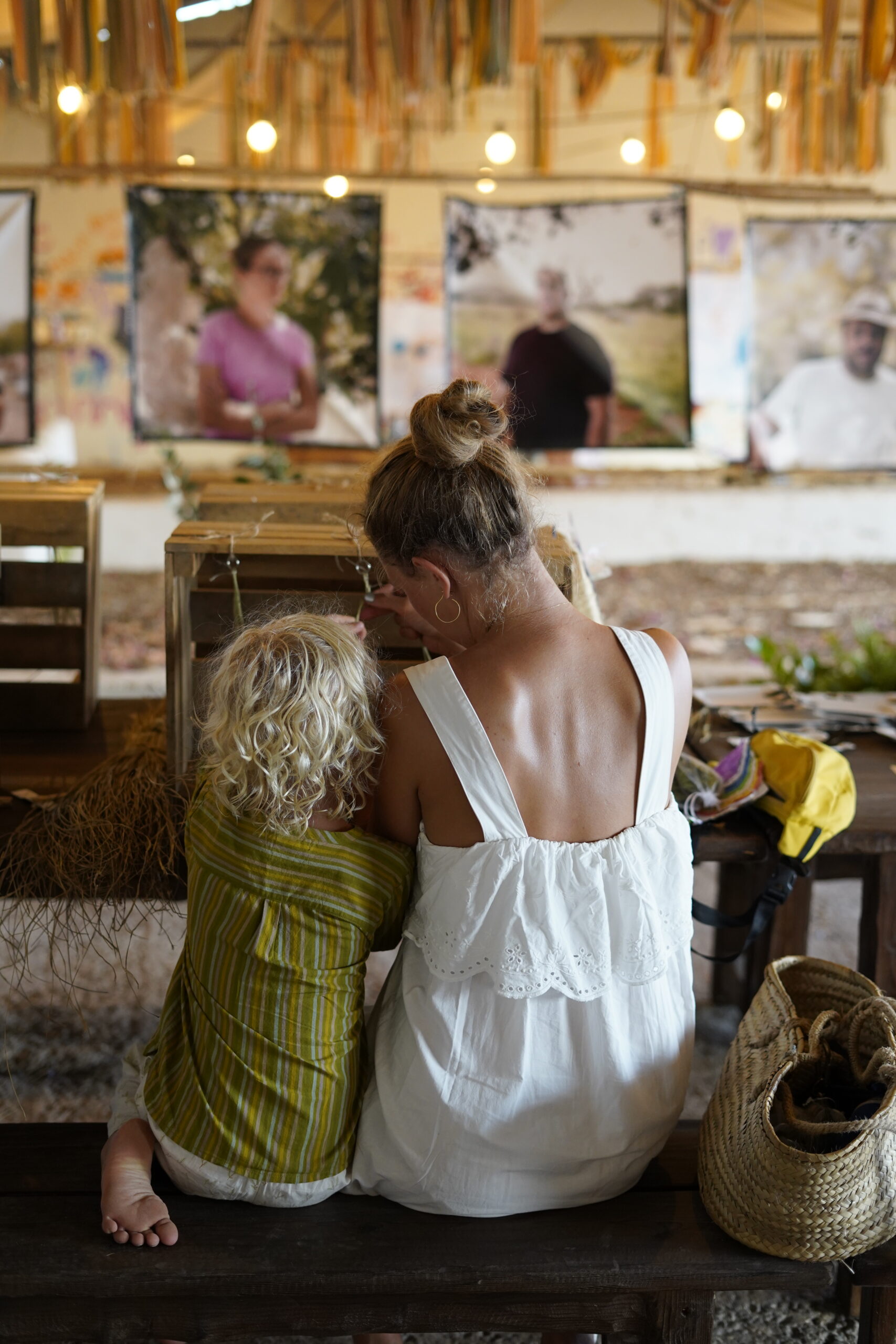
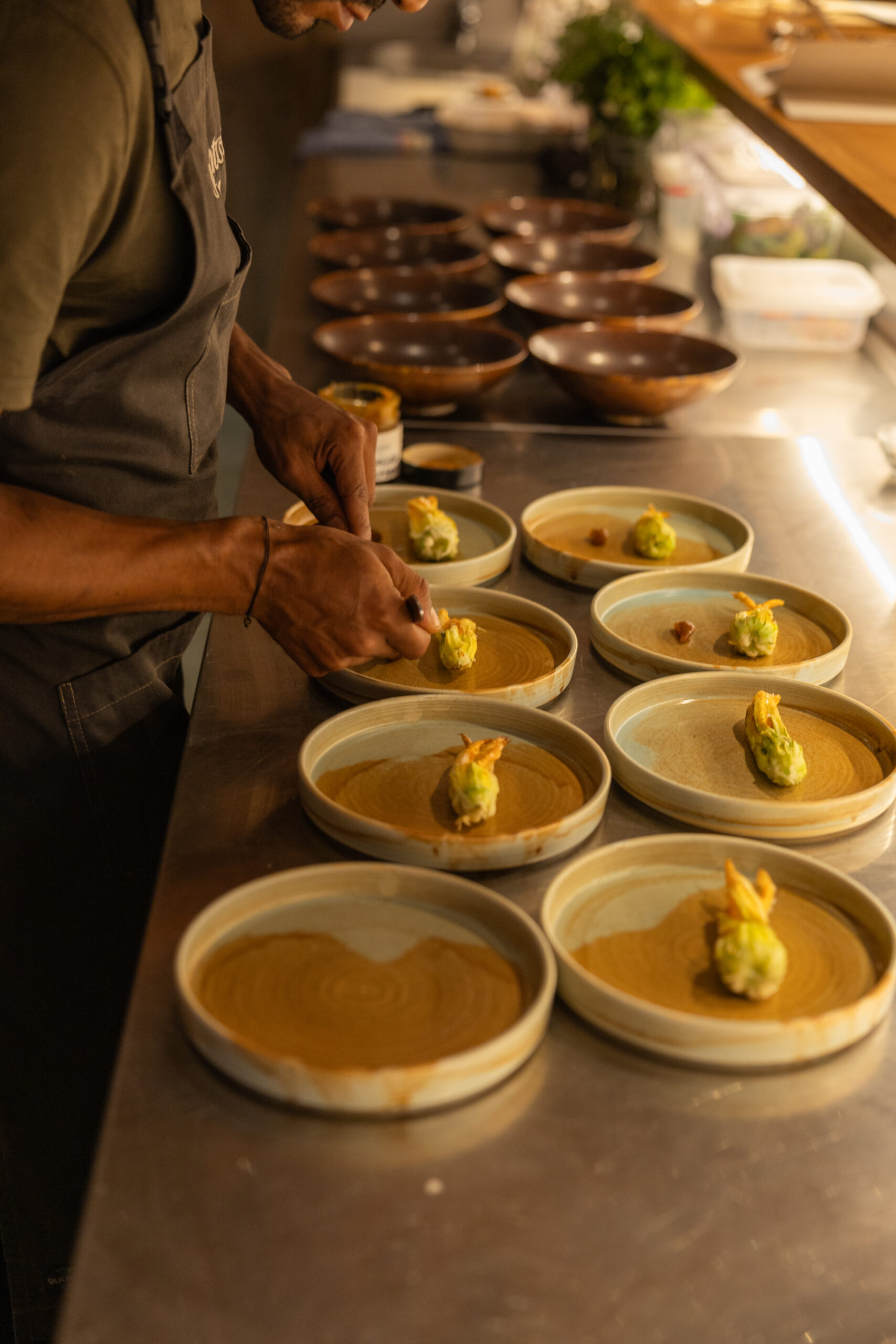
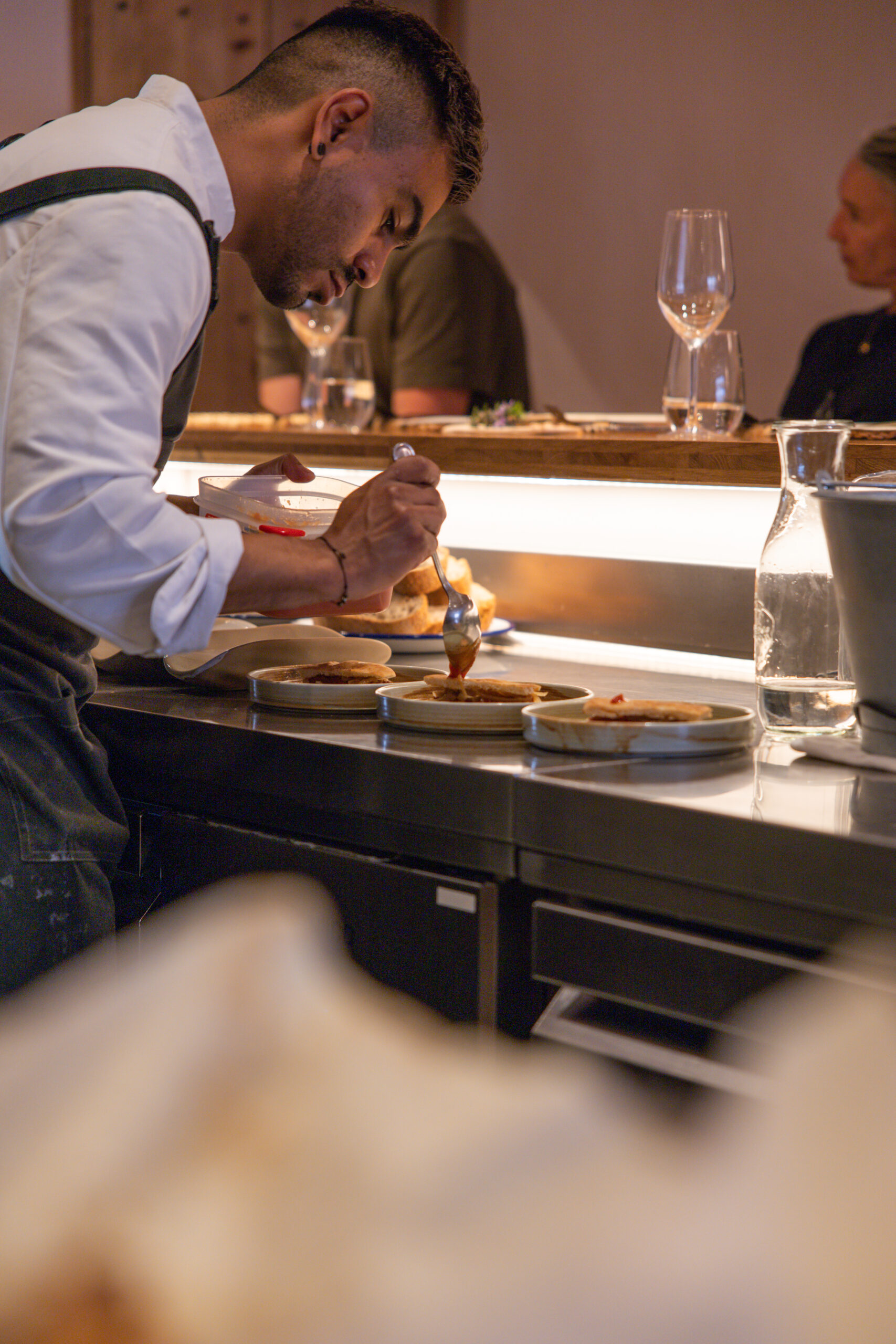

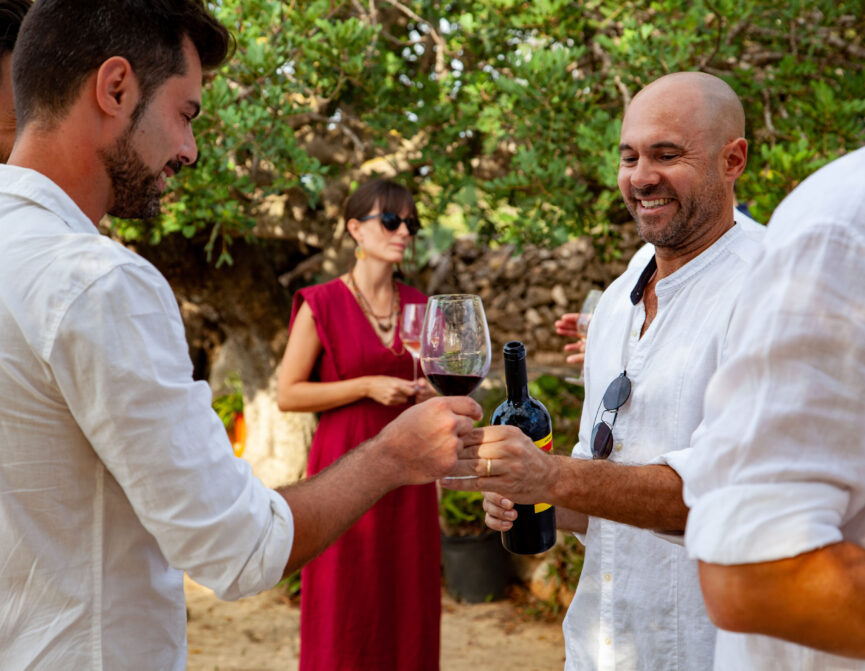
This ecosystem now extends beyond the fields. In Sant Mateu, Juntos House brings the farm-to-table philosophy into a restaurant, courtyard, garden, cocktail bar and boutique, showcasing produce from the regenerative farm and local partners. In the heart of Santa Gertrudis, a new deli offers another expression of the Juntos world, from seasonal plates to curated pantry items, each rooted in the same commitment to small-batch, artisan, organic and sustainable production.
But for Finn, food is only part of the story. “Culture is design, food, craft, storytelling – it’s the expression of a place. Farming lost that in the industrial era. Here, we joke about putting the culture back in agriculture.”
The line neatly captures what Juntos is trying to do. This is not simply about restoring soil or serving thoughtful food. It’s about making farming something people can see, value and participate in again.
“Retrofitting is such an important architectural idea today.”
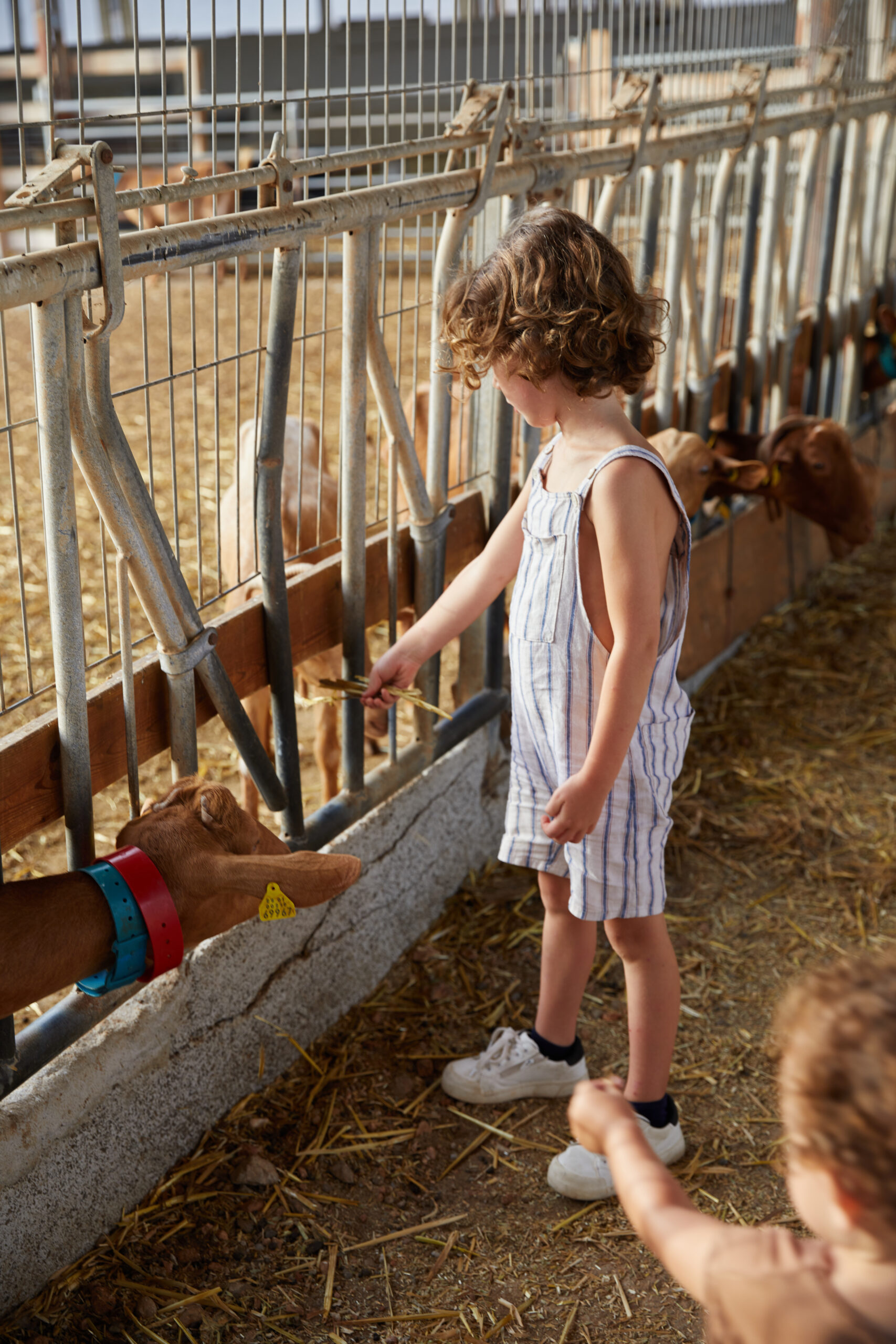
The model has been deliberately designed to be replicable elsewhere. “Our goal is to make this single site work, but in doing so, it becomes a case study for rural regions across Europe.”
The project is still young, but its momentum is undeniable. “I think people are drawn here because it offers a glimpse of another way forward,” Finn reflects. From a derelict plot to a thriving hub of regenerative agriculture, Juntos Farm shows that sustainability doesn’t have to be austere or abstract. Instead, it can be generous, designed, delicious – and deeply rooted in place.
Discover farm-to-table tastings and other farm experiences at juntosfarm.com
Artículos relacionados
At the root of Ibiza’s eco-conscious movement with Terravita
Founder Jason Watson Todd reveals why putting the environment at the heart of the design process pushes his studio to keep innovating.
Ojo Wines: Crafting Ibiza’s next chapter in wine
We speak to the pioneers behind a vineyard crafting wines with passion, patience and biodiversity in mind.