

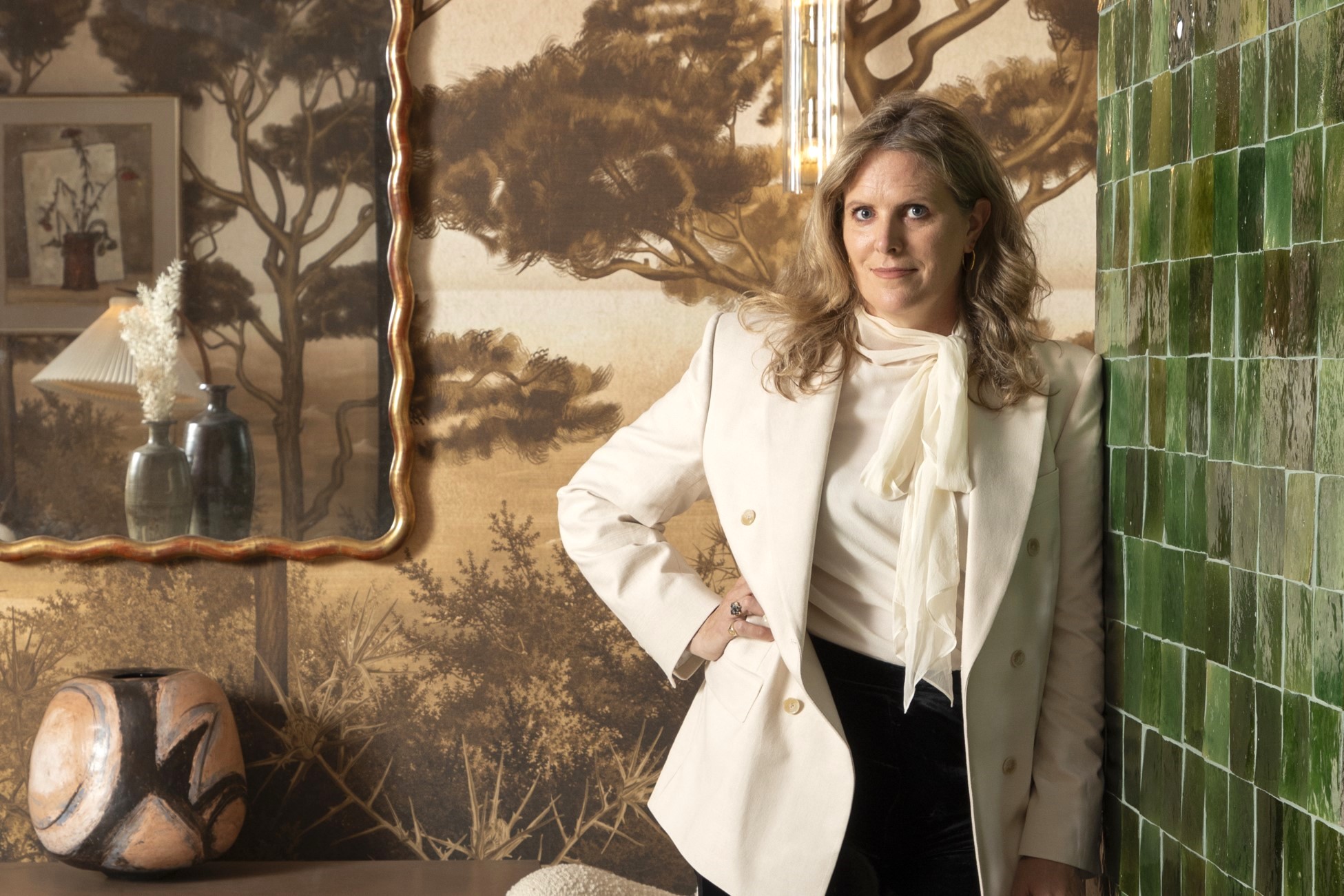
Interior designer Suzy has built her reputation on homes that feel wholly of their owner – and of their setting. She talks us through designing for place, from a family house in Ibiza to a chalet in Chamonix, and how to bring the same instinct home.
Suzy Hoodless has a test for a room. Take a scheme that sings in London – the fabrics, the finishes, the exact chalk of a wall colour – carry it out to Ibiza and see whether it still holds. More often than not, she says, it reads as something else entirely. “You have to see everything in situ.” It’s a small observation that contains most of her philosophy: a home is not an idea you impose on a place, but something you draw out of it.
That instinct has carried her a long way. Suzy began at Designers Guild, assistant to Tricia Guild and her creative team, before a spell in publishing took her through House & Garden, eventually, to the very first issue of Wallpaper – five people working on a magazine that turned cult almost overnight.
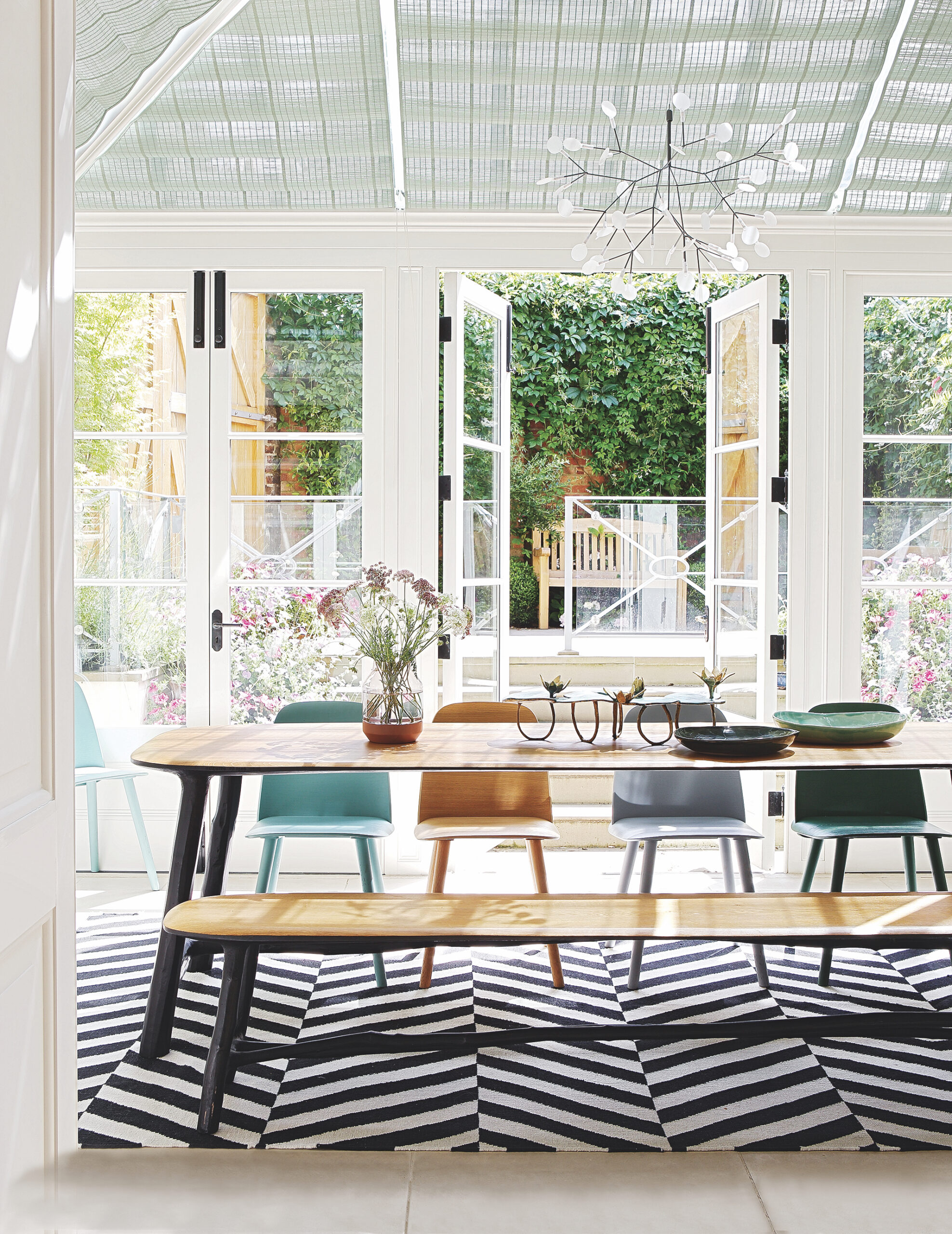
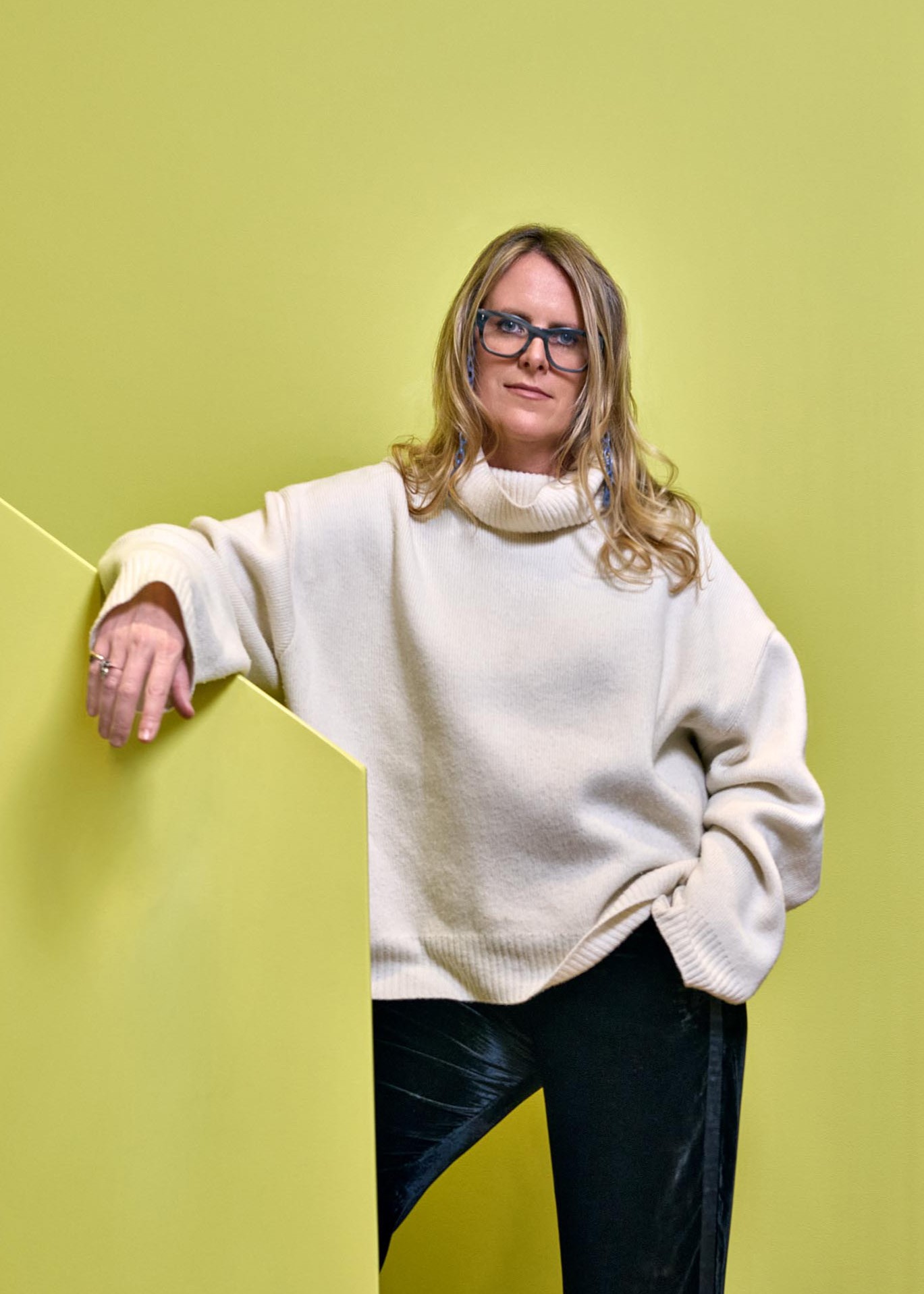
Five years and countless furniture fairs later, an American client asked for help with a house in Notting Hill. “The timing was really quite perfect,” Suzy muses. “I’d built up this wealth of knowledge – creative contacts, makers, an understanding of design. It was the perfect moment to move onto something I could really make my own.” More than two decades later, her studio’s London footprint runs from the former BBC Television Centre in White City to The AllBright, the women’s members’ club she conjured out of a Mayfair auction house.
Ask her what she actually starts with, though, and the answer is rarely a style, aesthetic or even a mood board. “I’m almost always most inspired by the client and the place. Those are the fundamental building blocks,” she insists. Her studio puts it another way – its work “rooted in curiosity and local vernacular,” with a global perspective on top. The homes she designs carry a subtle signature, yet each one is pinned firmly to its own patch of ground.
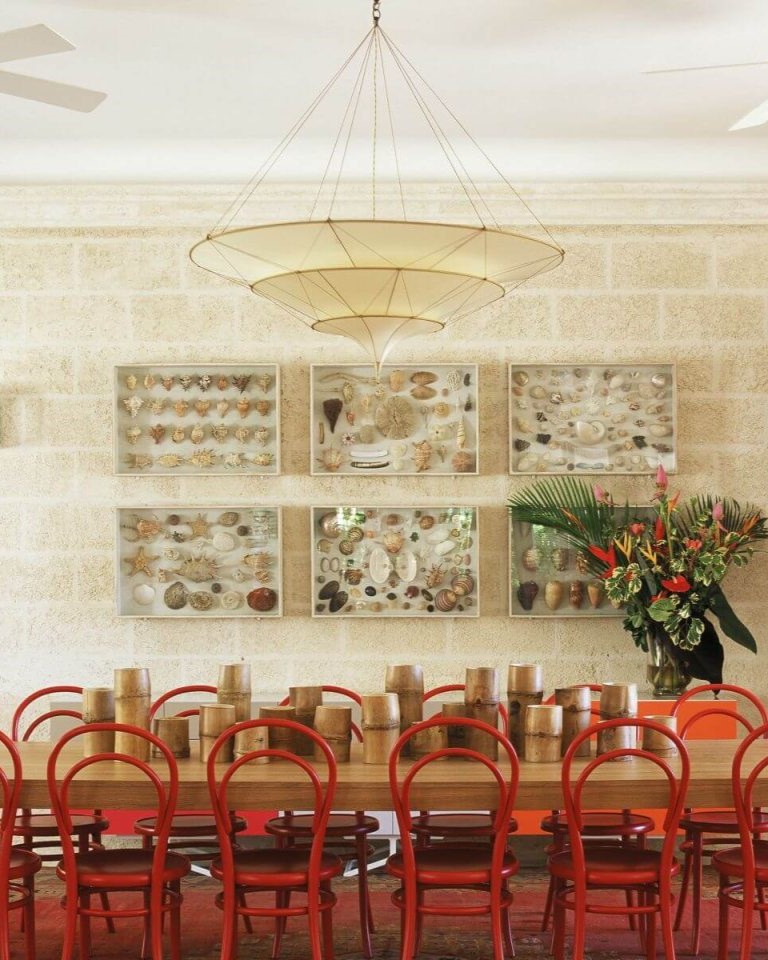
Nowhere is that clearer than in the projects that take her out of the city. In the hills of Ibiza above San Antonio, she is reworking a house one of her oldest friends inherited from family – room by room, in earthy terracotta, with a looseness the island seems to invite. “The style is more laid-back and relaxed,” she says, and the brief bends to a rhythm you don’t design for in the city: children coming in wet from the pool, somewhere to rinse off sand and swimming costumes, doors left open to the outside. “When you’re forced to think in a different way, it reinvigorates the whole creative process.”

In Chamonix, the logic inverts. Where the Ibiza house opens itself to the outdoors, the mountain home has to offer shelter from it – everything robust enough to stand up to the altitude. But the shift is more than practical. If Ibiza is about dissolving the line between inside and out, Chamonix is about drawing it, softly. “With interiors in cooler climates, the aim is to counterweight the hard exterior beyond the window,” explains Suzy. “You want to achieve that cocooning feel.” For this particular project, a vast and exact map of the massif takes one wall – the landscape discreetly brought indoors, even as the design turns inward.
Her projects at home in the UK take the same approach. The setting is less dramatic than an island or a mountain, but the discipline is identical: read what’s already there and let it lead. And the reading goes deeper than the furniture. Where others decorate a room, Suzy designs the house: flooring, fixtures, kitchens and bathrooms, the architectural detail and the lighting all considered alongside the furniture and fabrics. “It’s about looking at the whole thing,” she says. “The finishes are just as important as what you put in the room.”
The curiosity behind all this isn’t incidental, it’s the engine. Suzy travels constantly and takes in design voraciously – “I’ve already been to two things this morning,” she says when we speak, “an exhibition opening and a book launch on Greece.” It feeds a growing appetite for work in Britain and beyond, with recent projects in Italy and conversations under way in the US. Clients abroad, she finds, tend to want the same paradox: a home that feels like a home but runs like a hotel, unmistakably theirs and unmistakably of its place.

It’s so important early on to get a true read on what the client thinks – even if they hate all of it. That’s how we make something together.
- Suzy Hoodless, Interior Designer
What keeps any of this from feeling predictable is the other half of her method: the reading of the person. Suzy is quietly known for helping clients find their own taste rather than force-feeding them hers, and much of that happens through observation. “What they wear, how they speak, whether they lean to bold patterns or something pared-back. With permission, it’s incredibly helpful to look inside a client’s wardrobe for the tell,” she smiles.
For Suzy, each project is the creation of a design language specific to the person. From there come the concept images, deliberately a starting point, not a verdict. “It’s so important early on to get a true read on what the client thinks – even if they hate all of it. That’s how we make something together.”
There’s a longer view at work here, too. Suzy designs for permanence rather than the season – for how a room will read in ten or twenty years, not months. “I want design to stand the test of time,” she says, drawn to pieces bought to last a lifetime and beyond. She has little patience for disposable design – furniture built for obsolescence, or to feel of the moment and little else. “Surely the ultimate form of sustainability is buying less, but buying better: pieces you’ll love for so long that they’re handed down rather than thrown away.”
So how do you borrow this philosophy for your own four walls, particularly somewhere with a strong character of its own? Suzy’s advice is refreshingly unprecious. Do your research and let the landscape and the surroundings set the direction. Test as you go – try the fabrics, the materials and the tones in the actual space, in the actual light, rather than trusting a sample in a showroom. And don’t overthink the shopping. “It’s pretty hard to go wrong with a curated collection of things you love,” she says. A home rooted in its place, it turns out, is mostly a matter of paying attention: to where you are, and to who you are in it.
Artículos relacionados
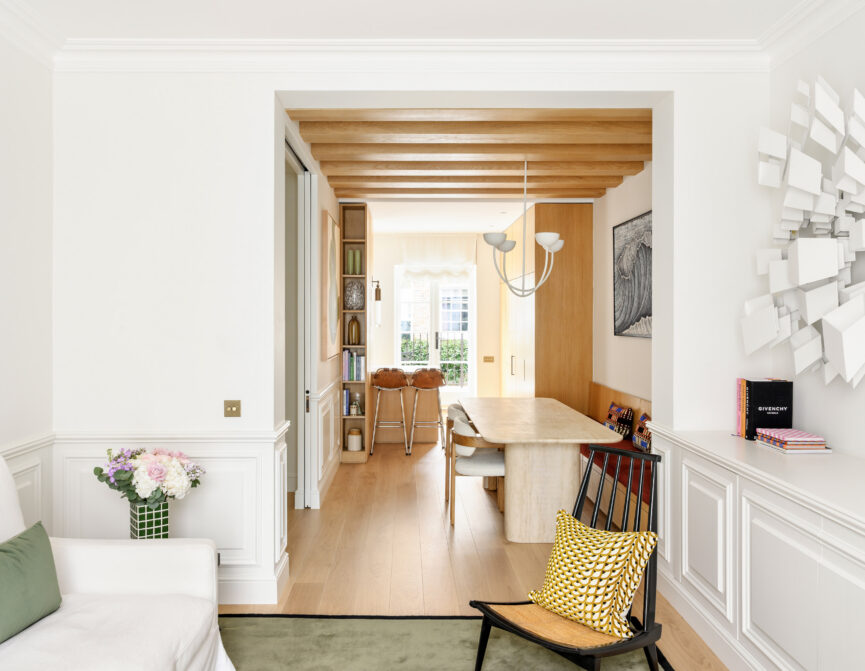
Behind the calm: Inside a thoughtfully reworked Notting Hill duplex
Marina Werfel, founder of WER Studio, explains how sensitivity and a little spatial Tetris brought clarity to the Grade II-listed duplex.

From hardware storehouse to sustainable home
Nina and David McNab on transforming a dilapidated Art Deco-era building into a sustainably minded home.